A Year after the floods: Voices from the Motueka Catchment
The water came in the afternoon. Heather Davies watched it spread across the lawn, through the flower beds, across to the rhododendron on the corner. The duck pond disappeared under logs and slash. It kept rising — and then, just short of the house, it stopped.
“We got off lucky,” she says. “Not everyone did.”
It was the first of two floods, two weeks apart. But it was the neighbours, including the Ings — John and Kathleen, both in their 80s — who bore the worst of it. The stop bank below their property blew out. Not a proper engineered wall, Heather explains, but a meadow bank — a pile of sand, really, put in after an earlier flood decades ago. When it gave way, the river carved a crater five metres deep in the road and poured into the Ings’ home.
The Ings waded through floodwater to reach their son’s two-storey house on the property. They rang for help. The helicopter couldn’t come — too late in the day.
“They were terrified,” Heather says. “They’re in their 80s, wading through floodwater. The water was coming into their house.”
Further down the road, she heard screaming. A young family — including a toddler, and a preschooler were trying to scramble up the bank above their flooded home. Dood and their neighbour Harrison went out on the tractor, water rising to the bottom of the motor, and got them out — crossing a ditch with babies on their backs.
“It was not safe,” Heather says simply. “But what do you do when you hear someone screaming?”
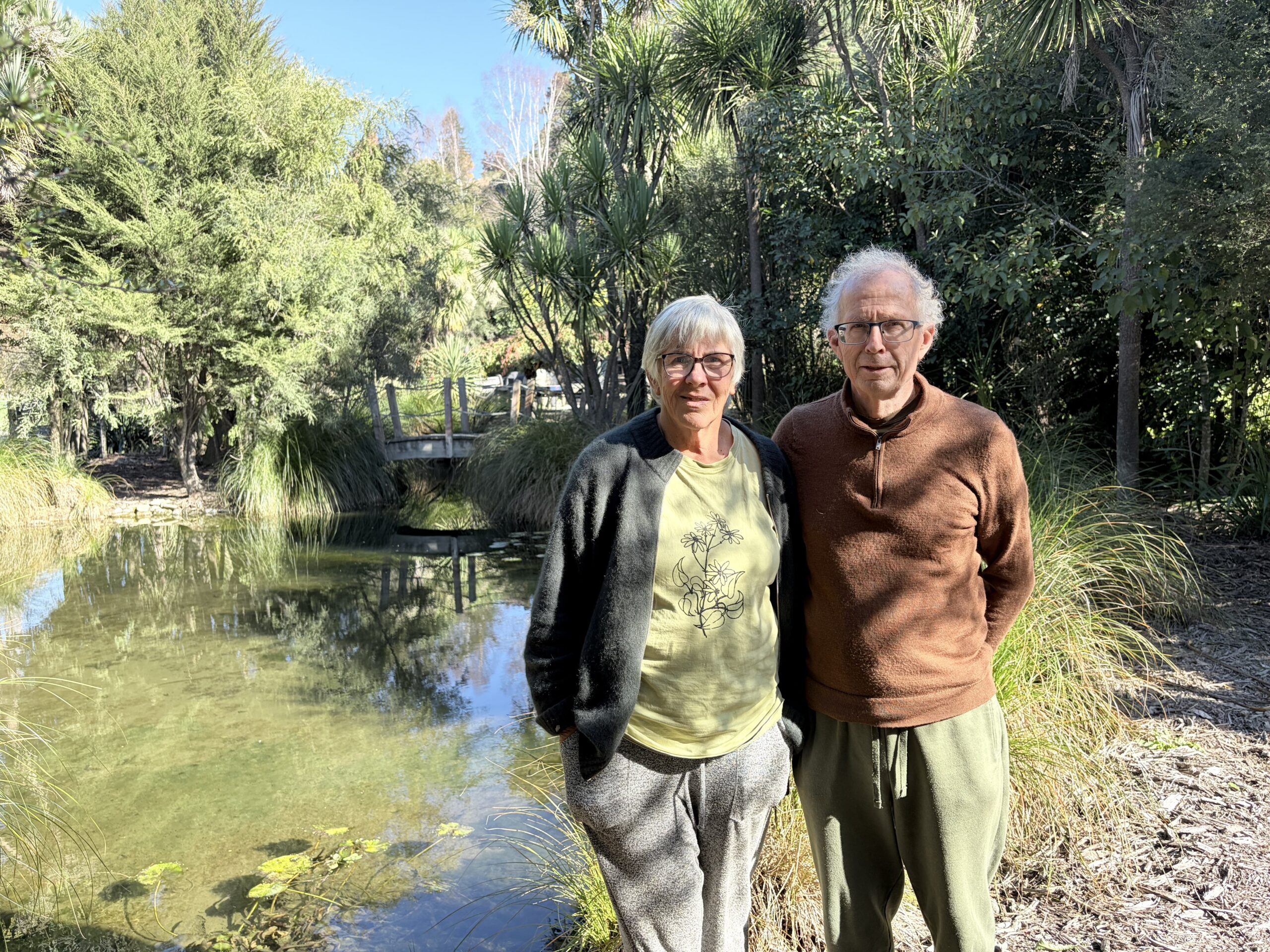
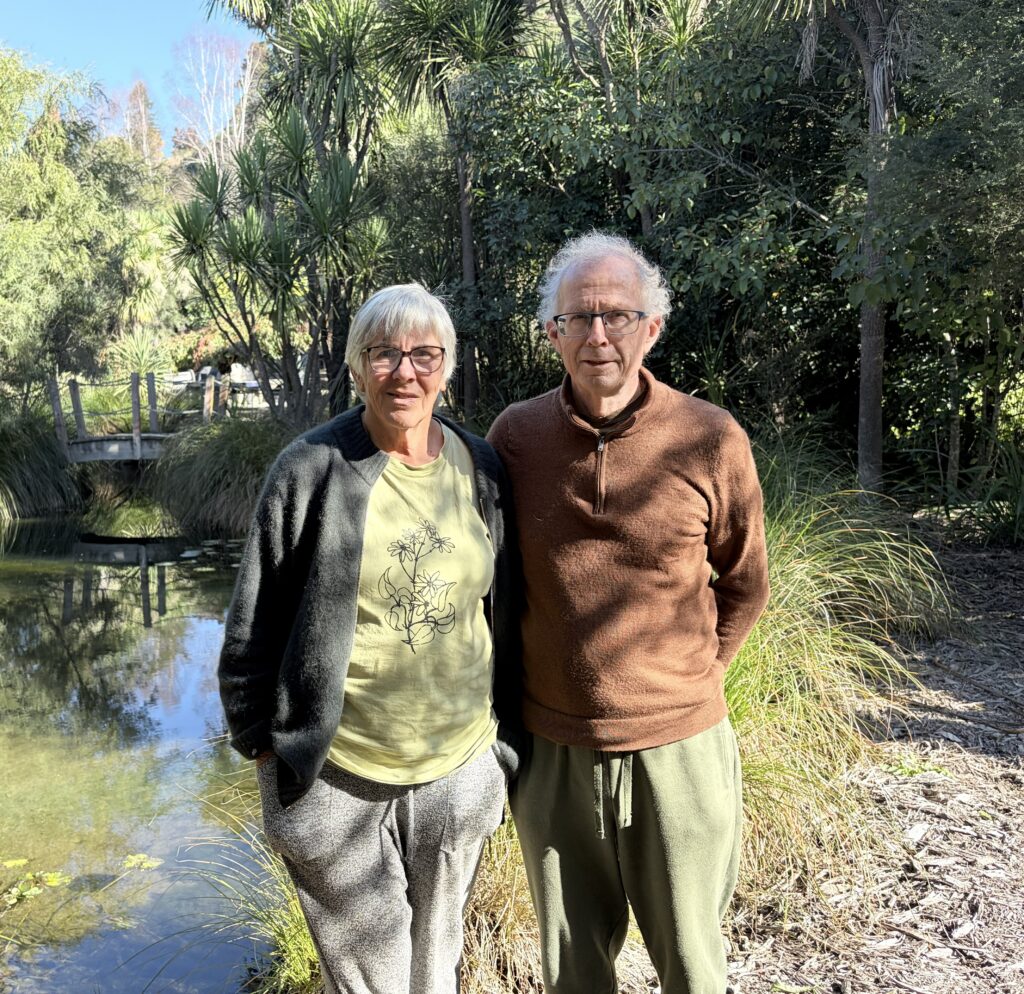
Dood and Heather Davies have lived on the West Bank of the Motueka River since 1983. They arrived on bare land — a ploughed-up tobacco farm, not a tree in sight — as part of a loose community of friends drawn by the river and the fertility of the valley. Over four decades, they planted thousands of natives up the hillside, built their house, along with a pond from a boggy spring, raised children and grandchildren here.
They have seen floods before. In forty years on the West Bank, there have always been floods. But not like this.
The second flood came two weeks later, while they were still helping the Ings clean up — not quite as high, but the stop bank holes still unrepaired, the river loaded with silt and debris.
“The river was heavy,” Heather says. “You could hear it. All the water came down the hills, took silt with it. There was so much of everything.”
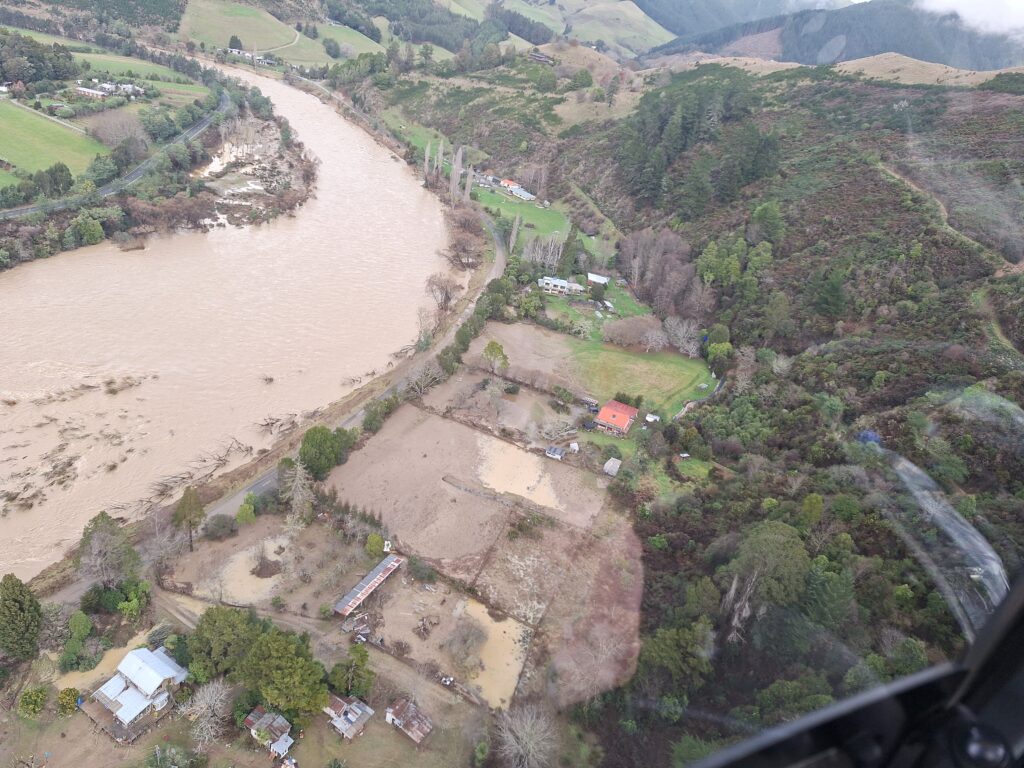
A year on from those two weeks, I drive out to the West Bank to find out how they’re doing. We sit around the kitchen table on a still autumn afternoon, the river visible through the window, running peacefully. They are, it becomes clear quite quickly, the kind of people who get on with things. Pragmatic. Resilient. The past year’s cleanup has taken its toll — less time for the restoration projects they love, less time for everything really — but they’re just getting on with it.
They walk me around the garden. The pond is settled and clear, the goldfish back in residence. New mulch covers the beds thickly — the slash and debris from the flood broken down and put back to work, apart from a few piles waiting to be burnt off. The fencing is new. The garden is, if anything, more abundant than before — the flood silt, it turns out, is extraordinarily fertile. Heather grew her best ever kūmara crop in it.
Then Dood suggests we walk up the hill. There’s plenty to see.
It takes twenty minutes, up a steep track through the regenerating bush. Halfway up, a slip has taken out a wide swathe of vegetation, the earth still exposed — a reminder that last year’s damage wasn’t only right by the river. Dood and Heather show me the water tanks fed by a clear mountain spring, and the new plantings coming away strongly. And finally, the caravan — their bolt-hole, one escape plan if needed. Heather eyes it with slightly more conviction than Dood.
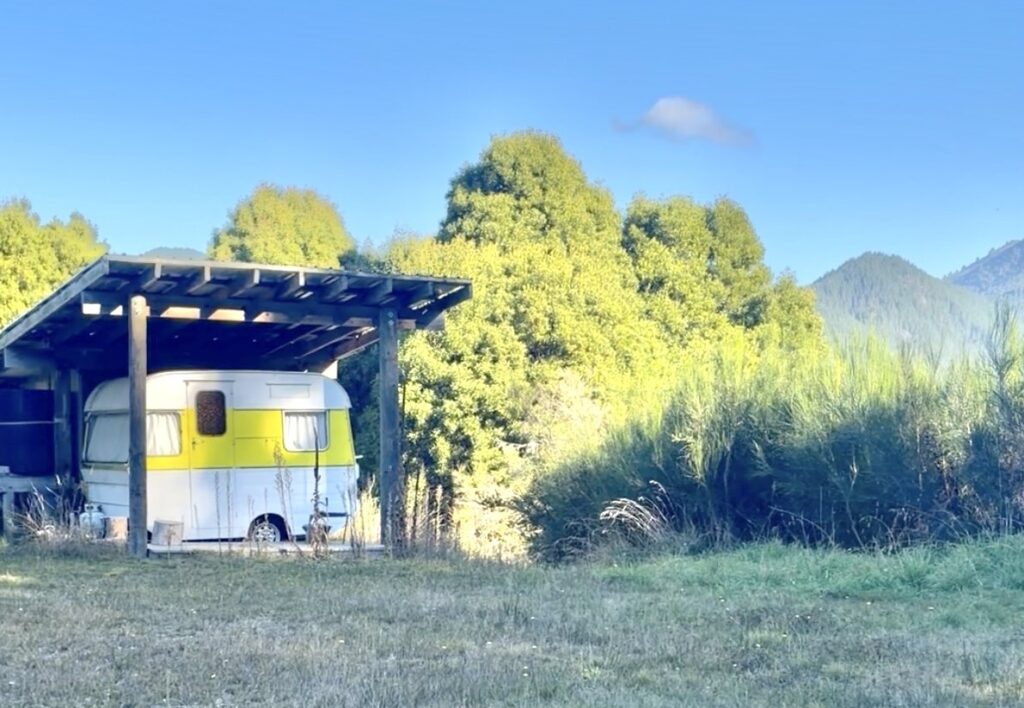
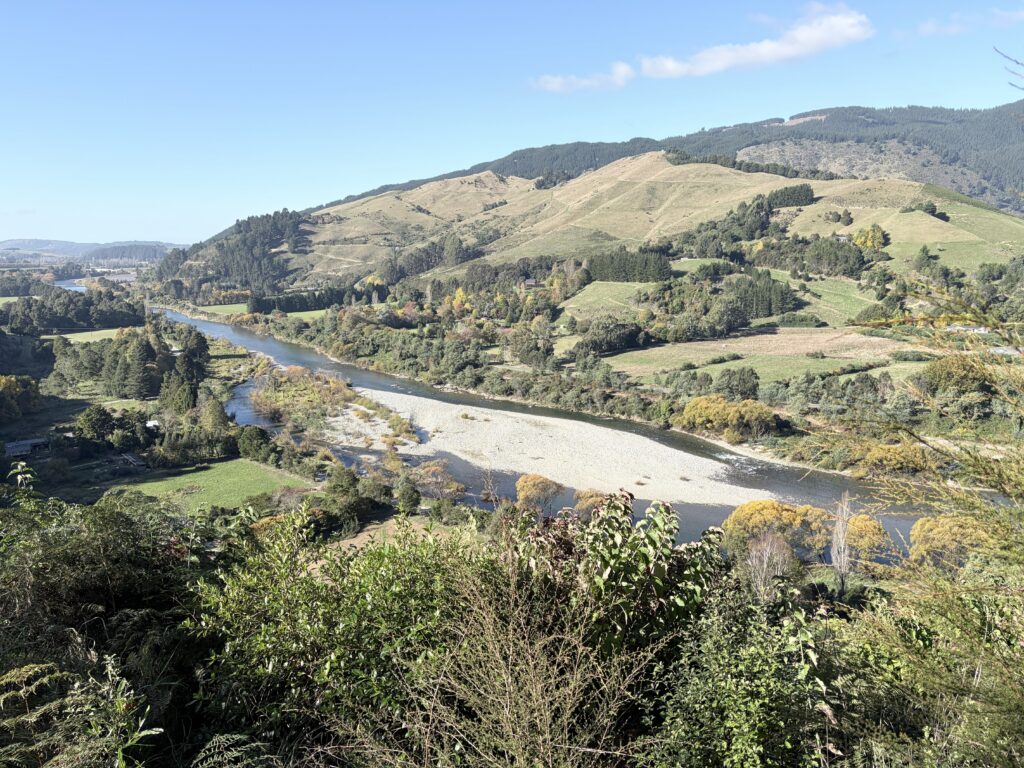
“You can see why we love this place,” Heather says as we look out over the valley. From up here, the landscape looks almost untouched by the floods — the river banks vegetated, the gardens lush, the grass re-established, the natives rising up the hillside. Almost. Down by the road, council vehicles and resealing works mark where the damage was worst. Next door, their neighbour’s place stands empty and still devastated.
What saved them — what saves communities — was each other.
Bob Roberg arrived early with his digger, funded eventually by the Lions Club, and worked through the fence lines pulling out logs and slash. The Student Army came for days, picking rocks from the paddock by hand. A Whenua Iti crew spent four careful hours excavating the waterslide from beneath a slip, working painstakingly around the liner, before cleaning it off and having a well-earned slide themselves. Even in the midst of the cleanup, Heather threw the slide open to the community — raising $3,800 for charity in the process. A woman from Oxford who crowdfunds her way to disasters and can drive any machine going spent days clearing silt from next door by the truckload.
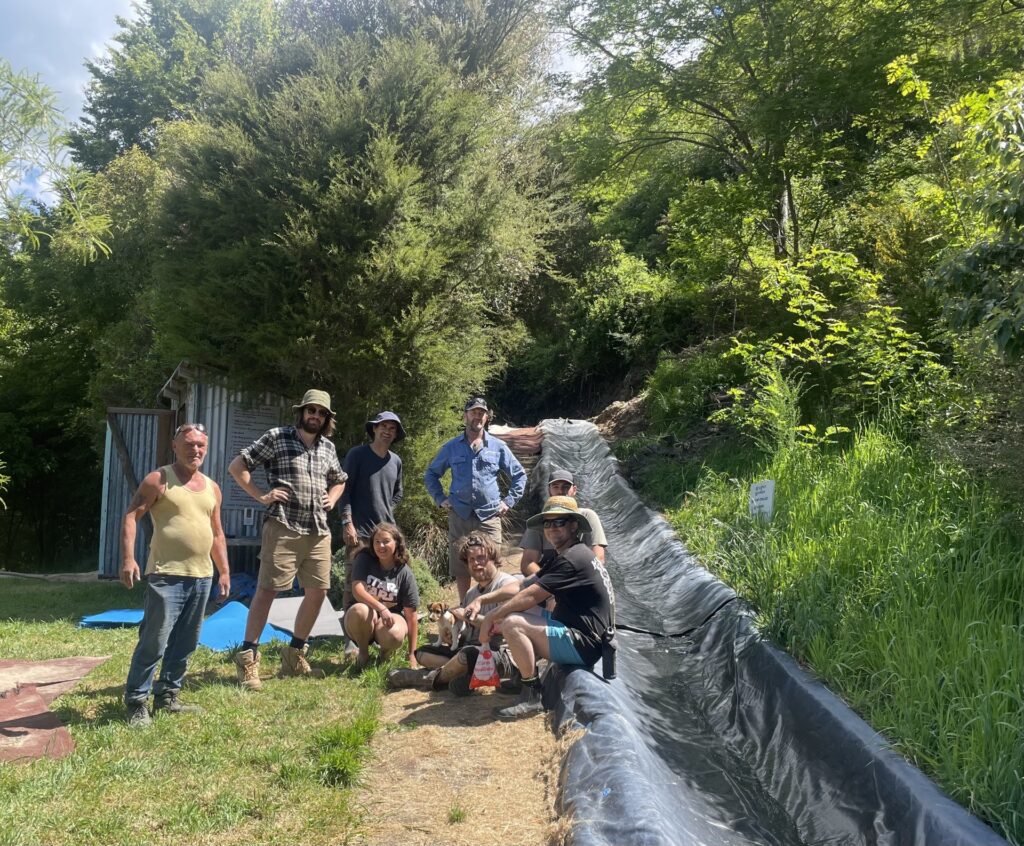
And the Ings came to stay — for four or five months, in the self-contained unit at the end of the property.
“It was actually really nice,” Heather says. “We got to know each other better. They’d walk back down to their place every day and do stuff.” She pauses. “But the fact that John and Kathleen have been kind of forced out of the neighbourhood — people who’ve been such a long-standing part of the history of this valley — that’s one of the ways the flood has permanently changed the feeling here.”
Their old house, built in the 1920s, is still not fully repaired. It sits on Trade Me for a dollar, to whoever will come and shift it.
Staying is not a simple decision. It is one Dood and Heather make consciously, and not without worry.
The flood hit hard financially as well as personally for many West Bank residents — property values, insurance cover, what’s actually protected and what isn’t — these are questions that linger long after the water recedes.
Dood is calmer about it all than he might have expected. Heather worries more. The caravan on the hill is their plan — though Heather is not sure she’d use it.
“I’d probably stay in the house and go upstairs. There’s a risk of slips going up that hill.” She pauses. “We got no warning last time. That’s what concerns me.”
And then there is the harder question. The ethical one.
“I would love a proper stop bank,” she says. “It seems like a no-brainer to me, when you think about what it costs to fix these roads every time.” But then she stops herself. “Ethically, though? Rivers should just do what they want to do. I was in Switzerland once, and they’d concreted the whole river into a canal. And then they realised how unhealthy it had become, and they were pulling it all out, letting the river go where it wanted.”
She looks out at the Motueka, running quiet and low.
“When you’re somewhere remote, let it wander — that’s what it should be doing. But when you’re coming through farmland, through people’s properties… how much do you protect people? It’s a catch-22. And I know that when it actually affects you, it’s not surprising that people are pointing fingers at the council saying you need to do more.”
She knows the floods will come again. The science says so, and so does forty years of living here.
“It’s climate change. They were called 100-year floods, but we’ve got a different atmosphere than 100 years ago.” She pauses. “I think that’s something we all need to start really reckoning with.”
But she will not leave you on a dark note. That is not Heather’s way.
The silt from the flood, it turns out, grows a magnificent kūmara — the best crop she has ever had. Just across the driveway, where there used to be nothing but steep rocks down to the water, there is now a little sandy beach and a good swimming hole.
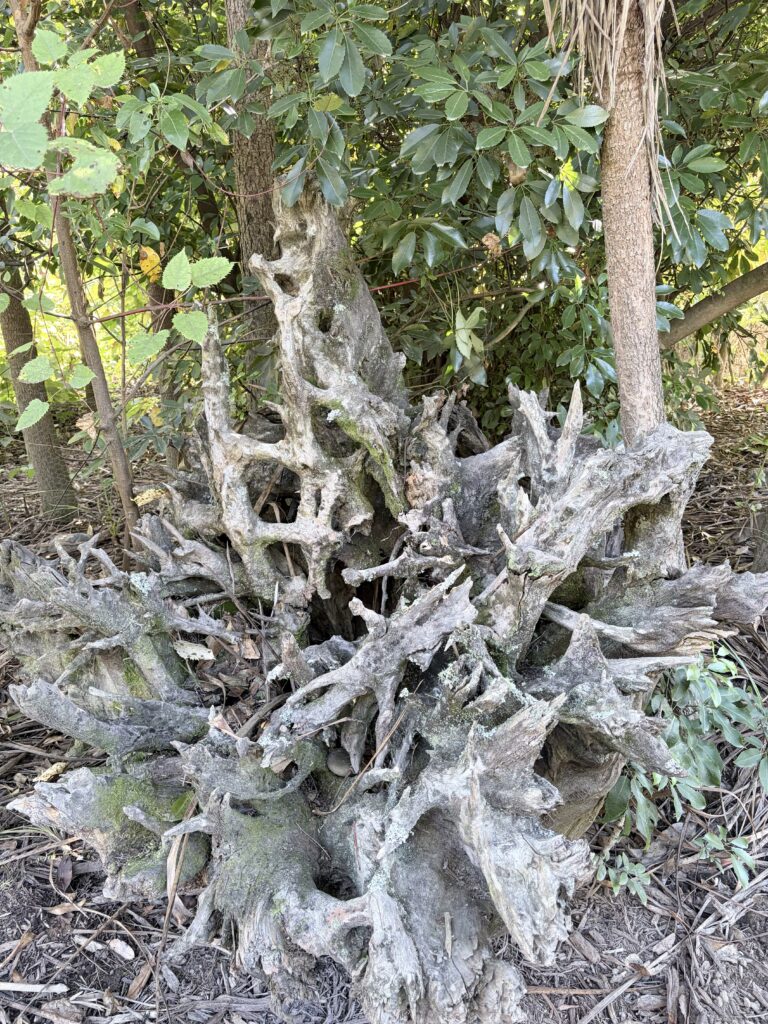
And then there is the old macrocarpa stump at the edge of the pond. She watched it during the flood, from the window inside — watched it rise up and float away on the current. When the water receded, she went to look. It had landed just beside the garden path. A beautiful, weathered sculpture, perfectly placed, as if someone had put it there.
“I was so excited,” she says. “It’s just a little gift. Like the river left it there for us.”
She smiles, looking out at the Motueka — quiet now, unhurried, glinting in the afternoon light.
“It’s obviously lovely living by the river,” she says. “That’s why you wanted to come here.”