Updates from MCC’s Biodiversity, Pest Management and Freshwater Monitoring Groups
Biodiversity and Restoration Group Update
The BAR Group has had a strong period of activity. We welcomed Wayne O’Keefe, whose extensive background in ecological restoration, community conservation, and landscape‑scale projects adds real depth to the group. Wayne also facilitated the recent Forest that Lasts workshop.
Plant distribution has been significant, with 2,500 Trees That Count plants allocated to 11 landowners and a further 1,500 plants supplied from the Dovedale Community Nursery. All plantings are now recorded through the online mapping platform, which captures photos, mapped locations, and survival data.
The Community Nursery Network continues to grow, with seven nurseries producing between 500 and 4,000 plants annually. New nurseries are emerging through the Nurseries in Schools initiative, with Brooklyn School making strong progress and Tapawera Area School’s nursery infrastructure now in place.
A rare plant programme is being developed, focusing on species such as divaricating shrubs and rimu. Progress is currently limited by a poor seed year and the need for DOC partnership.
Recent restoration activity includes support for planting at Haycocks Bush, tōtara direct‑seeding trials on three properties, and planning for a wetland tour, a home‑nursery online event, and a potential poplar and willow nursery. Workshops on forest succession, seed collection, and seedling giveaways have continued to build community capability and interest.
Pest Management Group Update
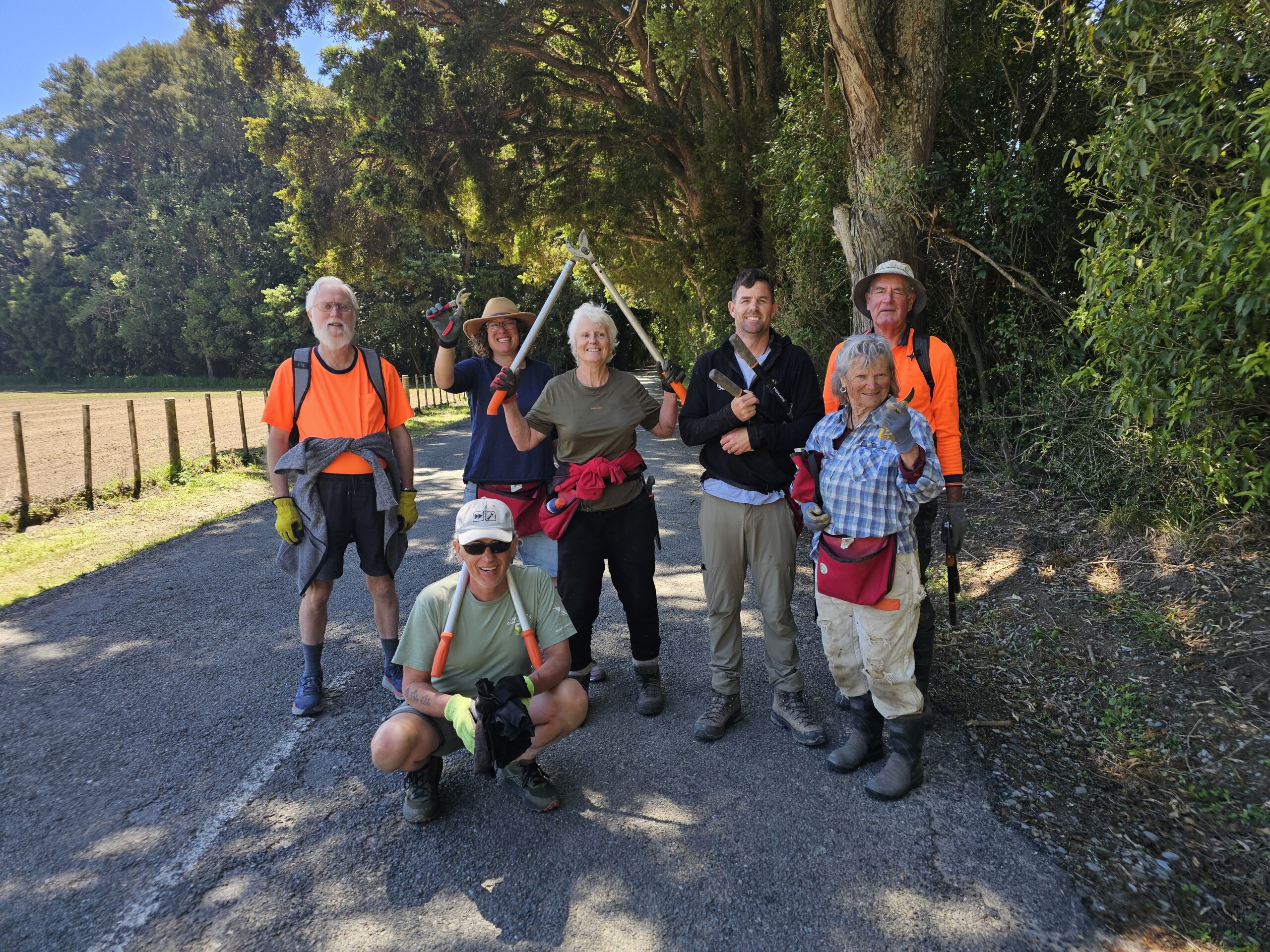
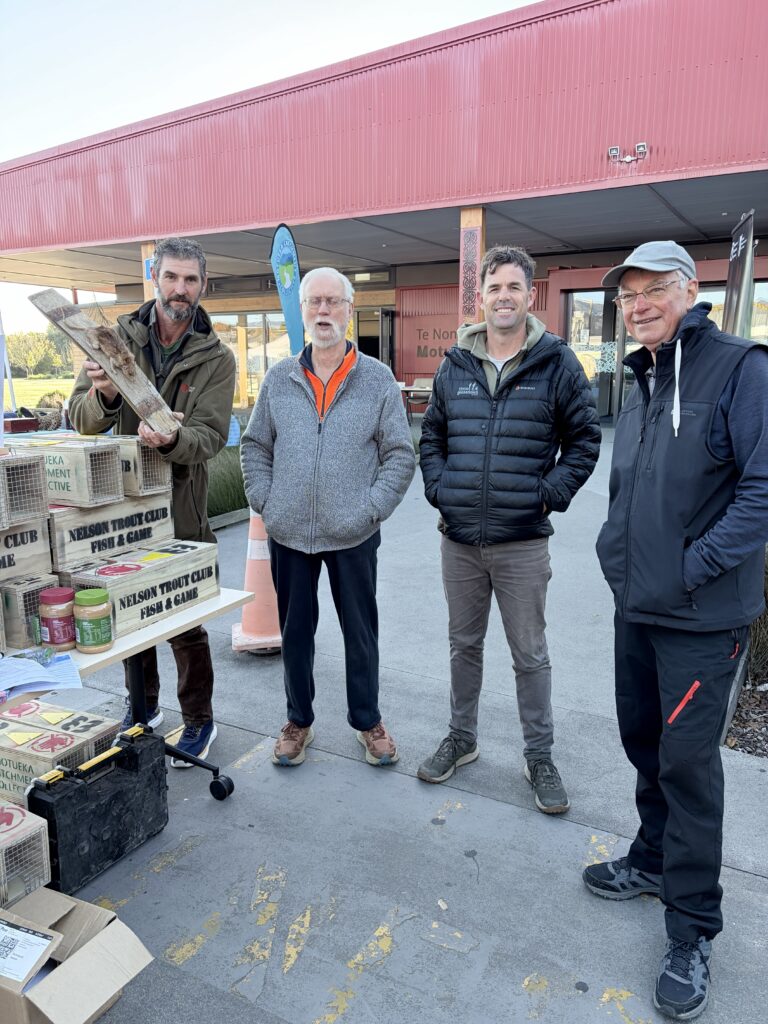
The Pest Management Group has continued to expand predator control efforts across the catchment. At Haycocks Bush, old man’s beard control is progressing well, supported by volunteer days and a recent barberry‑removal session with Fish & Game and the Nelson Trout Club. External funding applications have been submitted to secure contractor support for the more technical areas of the site.
The Motueka Town Trapping Project has now distributed around 100 traps, with strong community uptake and active TrapNZ reporting. A further 100 traps are ready to roll out, with the aim of eventually covering the wider Motueka township.
On the Motueka Delta, 30 DOC200 traps have been secured at no cost, with another 20 to be added from MCC stocks. Iwi support is in place, and deployment is planned for winter. The group will also inherit the Whakapaetuara/Motueka Delta trapline (62 traps) established by TDC, NRAIT, and Tasman Bay Guardians.
At Shedwood Bush, 40 DOC200s and 4 AT220s have removed 177 pests in six months, the majority possums. The project will soon transition to the Shedwood Bush Betterers group, with MCC continuing to provide technical support.
Community engagement remains strong, with recent market stalls, attendance at the Top of the South trapping hui, and upcoming events including sessions with Sam the Trap Man and a farmer‑focused pest management day planned for later in the year.
Freshwater Monitoring Groups Update
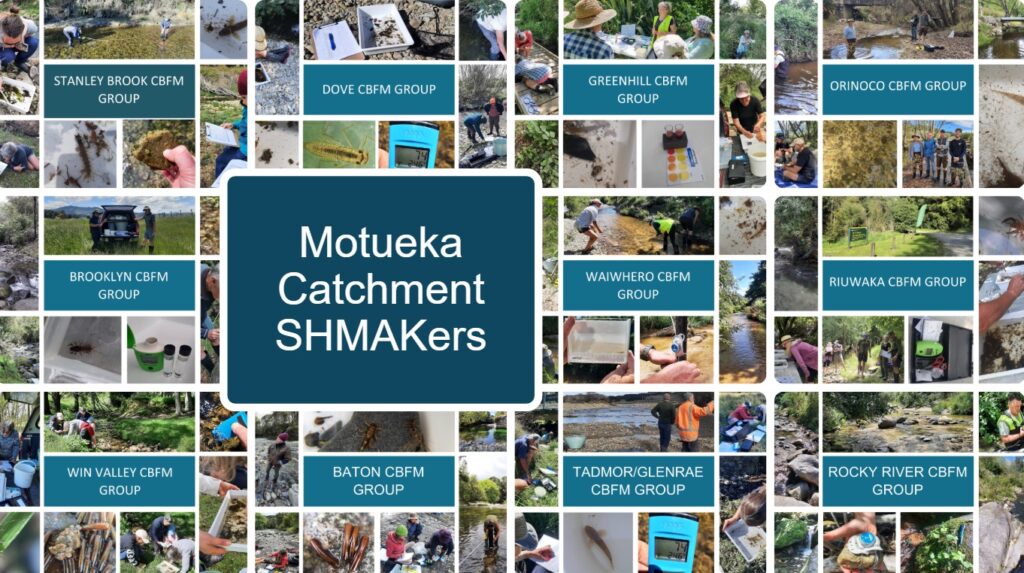
Kate Radloff, Tasman Bay Guardians (TBG), recently reported to MCC’s Steering Group about the progress of the catchment’s freshwater monitoring groups. These groups are supported by resources from MCC and mentoring support and guidance from TBG. Here are the key numbers:
6 community workshops have been held across the catchment
We have 11 active community based freshwater monitoring groups
there are 30+ trained SHMAKers (community members trained to used the stream health monitoring assessment kits)
There are 12 sub‑catchments with active monitoring
Community monitors are monitoring 25 sites
there have been 250+ sampling events completed so far
Every group has developed a monitoring plan using the National CBFM Framework. These plans are living documents and can be updated as sites, priorities, or group capacity changes.
Tools and data platforms
Groups use SHMAK as their core sampling method. Data is uploaded to NZ Water Citizens, where groups can manage privacy settings, view site maps, and generate basic graphs.
Last year MCC purchased 10 HOBO temperature loggers as a thank‑you for the groups’ mahi. Tasman Bay Guardians deployed them over summer, and results will be publicly available soon. Four sites were also monitored the previous year using TBG loggers. Temperature is already known to be a major pressure in several streams, so this expanded dataset is extremely valuable. TBG has been sharing early results with Trevor James (TDC) to help guide interpretation and communication.
Tasman Bay Guardians donated four eDNA kits. After checking in with TDC’s freshwater ecologist, samples were taken at Tadmor at Tui, the Dove confluence, the Greenhill confluence, and the Orinoco confluence. eDNA provides a snapshot of biodiversity, and the “wheel of life” visual shows the range of species detected.
What’s next for the freshwater monitoring programme
For community monitors:
Continue long‑term monitoring using SHMAK, temperature loggers, and eDNA
Maintain QA/QC following the National CBFM Framework
Use Hills test kits when red flags arise (no funding currently for additional lab testing)
Share monitoring results with their communities where appropriate
Keep building the community of practice through shared learning and collaboration
For MCC and partners:
Work with TDC to minimise data gaps and strengthen catchment‑wide coverage
Support SHMAKers with ongoing workshops, QA/QC, and interpretation guidance
Provide Survey123 training for freshwater surveys
Support new or emerging sub‑catchment groups
Help groups link monitoring results to practical actions in their sub‑catchments
Draw on technical expertise from Trevor James, Rob Holmes, Kati Doehring, and others
Contribute to a catchment‑wide picture of freshwater health to inform land‑use decisions, restoration priorities, and long‑term planning