
Willows for flood mitigation – MCC field trip
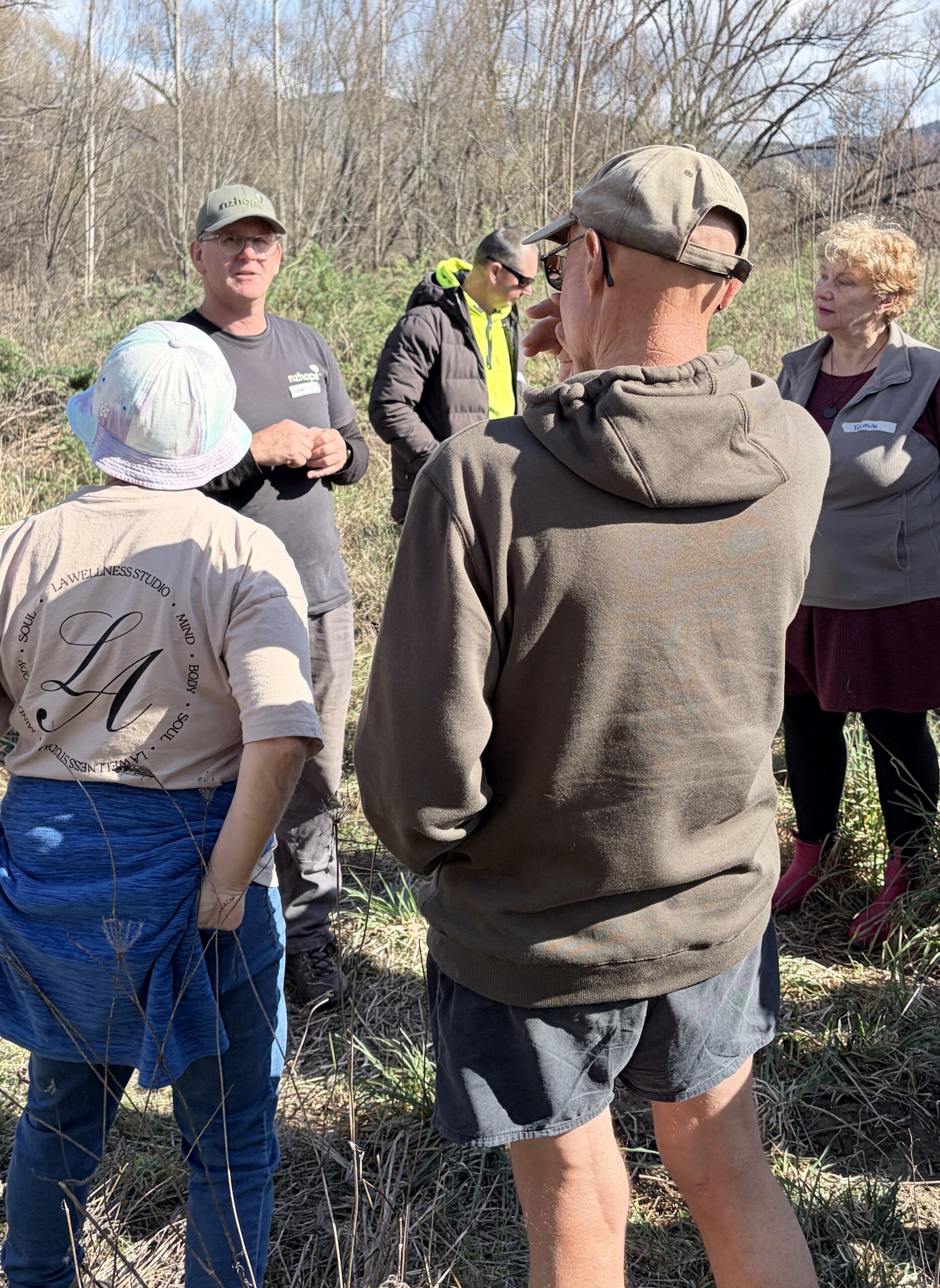
Back in May, our Flood Risk Workshop in Tapawera opened up a catchment-wide conversation about flood risk, with input from science, council and residents. Dean Palmer of Hinetai Hops spoke that day about what he’d seen on his own land during the flood, and it struck a chord. People asked for exactly this: a chance to walk the land with him and see it firsthand.
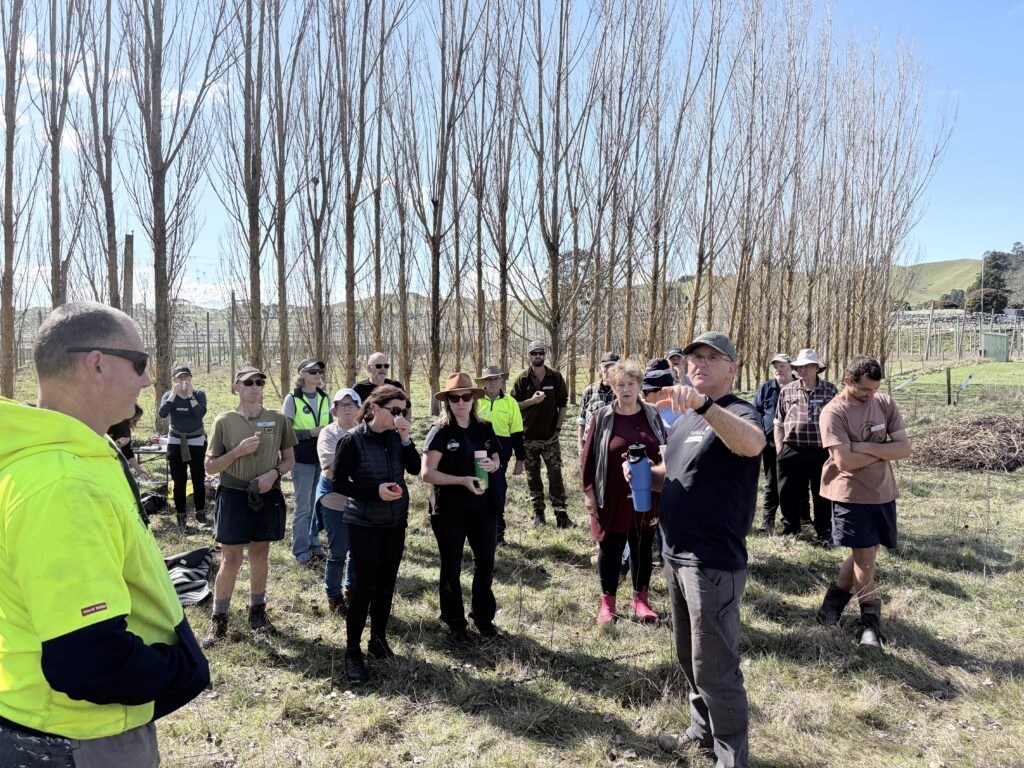
That’s the model we work to at MCC — the community tells us what’s needed, and we help make it happen. So on 3 September — a still, sunny day, about as good as you could ask for in early spring — 24 of us gathered at Hinetai Hops, Tapawera: mostly landowners, but also council staff, and a few from MPI, Boffa Miskell and Fish & Game.
We started with a welcome then walked down to the first site together.
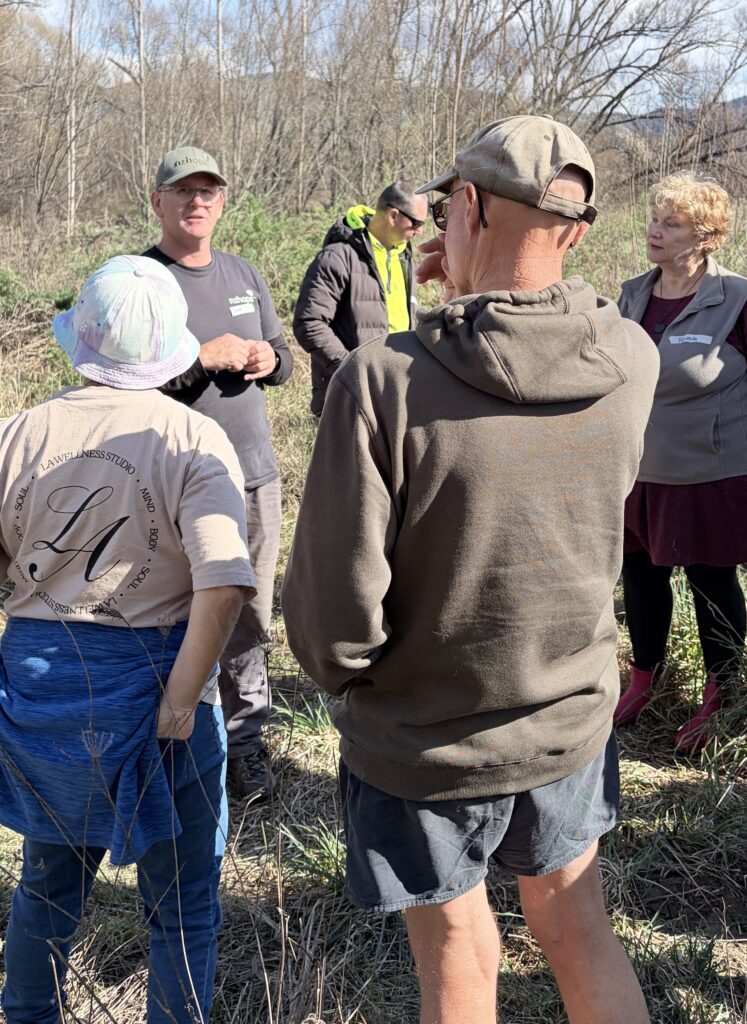
Dean’s story: what years of floods have taught him
At Site 1, Dean talked us through years of trial and error — much of it hard-won — protecting his hop farm from flood debris. He was upfront that he’s no willow expert; this is simply what’s worked, and not worked, on his own ground.
Key lessons from Dean’s approach:
- Plant at an angle to the flow, not square-on. This helps debris collect behind the willows, rather than letting it through.
- Keep the lines tight — gaps are the real risk. Water getting through a planting is fine and expected. The problem is debris getting through a gap, and that’s what tears out fences and hop poles downstream. Overlapping rows so there’s no clear gap is the goal.
- It’s not just about the willows. Bare, grazed ground is what scours out in a flood. Dean destocked this land and let rank grass grow tall and dense, and that ground held together well. The one stretch that stayed grazed, or had disturbed ground from digger work, blew out twice. Grass cover matters as much as tree cover.
- Species and planting method matter for survival. Dean’s moved toward matsudana willow (ideally male to reduce seed spread), planted deep into the gravel with good backfilling — loose air pockets around roots cause them to dry out and fail. Poplars grew tall but can topple in floods; he’s kept later plantings lower.
- Multiple layers give redundancy. On vulnerable corners, Dean’s planted up to five layers of trees, so if one line fails there’s another behind it.
There was a good bit of back-and-forth and plenty of questions for Dean — people comparing notes on their own properties, asking about fire risk from the rank grass, root systems, and whether Dean’s approach would translate to their own stretch of river. That’s the value of a field trip: you can ask the follow-up question that a report never quite answers.
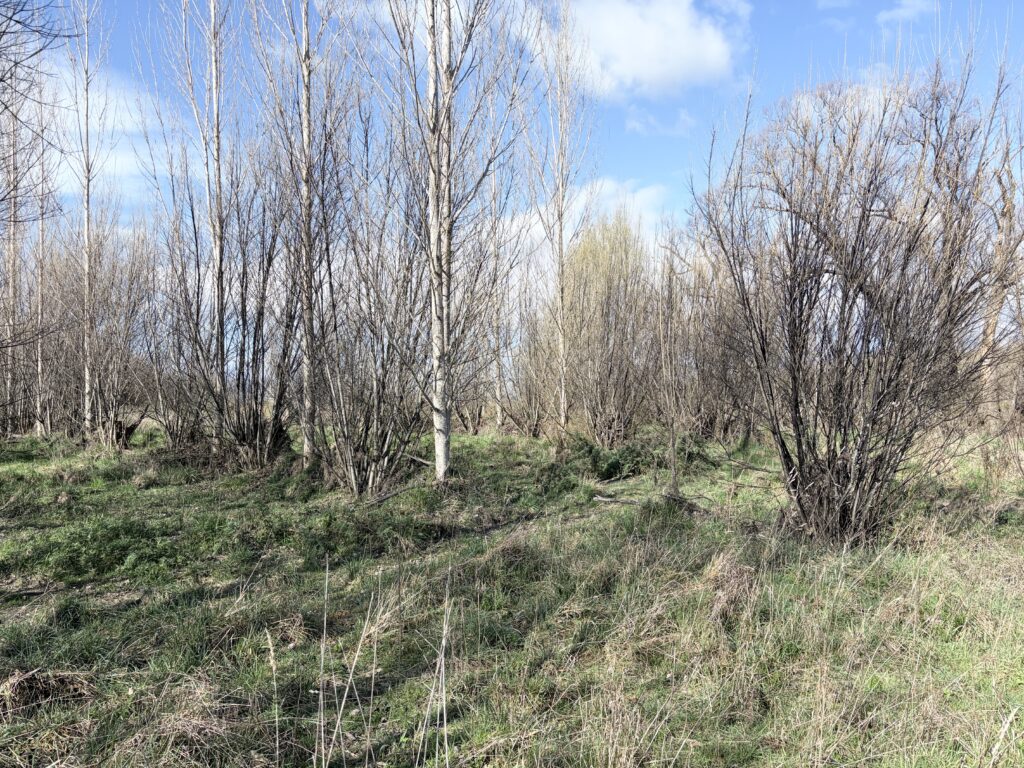
Council perspective: rules, mapping, and how engineers think about willows
Helen Forsey (TDC Catchment Advisor) then walked us through the council’s role: which stretches of river are actively managed by TDC’s Rivers Team (where landowners should check in before planting to avoid duplicated cost), and how to get advice if you’re outside a managed zone. She didn’t shy away from the fact that there are plenty of rules about willow planting and removal, and these rules are sometimes complex, so your best bet is to contact the Council and talk through your plans. This is because poorly planted or maintained willows can often result in more problems on your land than what they solve, along with negative consequences downstream, including impacts on ecologically important sites and native planting areas.
You can watch Helen’s talk below.
A few things worth knowing:
- Historic aerial maps show how much the river’s course has shifted over decades — useful context when thinking about your own flood risk.
- If you’re not sure about the rules around willow planting in your area, it is best to seek assistance from the Council.
- Where willow removal is being considered, a staged approach is recommended: establish natives first, then remove willows slowly.
Nursery expertise: species, roots, and technique
As we moved out of the sun, Jacky Friedman and Eric Appleton (Appleton’s Nursery) shared their approach to growing willows and poplars, and also shared decades of trial data on root structure and species selection:
- Root-anchoring differences between species and clones show up clearly even within a single growing season.
- Some poplar clones (e.g. Populus trichocarpa) are notably stronger-rooted and suited to erosion-risk sites; others prioritise fast growth.
- Planting tip: spray a ~1m circle with glyphosate before planting into rank grass — established grass roots release compounds that can suppress a new tree’s establishment. Once the tree’s established, use a grass-selective herbicide for ongoing weed control so you don’t harm the tree itself.
- Appletons’ use rooted poles which they consider provide better growth and survival of almost 100%.
- They can be planted with an auger or forestry shovel. If you take time to plant well, the survival will be good.
- Appletons are generally using male clones to reduce the seed spread.
- Research has been suggesting that shrub willow is best at the water edge, then tree willow further back, then contemplate poplars further set back from the river.
Watch the videos here.
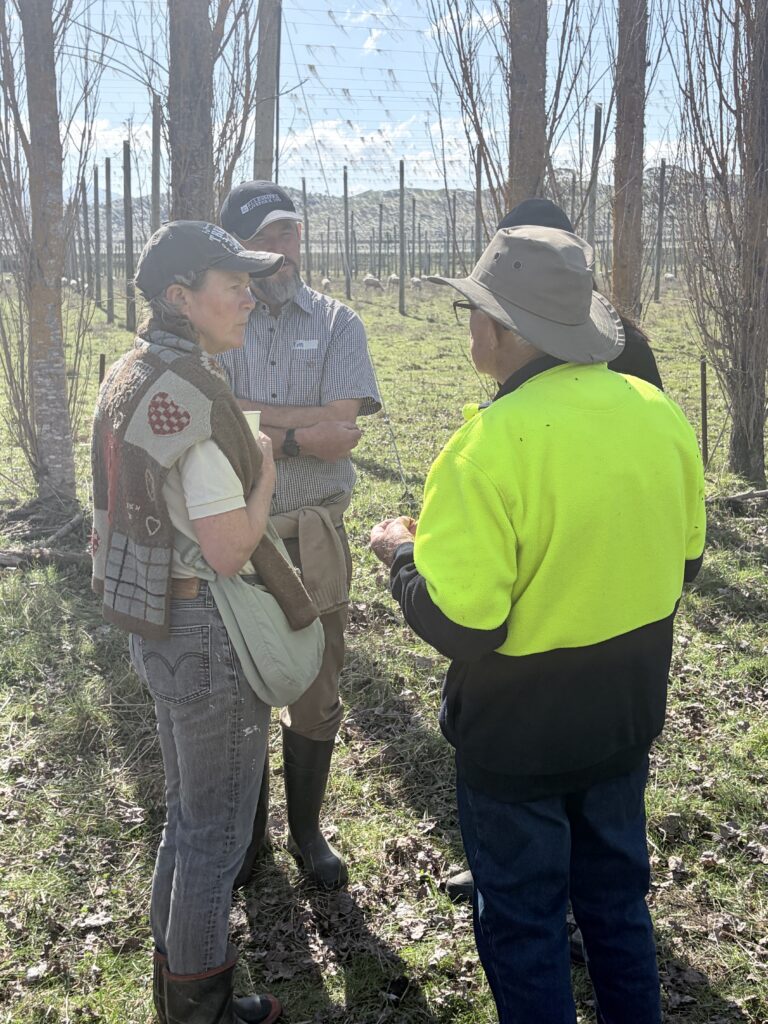
The bigger picture: a managed river at scale
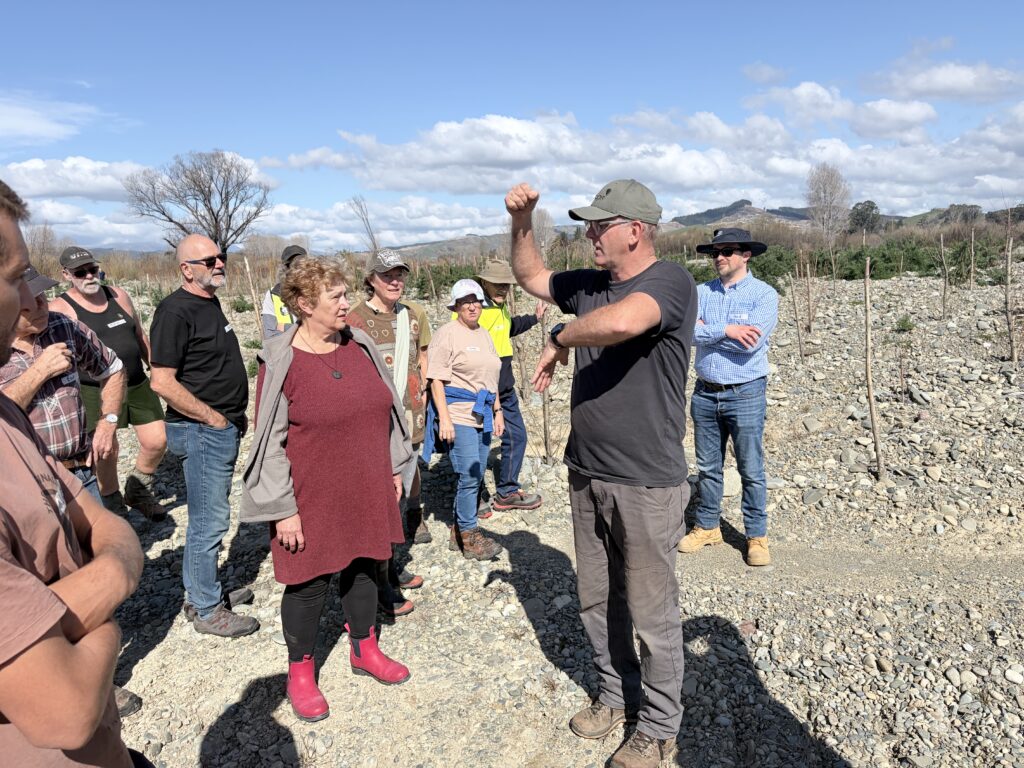
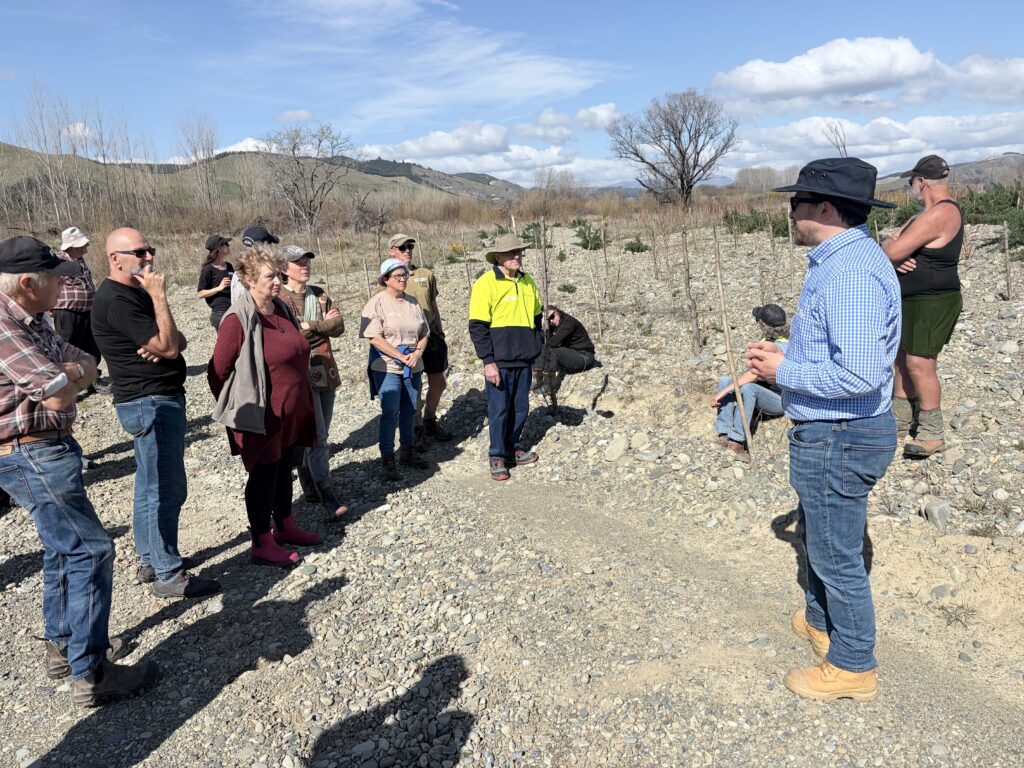
David Arseneau (TDC) closed the day by showing us how the council’s planting programme has scaled — from around 5–6,000 poles a year to 50–60,000 — and outlined a 10–12 year vision to restore the river’s resilience to something closer to how it was before decades of neglect. It’s not a fast fix: as he put it, it took 30 years to get into this state, and recovery will be gradual too. The environment the willows are being planted into is rocky which isn’t easy, so they’ve suffered some losses, but they’re getting more efficient as they go. These willows will need to be maintained regularly to prevent them getting too tall.
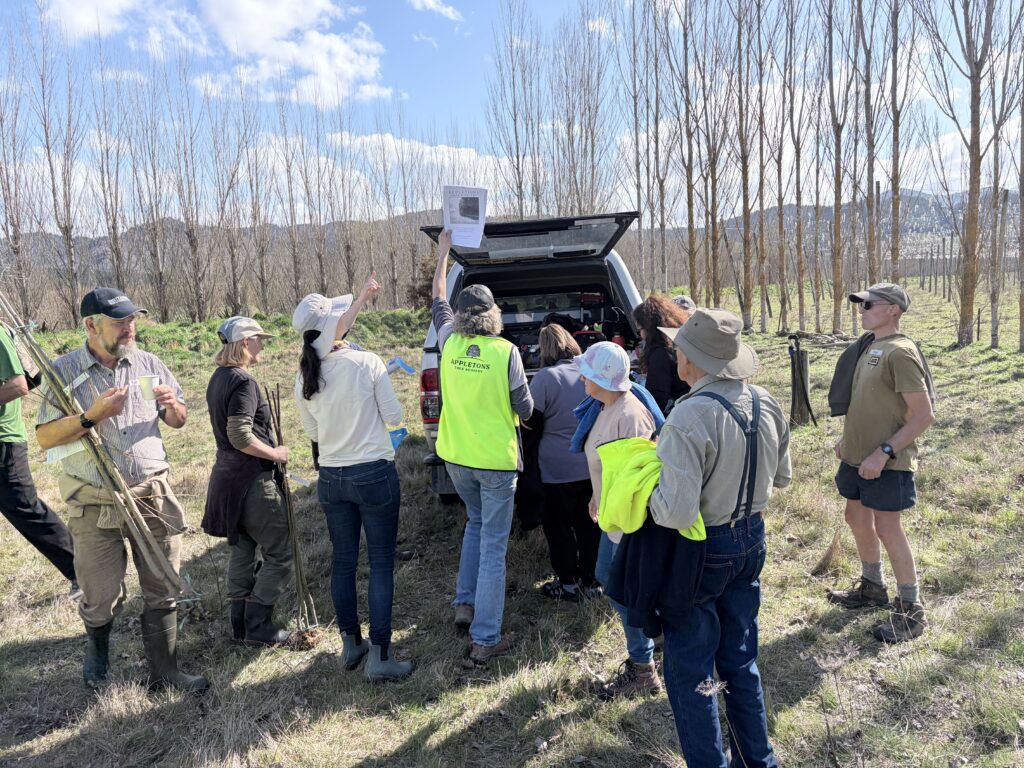
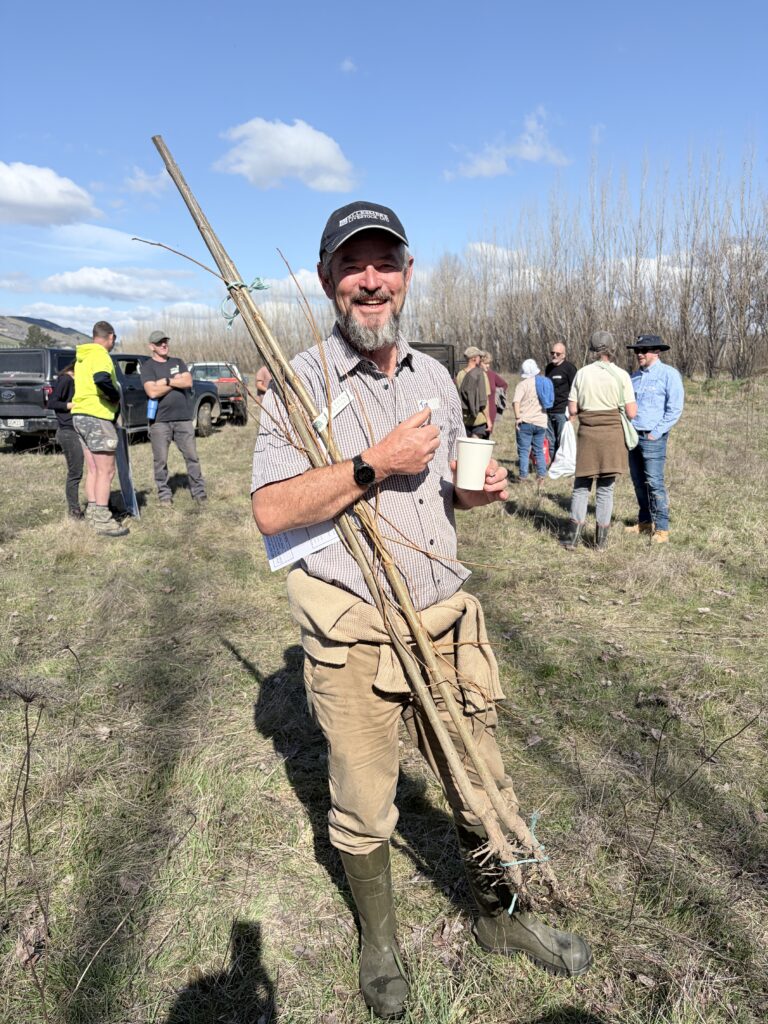
Participants even got to take away some free poplar and willow poles, generously donated by Appletons Tree Nursery.
Key messages from the day
- Right tree, right place — species and planting method need to suit the specific site, not a one-size-fits-all approach. It may be that willows are right for some situations, particularly in tributaries where there may be native plantings or ecologically important sites downstream.
- Gaps, not water, are the enemy. Water flowing through a planting is fine and expected. You won’t stop the water if you live on a floodplain. However, debris getting through a gap is what causes damage.
- Ground cover matters as much as tree cover. Bare or grazed ground scours; rank grass and established vegetation hold the bank.
- Maintenance is important – if you intend to plant willows you’ll need to think about the maintenance requirements. You can’t just plant and leave.
- This is a long game. Whether it’s a farmer’s own plantings or council’s river-wide programme, resilience is built over years, not one planting season.
- Peer-to-peer learning works. Hearing directly from another landowner who’s lived through it is often more useful than any technical briefing alone — and it’s exactly why MCC keeps bringing people back onto the land together.
Ngā mihi nui to Dean and the team at Hinetai Hops for hosting us, and to Helen, Jacky, Eric and David for sharing your knowledge on such a generous and practical day.