Mountains to sea: restoration happening right across the catchment
MCC’s team is often blown away when learning about the restoration efforts of just one landowner. Often these landowners have been working away over years clearing weeds, planting, fencing, checking, trapping, and more clearing of weeds, sometimes amounting to thousands of plants, wetlands bought back to life, birds returning and waterways shaded and hours and hours and hours of labour.
When we consider the collective efforts of multiple landowners across the whole catchment we start to see something arguably even more impressive: a patchwork of restoration work — riparian, wetland, hill-country, lowlands, ex-forestry — stretching from the upper catchment such as Tapawera and the Baton, through Ngātīmoti and the Motueka Valley, down to Brooklyn and West Bank Road and around Motueka township itself. While we have a long way to go to restore the land and to creating thriving habitats and native species, the transformation happening in front of our eyes (but often hidden from public view) is miraculous and heart-warming.
We’ve recently been walking the land and hearing about a number of these restoration journeys and we profile eight of them below, so you can also start to get a picture of the scale of the work in the Motueka catchment.
James Griffiths and Sky Davies, Awariki Farm
Awariki is an 8-hectare mix of blueberries, sheep and cattle on the Graham River, close by Kahurangi National Park. It’s prime whio country too, with the birds regularly seen and known to have bred nearby.
James and Sky have put around 4,000 natives into stream and river margin areas over the last eight years. They are also part of the Farmers for Whio trapping network, with 12 traps on our property
The next stage of planting is a 1,300m² riparian stretch — part existing plantings, part weedy tangle of willow, sycamore, honeysuckle and periwinkle. Contractors and WWOOFers are clearing this area this summer and autumn, ahead of infill and extension planting next winter including mānuka, kānuka, karamū, koromiko and toetoe on the drier margins; harakeke and tī kōuka at the water’s edge.Long-term, they’re aiming to plant over 5,000 natives on the property.
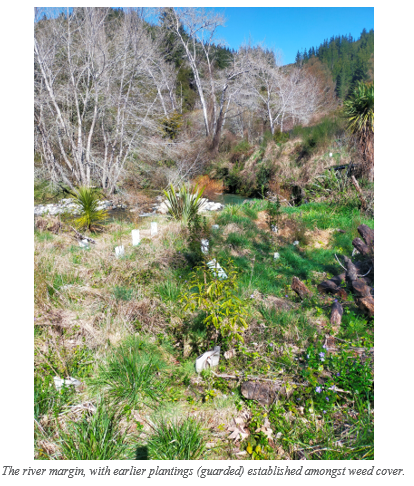
Ollie Langridge, Rewilding Wetland Restoration Project, West Bank Road
Ollie’s project is one of the standout stories in the catchment — over 17,000 eco-sourced natives planted over five years, alongside predator control, weed management and natural regeneration, on a property that’s also become a genuine community hub: 100–120 international volunteers a year, open to the public as a restoration showcase, and winner of MPI’s 2026 Growing Native Forests Champions Award in the Lifestyle Category. The current focus is a rare, largely intact wetland — over 99% of the original lower Motueka wetlands have been drained or lost — with 1,000 more wetland plants earmarked to follow the natural gradient from raupō and sedges through harakeke and tī kōuka to kahikatea and pukatea on the higher margins. Long-term planting goal: 50,000+.
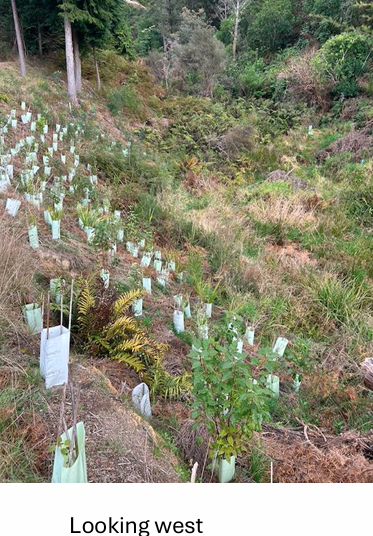
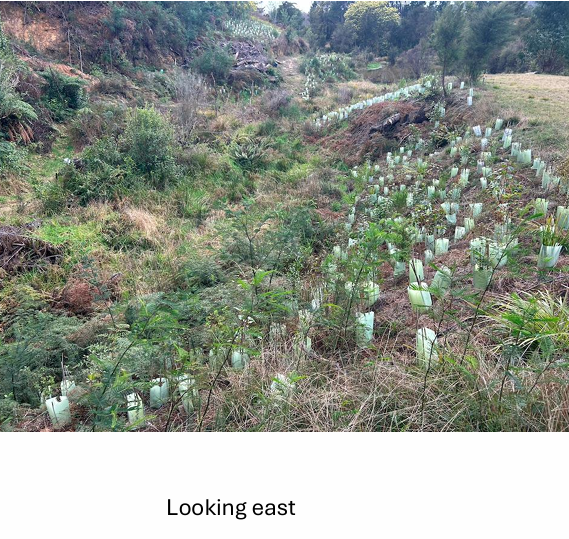
Jacob Lucas, Stoney Ridge, Motueka
Jacob’s 2023 and 2024 plantings on his Stony Ridge Way property are established and doing well as can be seen in the photos below. The concept behind the planting was to extend native plant diversity around a small patch of remnant mahoe, and to plant new areas with natives on the 5ha property over time. His initial donation of nearly 200 plants from Trees That Count was the catalyst for this planting programme, which will hopefully see around thousands more additional natives planted over time.
He’s proposing 300–500 more plants for 2027, focusing on a more challenging area, with gorse, fern and banana passionvine control needed to prepare the site. His approach favours fast, canopy-forming species — akeake, kānuka, mānuka and pittosporums — planted densely to shade out weeds early. Beech, tōtara and rimu will follow once the colonisers are up.
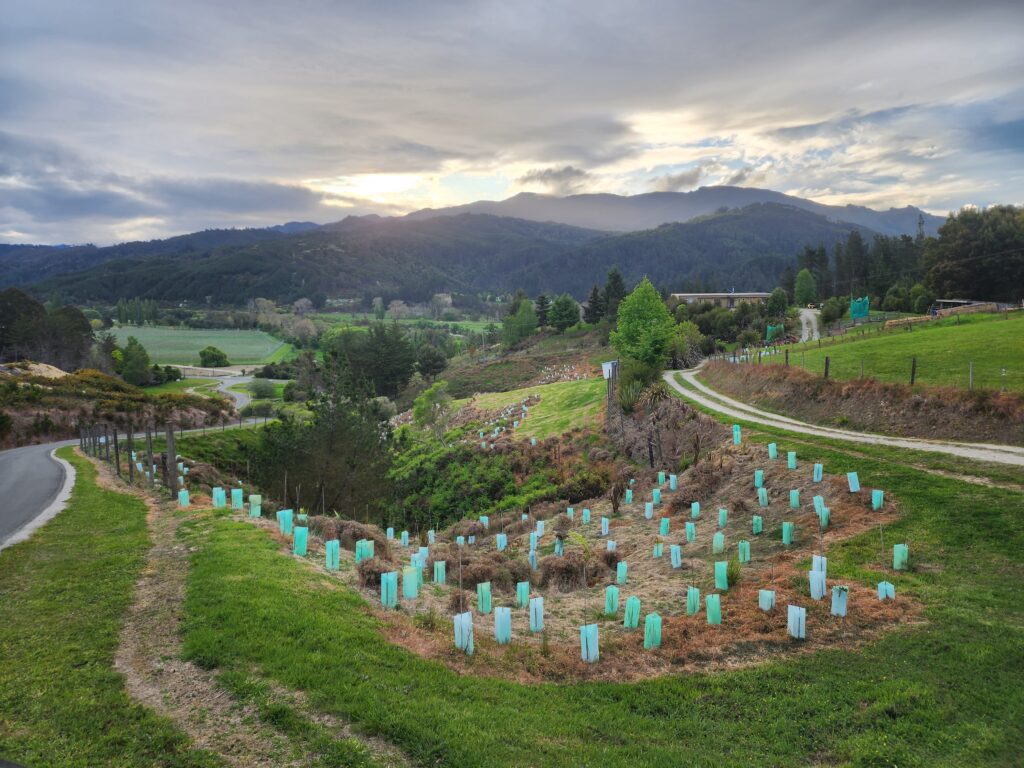
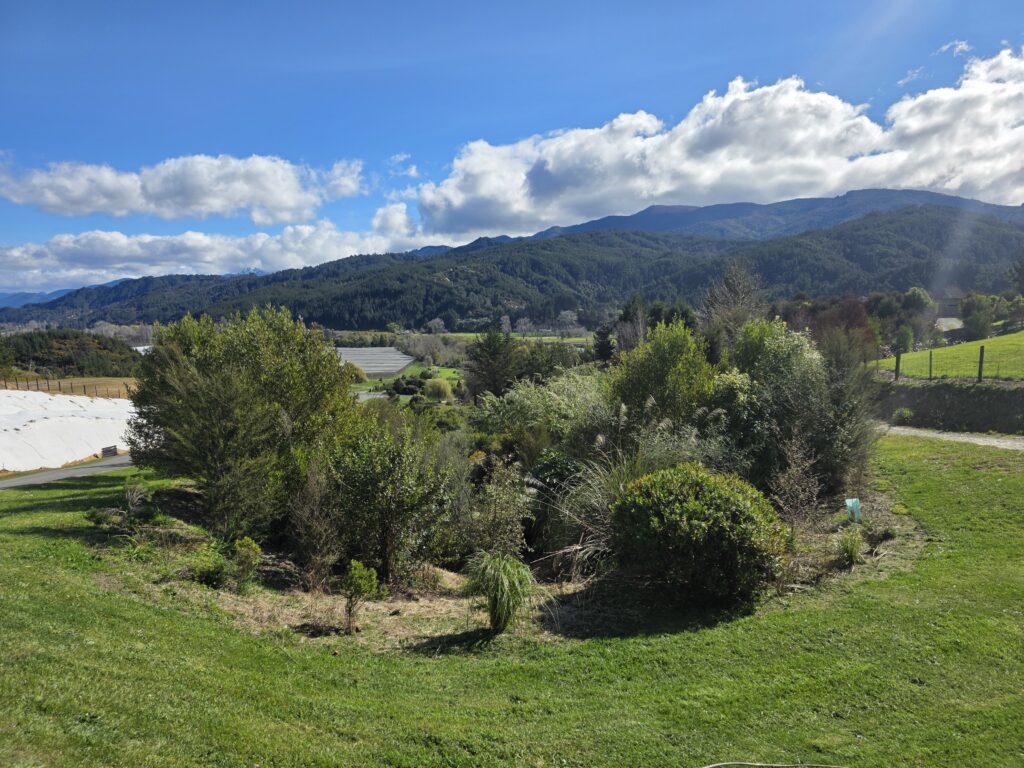
Mark Staples and Steph Beath, Brooklyn
Mark’s steep, slip-affected block above the Motueka River has had over 5,500 natives go in over five years, achieving around 95% survival despite regular dry summers. A lot of that comes down to what’s already growing there — strong natural kānuka regeneration doing much of the early work. “There is a lot regenerating by itself which is fantastic, and I’m trying to fill it out,” Mark says.
It’s entirely his own project, shaped around the site rather than a fixed programme. Small pockets get cleared of gorse and bracken and planted progressively, staying manageable as he goes, with mulching (green waste from friends, pine logs from fallen trees) helping build the soil back up. Older stands are being infilled and extended down the gully and across the slip face as capacity allows.
For 2027 he’s after 1,000+ more across six areas, including starting to think about in-planting of the bigger canopy trees — rimu, beech, tōtara — as the site matures. Long-term goal: 10,000+, with the ultimate vision a fully restored native forest, complete with walking tracks and habitat for birds throughout.
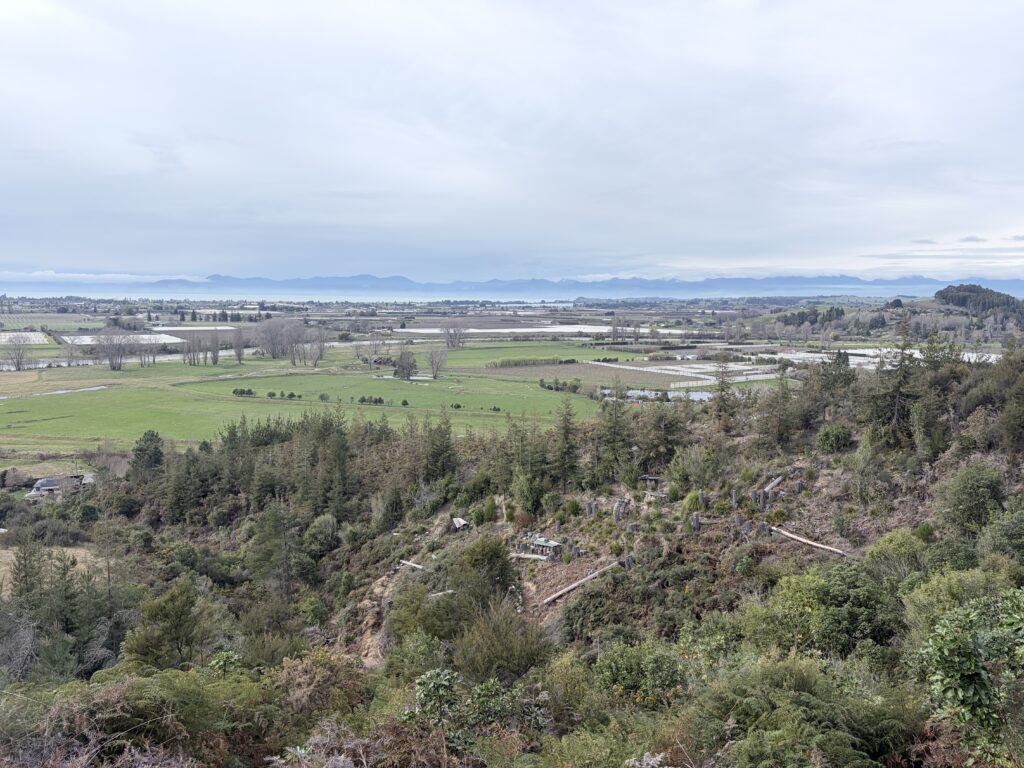
Hubert Altenburg, Baton Valley
Hubert is looking after 100ha of QEII bush, and 8ha of river flats, steadily expanding the QEII block by planting former pasture and pest-plant-choked ground. He’s cleared barberry, hawthorn and old man’s beard from pockets now regenerating naturally with coprosma, and planted around 2,000 eco-sourced natives in the last three years — including a former sheep paddock now being progressively replanted. His 2027 area, a cleared 2.25-hectare terrace fed by a hillside stream, will take 500–1,000 more.
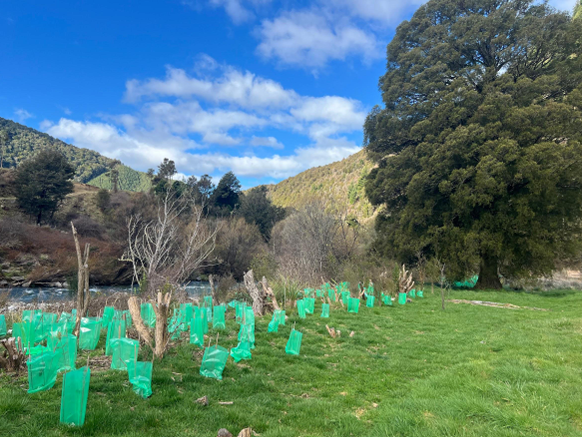
Tall guards handle the frost and wind risk near the Mt Arthur Range, and around 50 traps plus hunting and a tracking dog keep possums, feral cats and hares down. It’s clearly a labour of love — he’s out checking on the plants’ progress several days a week, and it shows: mistletoe spotted on a recent walkthrough is a sign the possum control is working, and whio have been calling on the property. Long-term goal: up to 10,000.
Mark and Lisa Quinn, Motueka Valley / West Bank Road
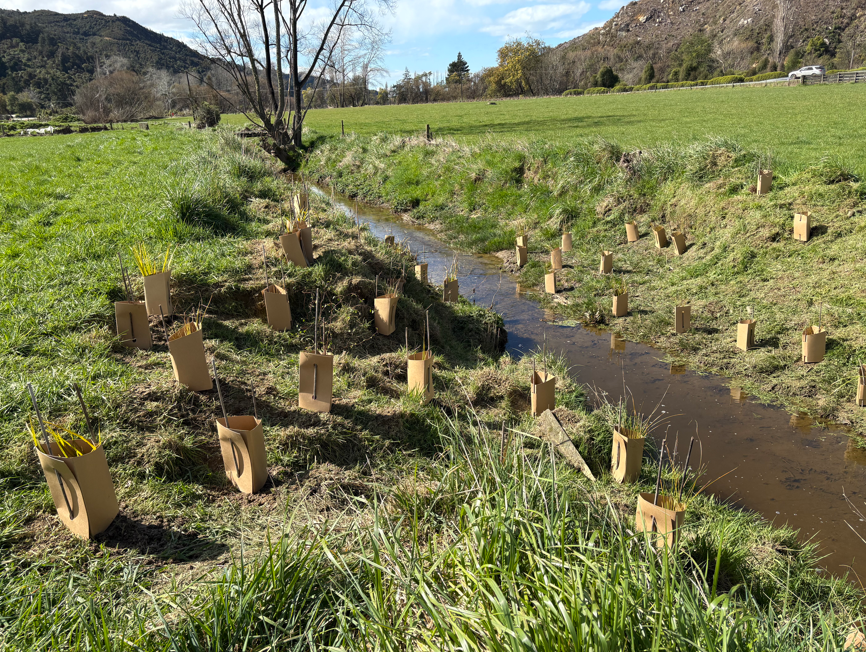
Around 1,500 natives are already in the ground here, over 1,000 in the last three years — reestablishing wetlands, replanting the Middle Ditch and part of Bellbird Creek, and putting back road boundary trees lost in the 2025 double flood. “The flood showed us where we need to plant to help minimise erosion and create habitat,” they say. Their 2027 plan spans nine areas — from the road boundary and farm drive to the wetlands, three farm ponds, and further up Bellbird Creek and the gorse hill behind it — all in service of their three Bs: birds, bees and beauty.
Gavin Strachan, Waiwhero
Gavin is a fourth-generation landowner on a 60-acre family farm. He’s been steadily reclaiming what a century of stock grazing took out — a bush remnant fenced off from 2000, then 3.6 hectares more retired from 2015 and cleared of heavy bracken, blackberry, old man’s beard and broom. He runs his own nursery, growing much of his own seed and cuttings alongside funded plants, and after some early losses to drought, frost and hares, a switch to tree protectors got him to around 90% survival of his plantings. He’s hoping to plant around xx trees next year, and his long-term goal is to connect the plantings into a single corridor and restore the property’s original lowland black beech–podocarp bush — black beech being, in his words, “the holy grail.”
Bridgit and Ross Knowles, Waiwhero
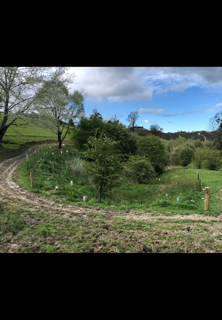
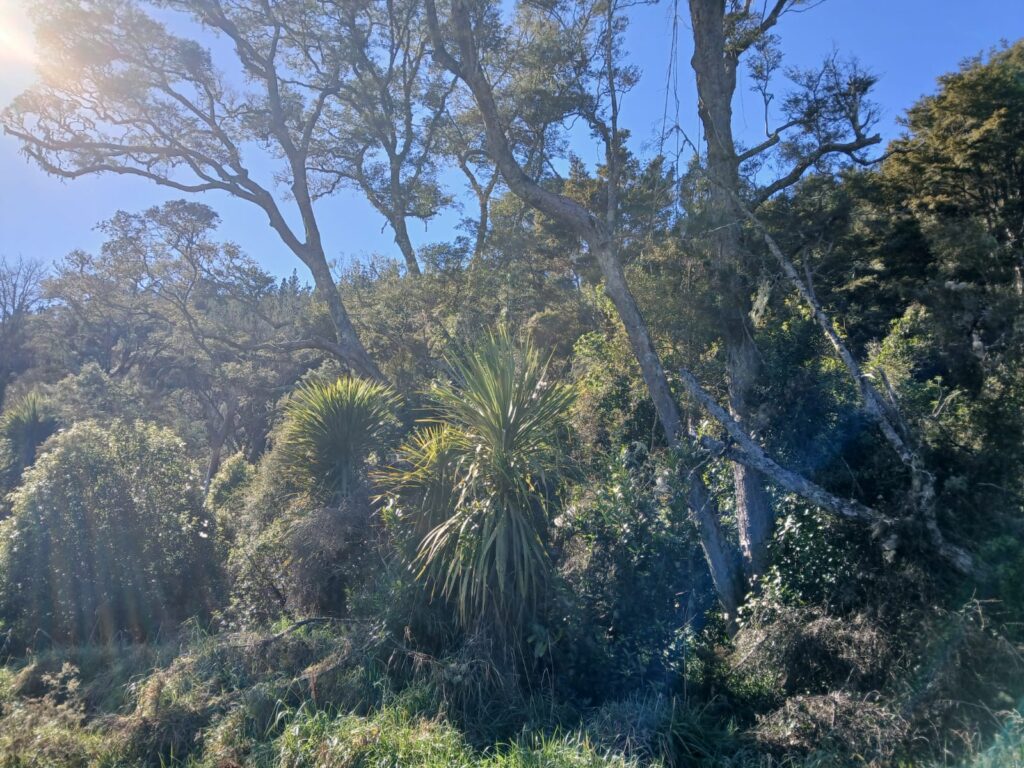
MCC’s Lucy Maxwell recently walked the Waiwhero Creek with landowner Bridgit Knowles. Along the way they saw native birds and found empty freshwater mussel shells. Along with protecting her QEII covenanted native bush, Bridgit’s planted over 4,000 natives across their property in the last seven years, with the goal of restoring the full length of the Waiwhero that runs through her land. “Our next challenge is to plant the area between the road and the stream,” she says. “We’re excited to see mahoe coming up in places already, but the area’s covered in blackberry and would need spraying out, mulching, then planting. Ultimately, expanding our covenant is our goal.”
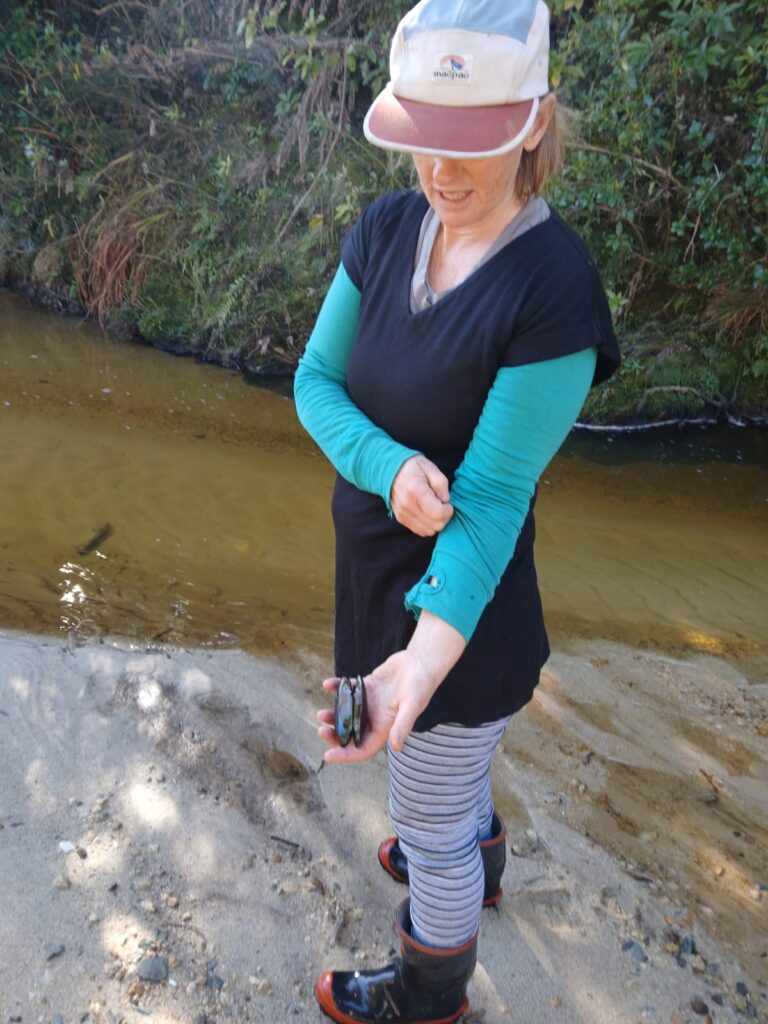
And that’s just eight of them!
These are eight landholders doing great work — but they’re part of a much bigger picture – the tip of the iceberg really. This year’s Trees that Count application includes the planting plans of 16 landowners in total, largely to extend plantings already underway on creek and gully country in the Motueka Valley, ex-forestry blocks on Waiwhero Road, storm-damaged riparian land, and river, wetland and biodiversity corridors right across the catchment — many with long-term goals in the thousands.
Since 2022, MCC’s planting records show more than 122,000 native plants have gone into the ground across the catchment, drawn from right across the board: Trees That Count allocations, community nurseries, koha and donated plants, MCC-funded purchases, and landowners growing or buying their own. Trees That Count itself has contributed over 20,500 of those, reaching more than 100 landowners, community groups and iwi projects catchment-wide since 2019.
We’re hoping for a strong allocation of plants from Trees that Count and other sources to support landowners for the 2027 planting season. Cost is often a barrier to restoration plans. That and weed and animal pest pressure, extreme weather events and time.
Support from MCC
None of this landowner led restoration happens because of MCC — it happens because of landowners putting in the work themselves, year after year. What MCC’s Biodiversity and Restoration (BAR) group does with the support of MCC’s paid catchment coordinators, is work alongside them: a small, active bunch of volunteers and local experts — around eight members meeting every four to six weeks — who help source funding like Trees That Count allocations, offer guidance when it’s asked for, run community nurseries, events and workshops that build skills and connection across the catchment.
It’s volunteer effort in its own right, and it adds up. Between 2022 and 2025, MCC and its volunteer thematic group members helped establish 3 community nurseries, supported the creation of 3 new wetlands, backed over 600 metres of fencing, supported the planting of over 100,000 trees, distributed 147 predator traps, and run 7 weeding bees — all powered by more than 4,110 volunteer hours across 158 meetings, hui and events.
Every landowner planting 300 natives or 20,000, with or without a bit of MCC support behind them, is helping stitch this catchment back together, from the mountains to the sea.
Previous Story
Willows for flood mitigation - MCC field trip
Next Story