When I visited Jill and Martin Bonny’s this June, the photo albums came out first. Decades of them. Snapshots of children, paddocks, floods, and trees planted at every stage of the family’s life. Sitting in the cottage Jill grew up in — 115 years old and still standing dry — and hearing their collection of stories over the generations, you get the sense that this family’s history and legacy is strongly tied to their love and care for their land.
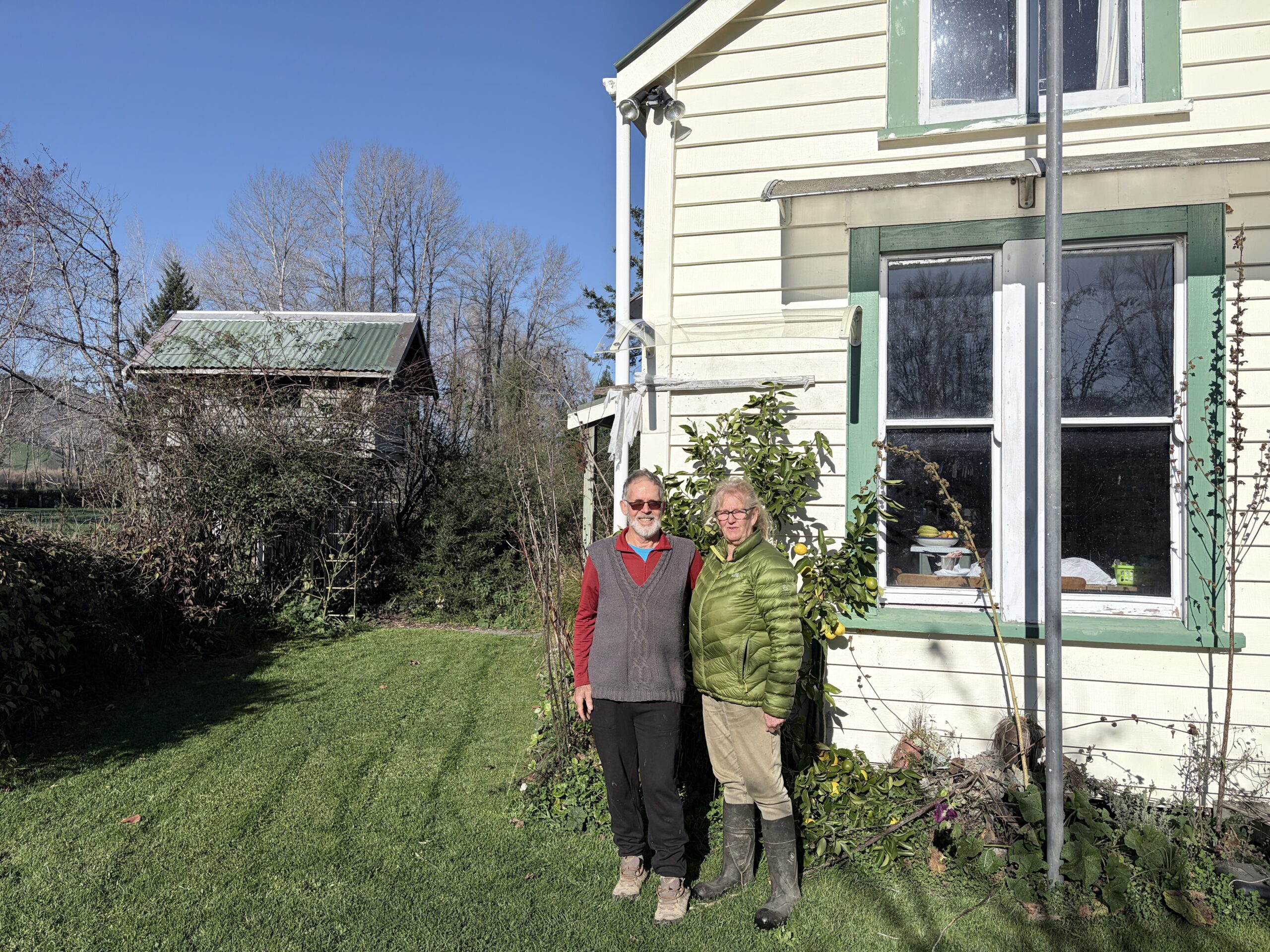
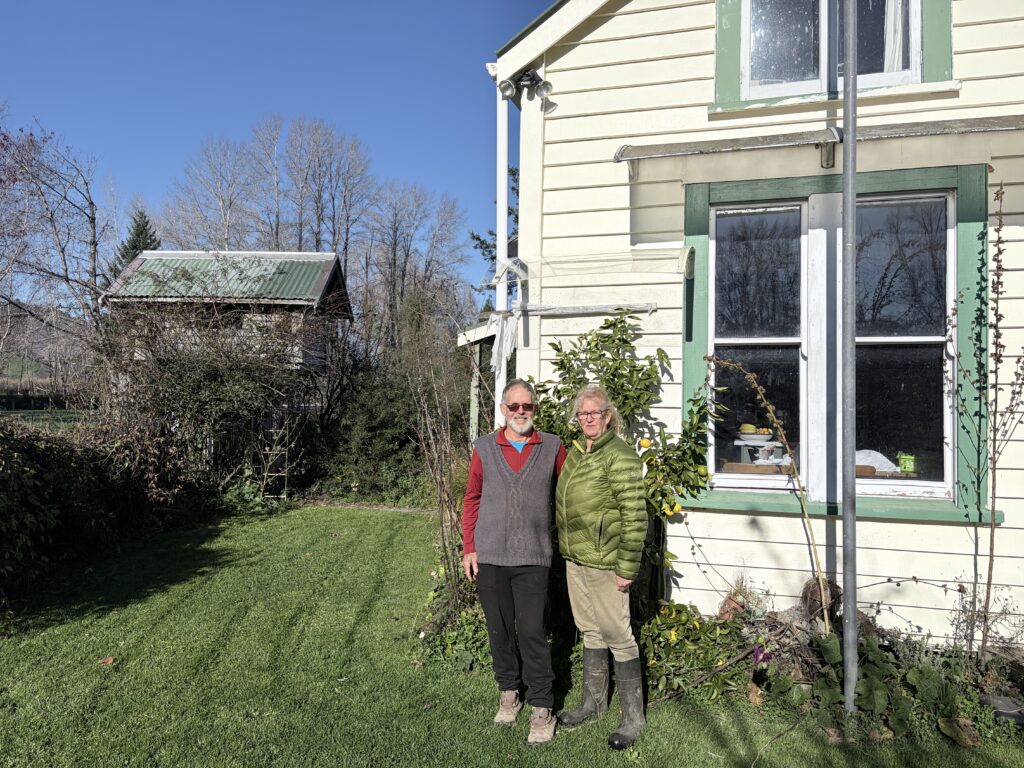
Martin and Jill Bonny outside their home
A farm built around water
“We live on a floodplain,” Martin Bonny says. “So what’s happening? Lots.”
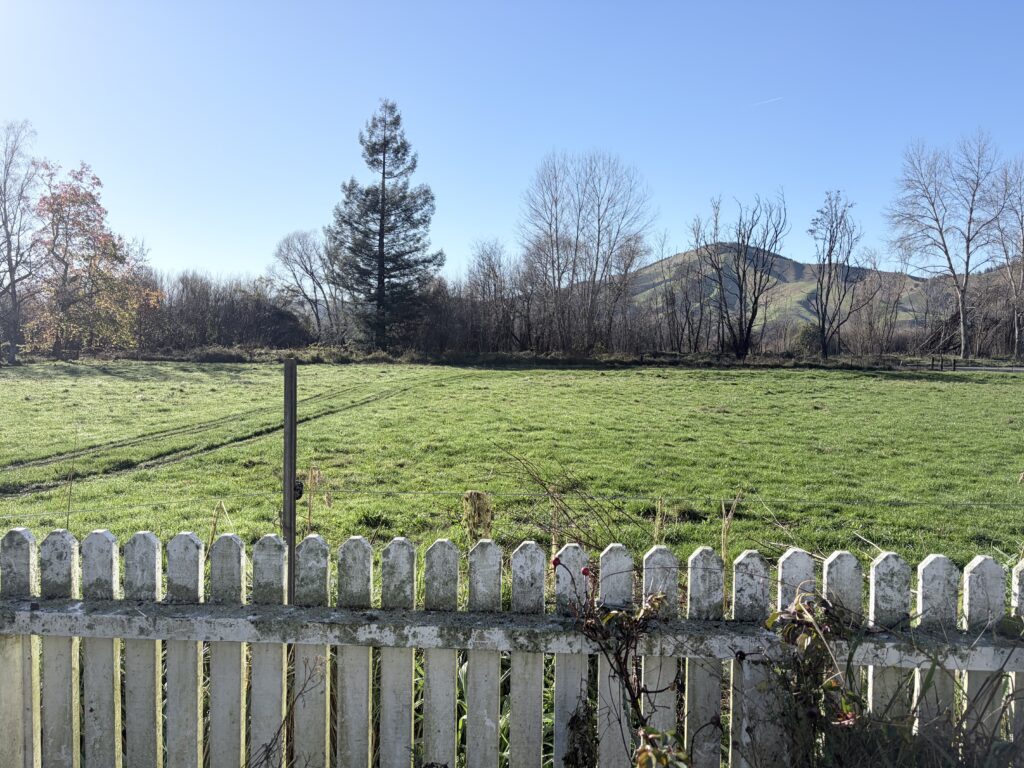
Once we’d looked through the photo albums Martin gave me the full farm tour. He first showed me the contouring on the lower lying land around their cottage, shed and front paddocks to encourage water away from their buildings and provide a greater sense of safety from future flooding.
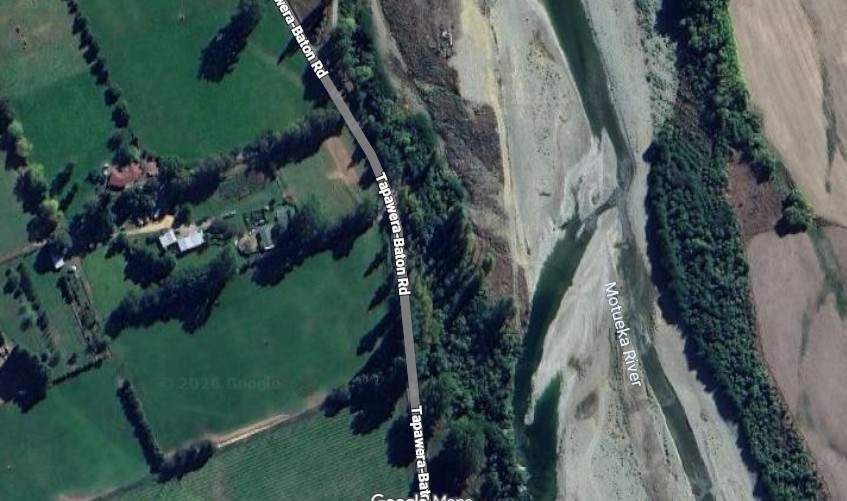
This is necessary because the Motueka River is only approximately 25 metres from their front boundary, and when the flows are up, water, gravel and debris escape onto the floodplain. In 1983 Martin explained that flood waters took out the public road and “ate a hole” in front paddock around part of the farm, and in earlier decades the Glenrae stream blew out leaving gravel where pasture used to be.
An aerial image of the Bonny's property in relation to the Motueka River
Last year’s floods came close to reaching some of their buildings, and 20mm of water did enter their nearby rented house. But Jill and Martin are pragmatic about these events – an attitude similar to other riverside dwellers we’ve talked to. The couple don’t have any plans of moving from their much-loved home, and instead of waiting for someone else to solve the problem, they’ve looked for solutions themselves. Over several years they’ve built a network of small, practical flood-management measures: earth bunds 500–600mm high to steer water away from the cottage, shed and other buildings, widened swales two to three metres across so water moves rather than pools, and created a shallow retention area under a metre deep to hold water briefly before releasing it slowly. Treeline plantings slow water flows and sieve out debris
Martin calls it “flood farming” swales gentle enough to drive a tractor through allowing the land to keep producing while being set up to manage water if it needs to. Spreading the flood water dissipate energy and reduce damage .
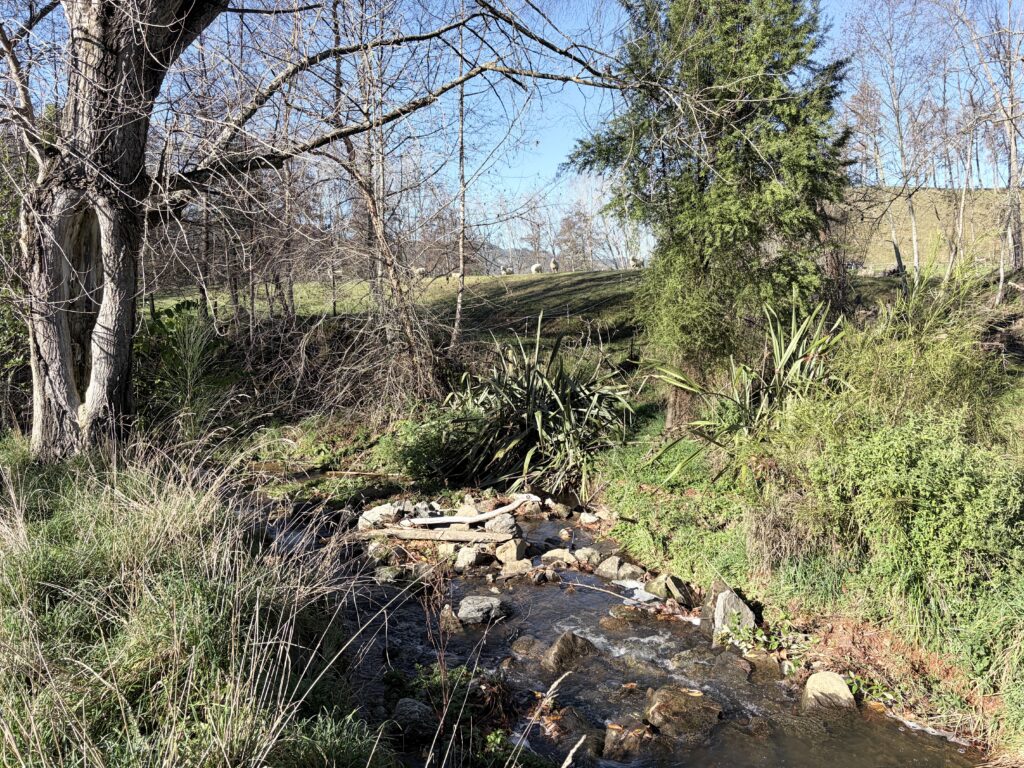
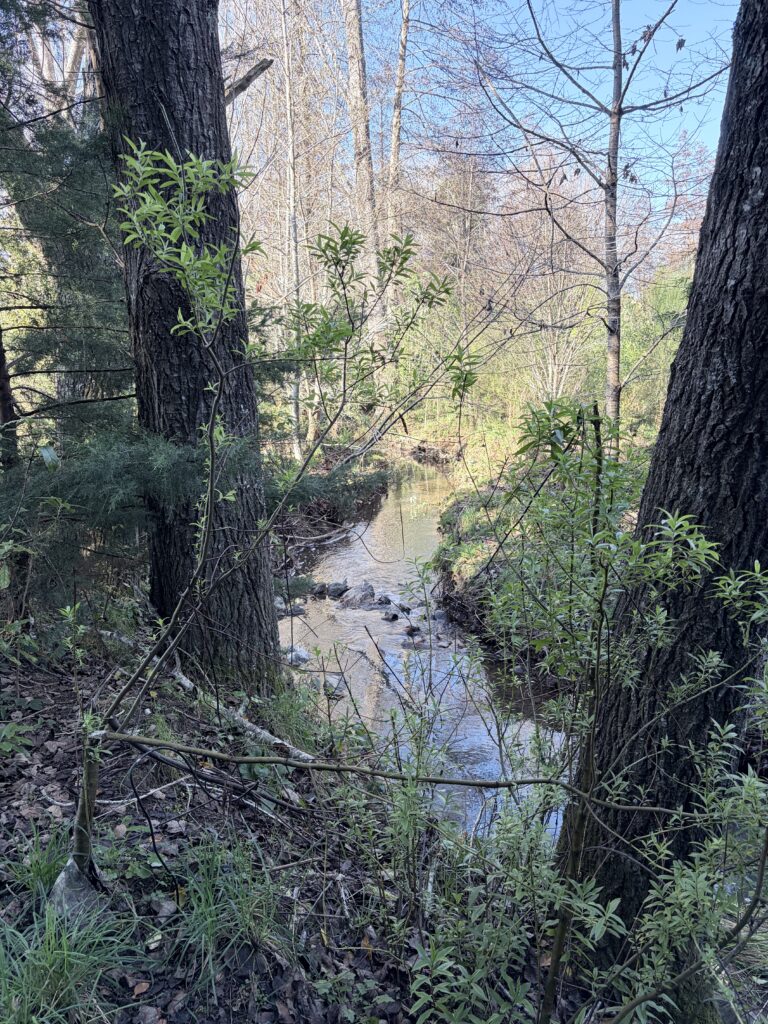
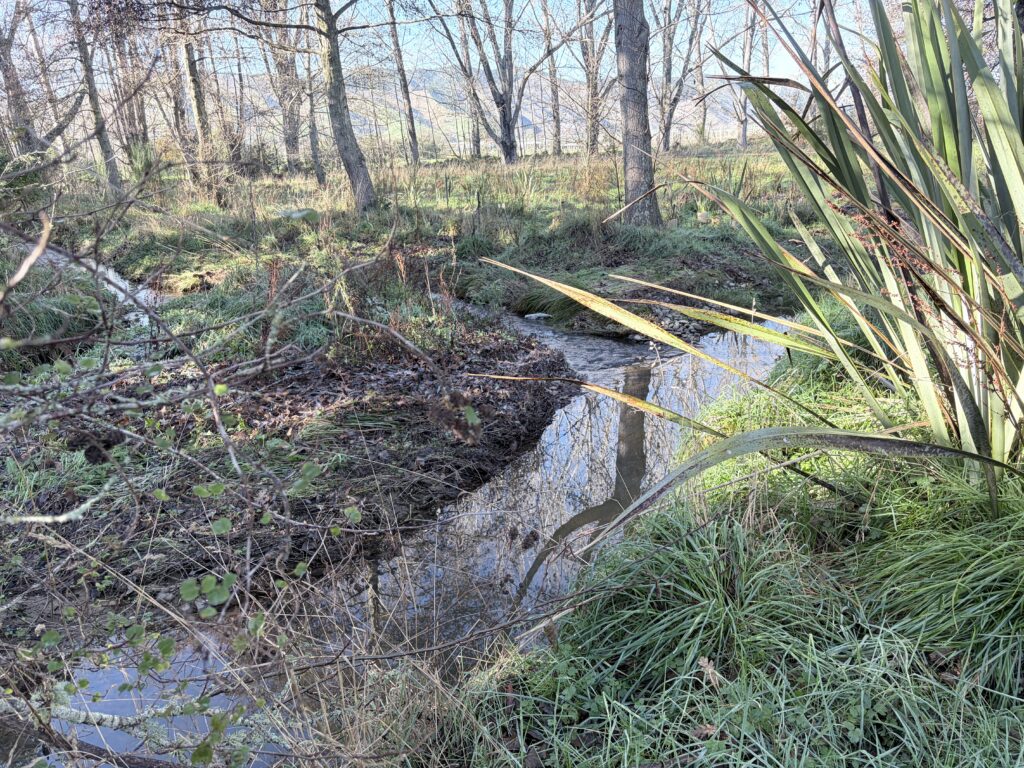
The many waterways weaving through the property are not just seen by Martin and Jill solely as a flood risk however. They are a precious part of the character and life of the Bonny’s farm. The Glenrae and Eely Creek (named as such due to the eels living there) thread through the lower part of the farm, with Eely Creek’s spring-fed flow keeping the lower Glenrae alive even in summer droughts. The Scarecrow Gully creek runs down from neighbouring forestry into the dam. “These three waterways enhances the beauty and uniqueness of the property but comes with associated challenges of maintenance”.
Gentle land contouring
To understand the health of these local waterways, Jill, Martin and other family members have gotten involved in community based freshwater monitoring, supported by Kate Radloff, their former tenant.
A legacy of planting
Flood resilience and the ever-changing nature of the water flowing through the property is only half the story. The other half is trees — thousands of them, a mixture of exotic and native, planted over three generations and many with their own memories and meaning.
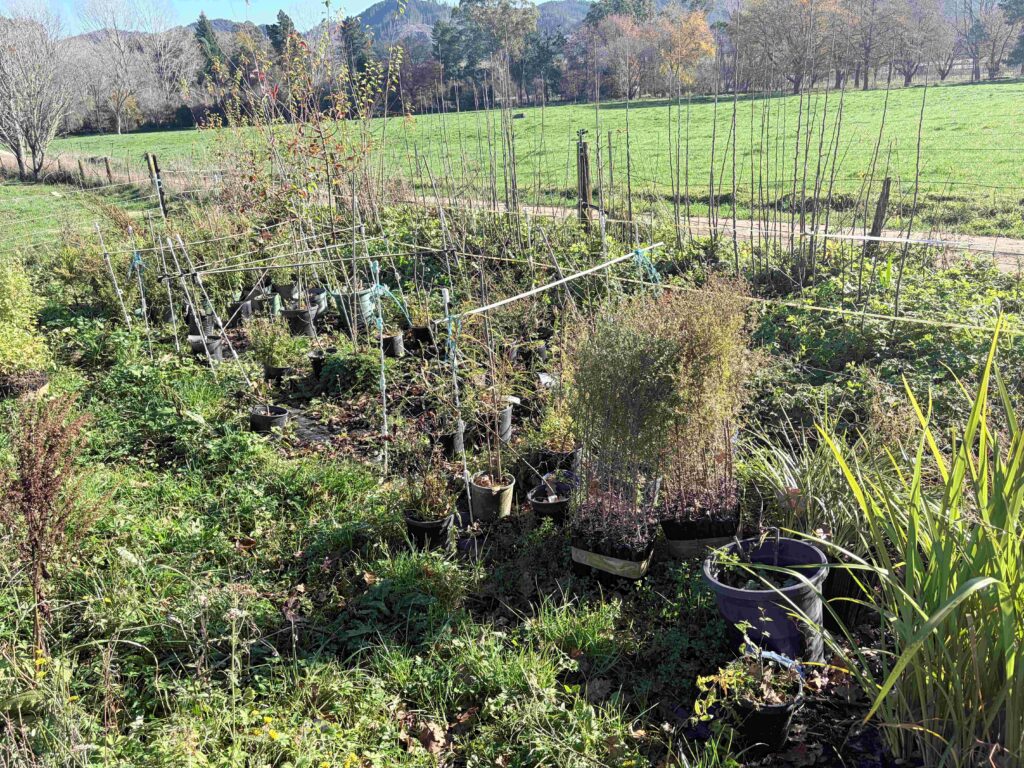
In the mid-1950s, Jill’s father, Harry Hancock, tried to convince the local Young Farmers group to start a native tree nursery. He “was a bit ahead of his time,” Jill comments, but the idea stuck. Harry planted specimen trees, fenced waterways, and set the tone for what the farm would become. Martin now has his own small tree nursery, with plants there ready for this season’s planting, although he admits he’s had less time this year because of the flood clean up.
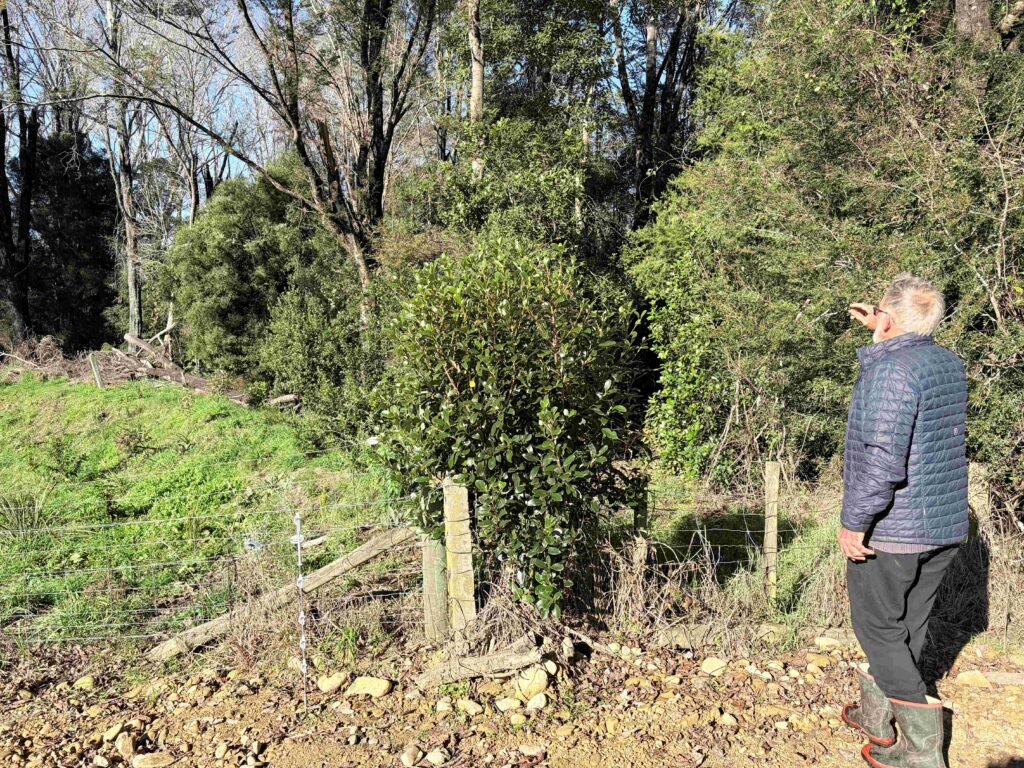
Part of Martin's native nursery
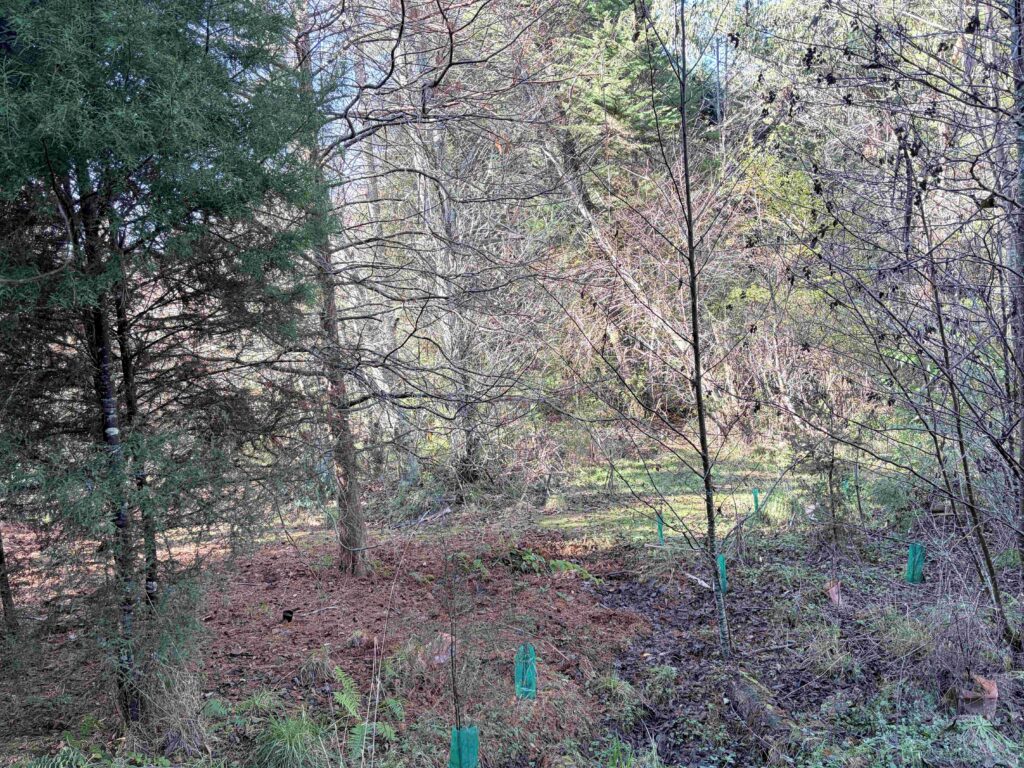
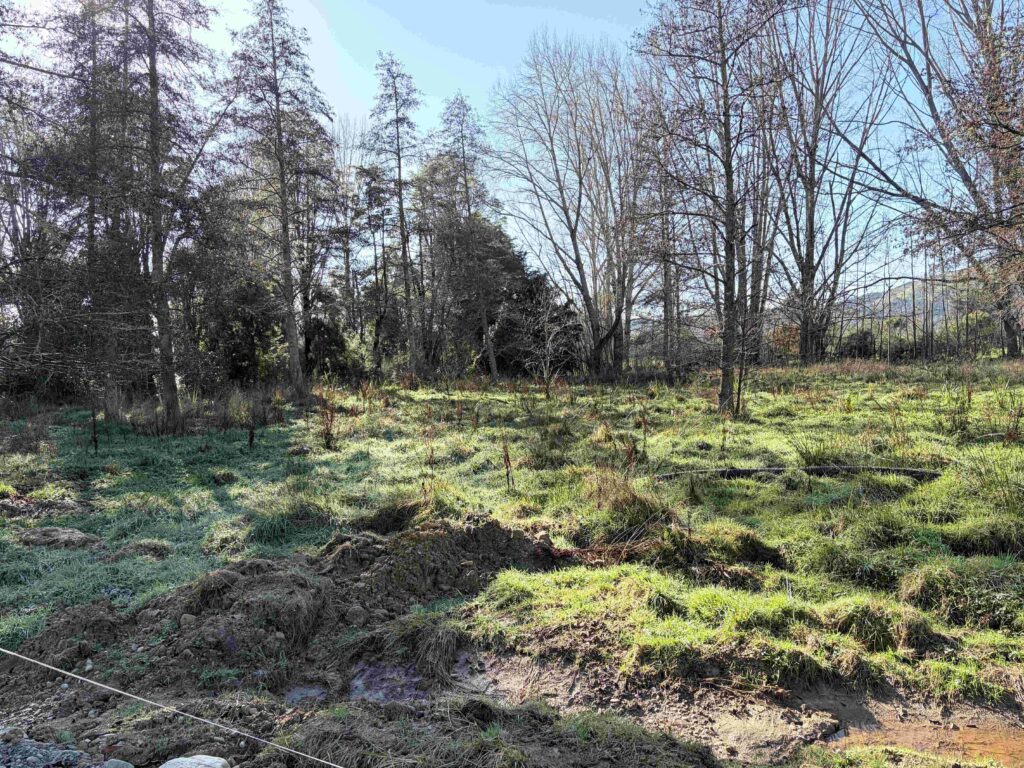
A former area of planting re-establishing
A mixture of exotics and natives planted over time
Eely Creek was double-fenced and planted on one side “in Barbara Stewart’s days”, (a former NZ Landcare Trust coordinator). The other side was deliberately left unplanted, as the creek needed to be dug out from time to time, and they wanted to keep that access. However the shade of trees has eliminated the water weed problem and excluding animals, has stopped the silt build up. So for the last 30 years the creek hasn’t required any maintenance .
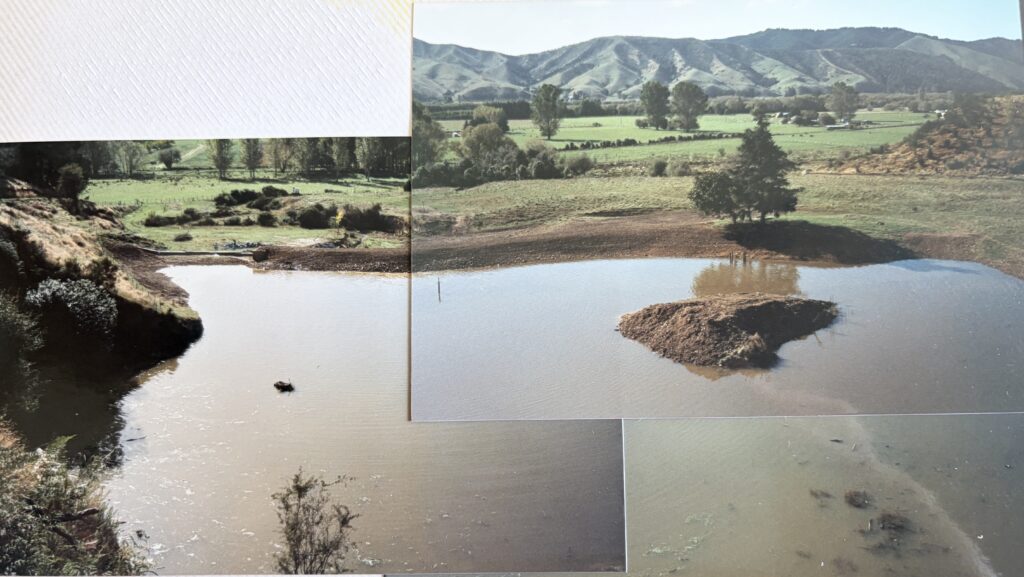
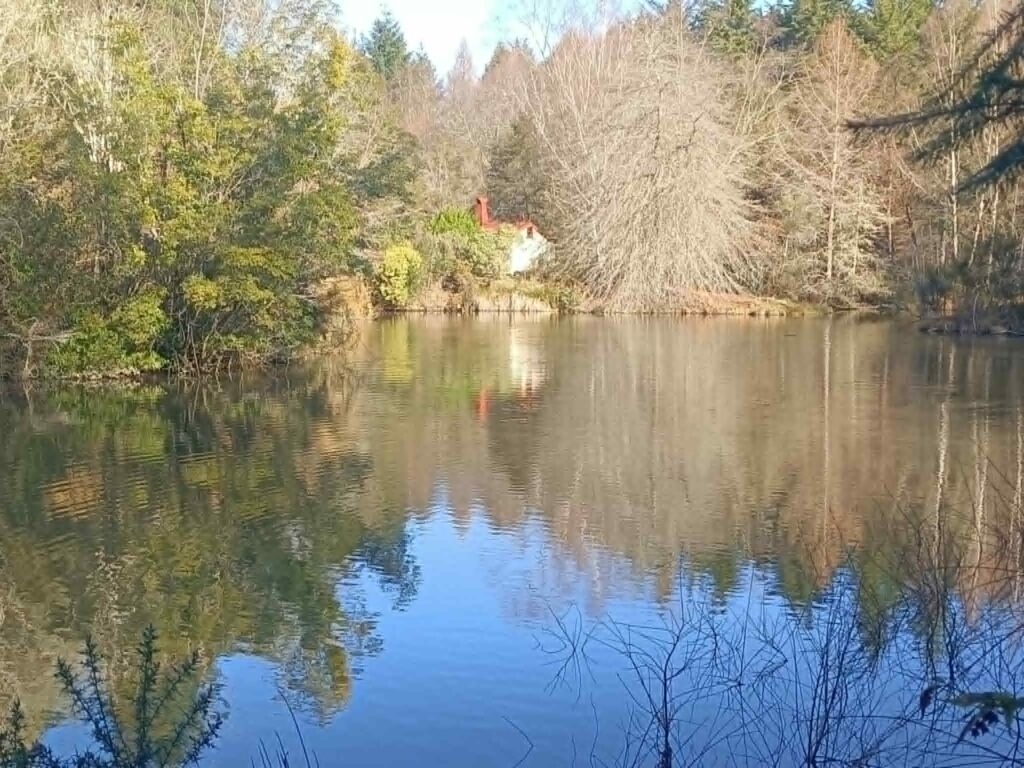
The conservation dam was Harry’s idea first — he’d wanted to build one years earlier, but it never went ahead. Martin picked up the idea again in 1992, and this time it happened. “Purely a dam for amenities. Birds,” Martin says of its purpose. Planted around with a mix of natives and exotics, it’s now a thriving pocket of habitat, complete with a jetty and — by Martin’s account — “heaps of eels.”
An old photo of the conservation dam
A newer photo of the dam
A low, wet paddock that had been pushed hard for pasture eventually won the argument. “It’s not working,” Martin remembers thinking. “Why did I mess up this nice bit of native area and try to put pasture on it?”
Former wetland being planted up with harakeke (flax)
bit of native area and try to put pasture on it?” It’s now a re-established wetland planted with young harakeke (flax). (Martin has learnt some techniques to ensure the success and efficiency of planting flax in such a location. He’s found using cardboard protectors enhances the growth and reduces the need of herbicides.
One paddock, “Jubilee,” named as such as it was planted for the Queen Elizabeth II 70th Jubilee tells a story of community effort — planted through a working bee with local school groups and Trees That Count plants, barbecue included. It’s a reminder that restoration here has never been a solo project.
Family, continuity, and thinking long-term
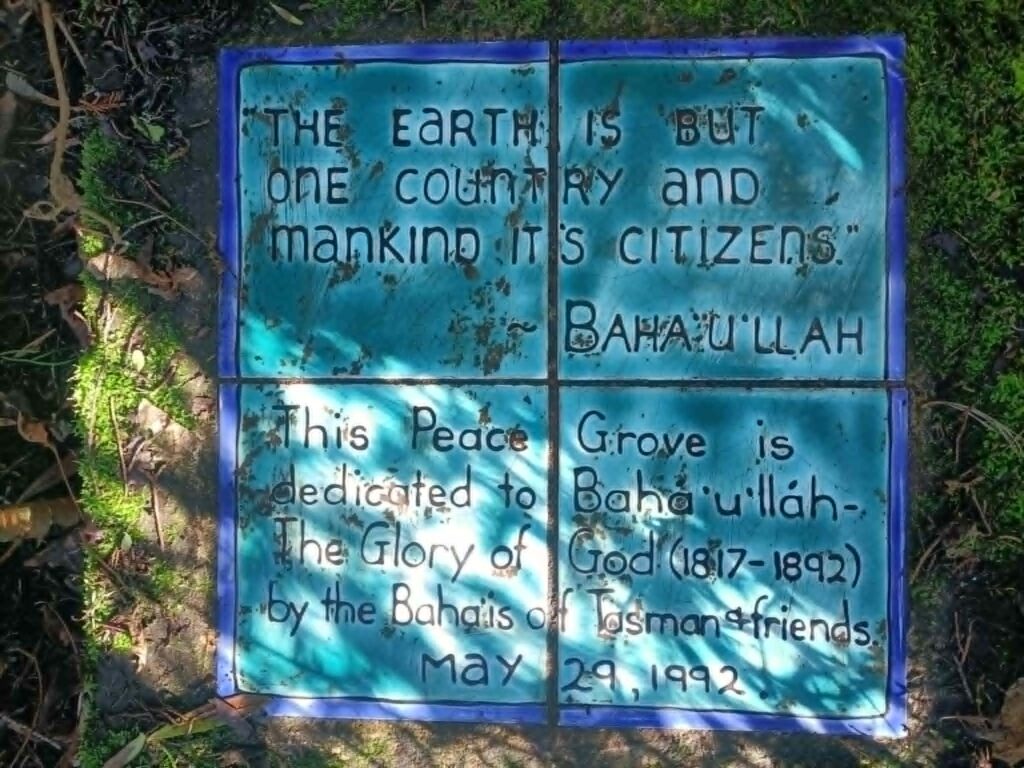
Walking the property feels like walking through the family photo album come to life: trees planted by Harry, poplars planted the year Jill was born, timber milled on-site to renovate the cottage Jill grew up in — timber from trees Jill herself planted as a girl, seven or eight years old, decades before they went back into the walls of her childhood home. And even a buried time capsule and a recovered DOC hut!
Their forestry block tells its own story of resilience: a stand planted thirty years ago was flattened by a storm and had to be replanted, and a more recent windstorm brought down a big chunk of another section. It has now has been harvested and cleared and plans for replanting are being developed.
Their nephew is now building a house on a terrace above the farm, with plans for cyclist accommodation linked to the Great Taste Trail — another chapter in the family’s long relationship with the land.
The farm itself is leased to a young sheep and beef couple from up the valley. “It’s soft country,” Martin says — silt over gravel — and they’ve always preferred farming gently rather than intensifying. Without a mortgage to service, they’ve been free to make decisions that suit the land rather than the market.
A time capsule is buried underneath this plaque
A microcosm of the Motueka Catchment
In many ways, the Bonny farm reflects the wider Motueka Catchment: long-term family connection, practical land-based solutions, restoration spanning generations, and a willingness to keep adapting as the river and climate change.
Resilience here isn’t a single project. It’s decades of small, thoughtful actions — one bund, one swale, one planting at a time.
As Martin put it, summing up seventy years of work: “This is why we enjoy living here… we don’t want to move from our cottage, and we want to look after the land.”