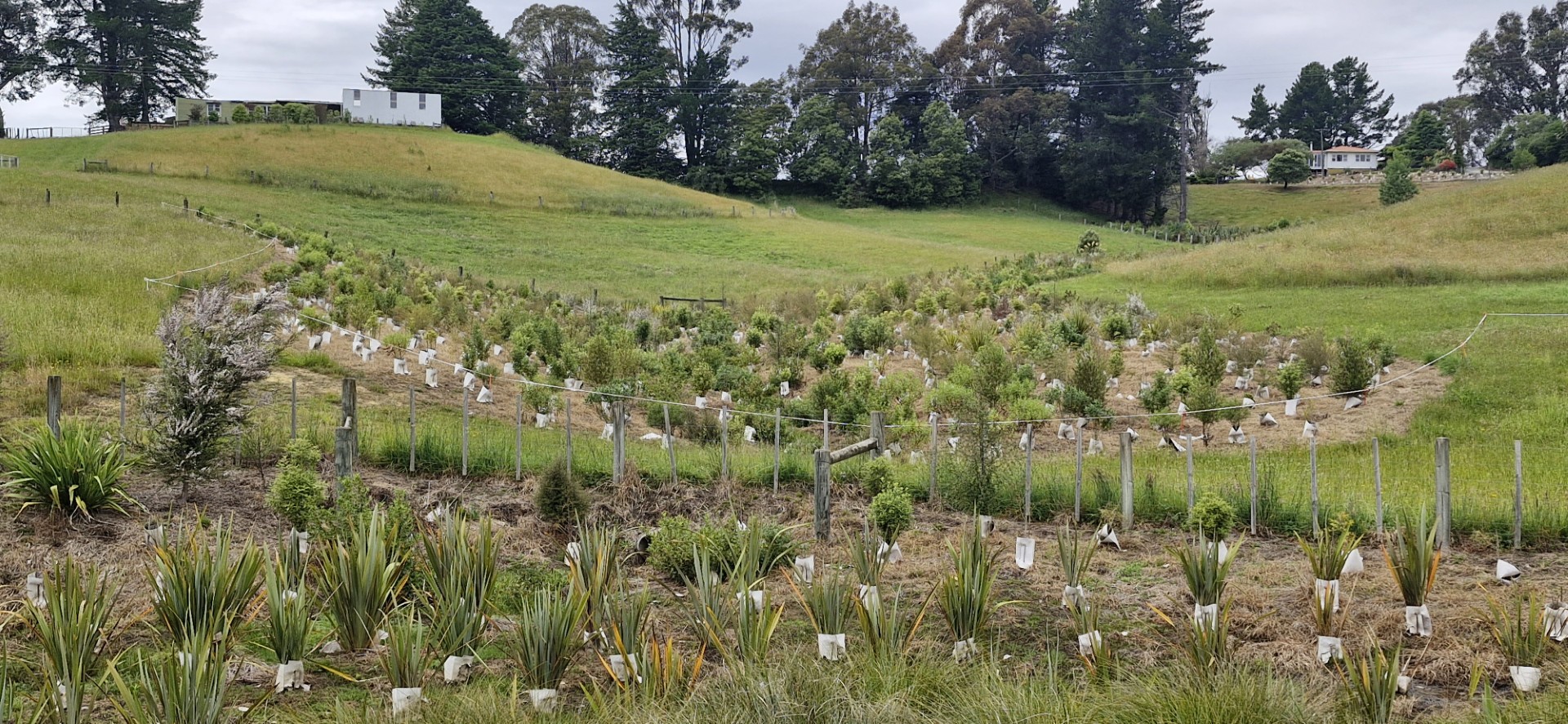
In 2022, Lorraine Thorne set out with a clear goal: to create a native corridor linking two existing forest blocks on adjacent properties. The land was a steep former paddock of about 1.5 hectares, and reconnecting these fragments felt like an important step toward strengthening biodiversity and restoring the landscape. That first year, she planted around 8,000 native trees, selecting a mix of wetland, riparian, and dry‑land species to suit the varied terrain.
2022 plantings
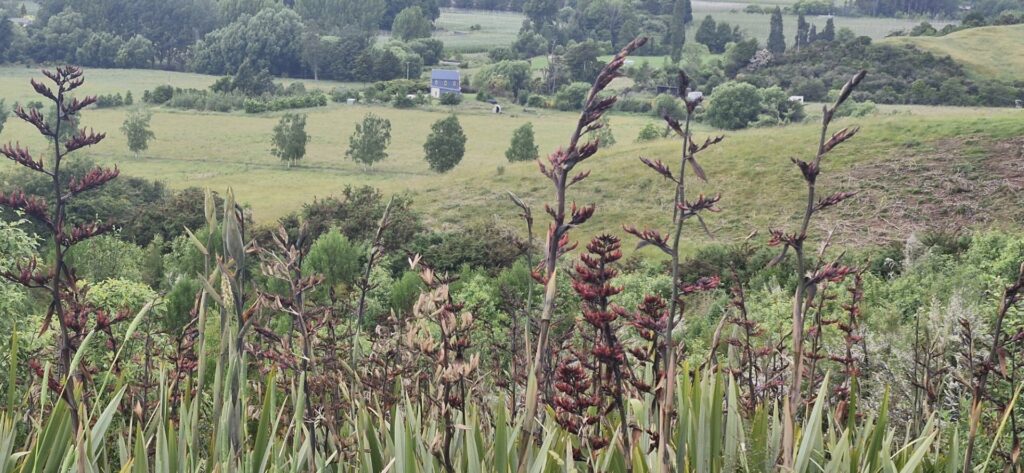
Two years later, in 2024, Lorraine expanded the project. This time the focus was on rewilding a nearby stream and extending planting into an adjacent gully to build out habitat and improve waterway health. The stream area (0.5 ha) was planted largely in wetland species, with riparian natives along the banks, while the gully (0.27 ha) plants were chosen to stabilise slopes and support wildlife. All up, 3000 more plants went in.
This work has been a family effort supported by local expertise. Le Gros Landscapes provided advice, planting support, and ongoing maintenance spraying, while Endurance Spraying carried out the initial pre‑plant preparation. Lorraine says their guidance has been invaluable: “Having people who know what they’re doing makes such a difference — especially when you’re working at this scale.”
The 2024–25 drought was a real test, particularly for plants on higher ground. After reading advice in Elliott’s newsletter, Lorraine tried placing wool around the spray guards to help retain moisture. “It worked incredibly well,” she says. “It was one of those simple, practical tips that really paid off.”
Support from the Tasman Environmental Trust has been central throughout the project — from supplying plants to providing maintenance spraying and technical advice. “TET’s support has been fantastic,” Lorraine says. “It’s made the whole project achievable.”
The results are already visible. The 2022 plantings have taken off, with strong growth and a noticeable increase in birdlife moving through the corridor. The 2024 areas are still in their early stages, but Lorraine commented that “Recently the stream planting has really taken off, especially the carex and flaxes, and is starting to attract tūī.”
Lorraine has learned a few key lessons along the way. Clearing spray guards and keeping up with well‑timed maintenance spraying delivers the best results, especially in the first two years. And for large‑scale projects, she says the help of professional contractors is invaluable: “If you’re planting big areas, get the right people involved. It’s the difference between surviving plants and thriving ones.”