Three Years of Collective Action: What MCC Has Achieved
As 2025 draws to a close, the Motueka Catchment Collective (MCC) reflects on three years of mahi supported by the Ministry for Primary Industries. The June and July floods reminded us of the challenges our rivers face, but they also showed the strength of local networks and the care people have for each other and for the awa. That same spirit has carried through every part of MCC’s work — from flood recovery to planting, monitoring, and planning.
Headline Achievements
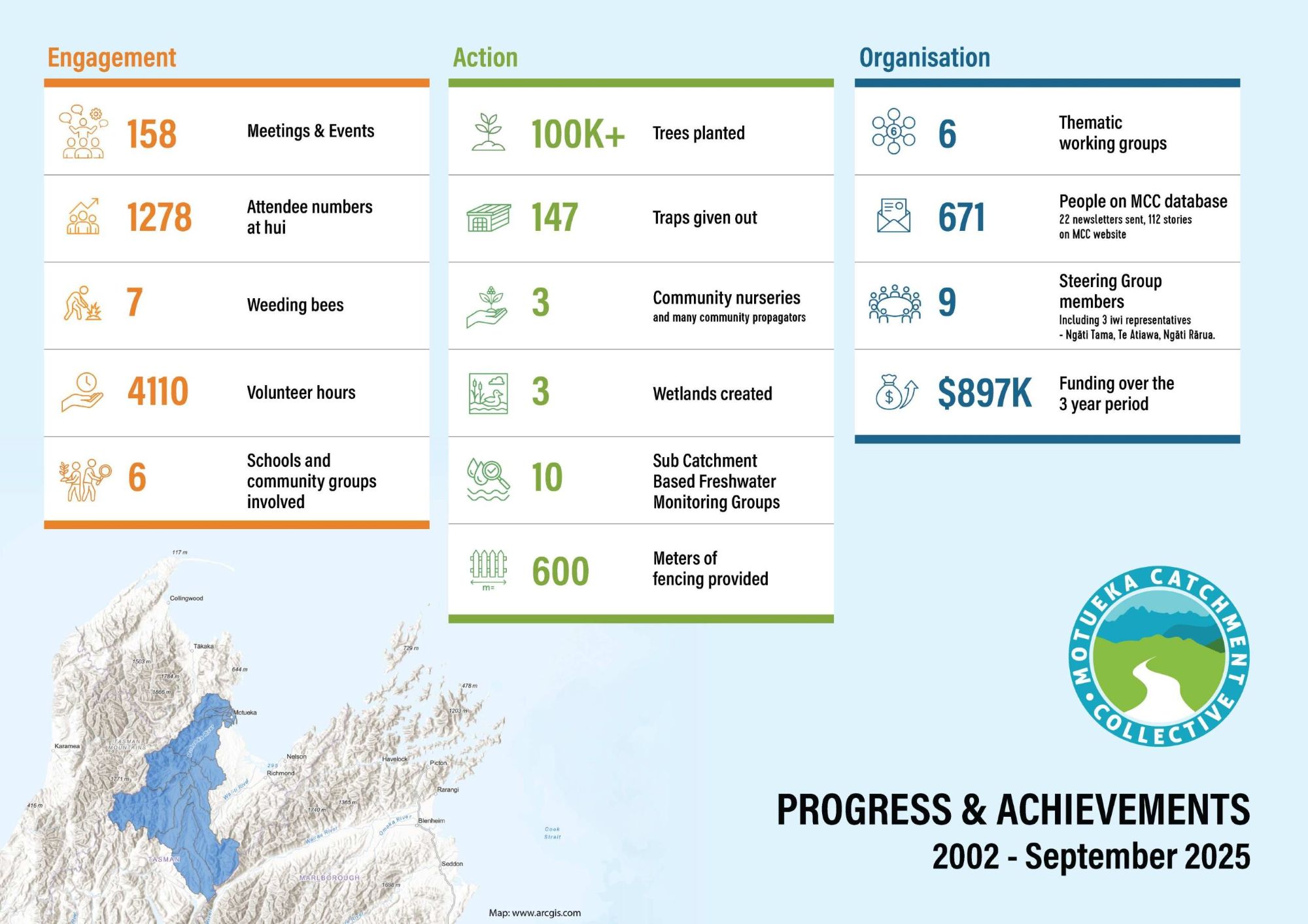
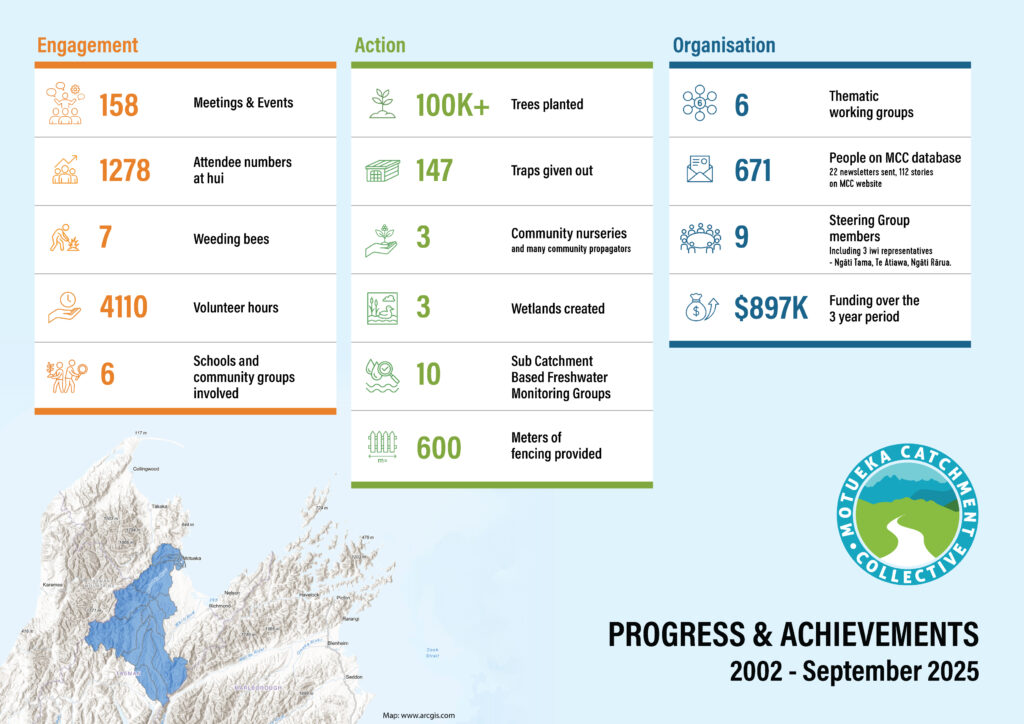
From April 2022 to September 2025, MCC and its partners delivered:
- 100,000+ native plants distributed and planted across the catchment
- 4,110 volunteer hours contributed to restoration, monitoring, and events
- 10 community‑based freshwater monitoring groups established
- 147 traps given out to support biodiversity and pest control
- 158 meetings and events, with over 1,200 attendees
- 3 wetlands created, 600 metres of fencing installed, and 3 community nurseries supported
- 6 thematic working groups guiding action on biodiversity, freshwater, pest management, forestry, river access, and river health
- 22 newsletters sent, 112 stories published, and a growing database of 671 engaged community members
These numbers tell part of the story. The real impact is seen in the projects and people behind them.
Restoration in Action
- Haycocks Bush Old Man’s Beard Project: Over four community weeding bees, volunteers tackled invasive vines in one of the catchment’s iconic bush remnants. MCC provided tools, refreshments, and contractor support to scale up removal between events. Significant progress has been made toward reducing OMB in this treasured site.
- Brooklyn Stream Planting: The Brooklyn BOMB Squad, with support from MCC, restored riparian margins along the stream. Brooklyn School joined in, giving tamariki hands‑on experience in caring for their local environment.
- Community Nurseries: MCC helped establish nurseries in Tapawera, Dovedale, and at local schools. These nurseries now supply eco‑sourced plants for restoration projects across the valley, reducing costs and building local capacity.
Monitoring and Learning
- Freshwater Monitoring Groups: Ten sub‑catchment groups now collect and share water quality data, linking with Council scientists and iwi‑led cultural health monitoring frameworks.
- Flood Resilience Hui: After the June/July floods, MCC convened a hui at Riverside Centre with iwi, scientists, and farmers to discuss river systems, gravel extraction, and resilience. Careful facilitation turned a complex, emotive topic into constructive dialogue.
- Sediment Control Workshops: Experts from NIWA, Landcare Research, Council, and forestry industry shared practical strategies with landowners, helping shift conversations from frustration to shared solutions.
Biodiversity and Pest Control
- Trap Distribution: 147 traps were given out to landowners and groups, supporting biodiversity gains across the catchment.
- Shedwood Bush and Motueka Sandspit: MCC connected local groups, shared equipment, and coordinated traplines, strengthening district‑wide conservation networks.
- School Partnerships: Volunteers worked with schools to build traps and set lines, sparking interest in conservation among young people.
Events and Engagement
- Baton Valley Workshops: Practical sessions taught landowners how to propagate and care for native seedlings.
- Post‑Flood Thank‑You Event: Hosted at Lisa and Mark Quin’s farm, this gathering acknowledged the volunteers and supporters who stepped up during the floods.
- Fencing and Technology Events: Farmers attended workshops on fencing best practice and new tools for land management, including ETS updates and tech demonstrations.
Planning for the Future
A major milestone was the publication of the Draft Catchment Plan in September 2025. Shaped by input from farmers, residents, iwi, and community groups, the plan sets practical pathways for restoration and resilience. A one‑page visual summary makes the vision accessible to all, and consultation is underway to ensure it reflects community priorities.
Acknowledgements
MCC thanks MPI, the Ministry for the Environment, the Kōtahitanga mō te Taiao Alliance, Tasman District Council, NZ Landcare Trust, Cawthron Institute, and all our partners and volunteers. Together, we’ve built momentum that will carry into 2026 — with more events, more planting, and more opportunities to care for the Motueka catchment together.