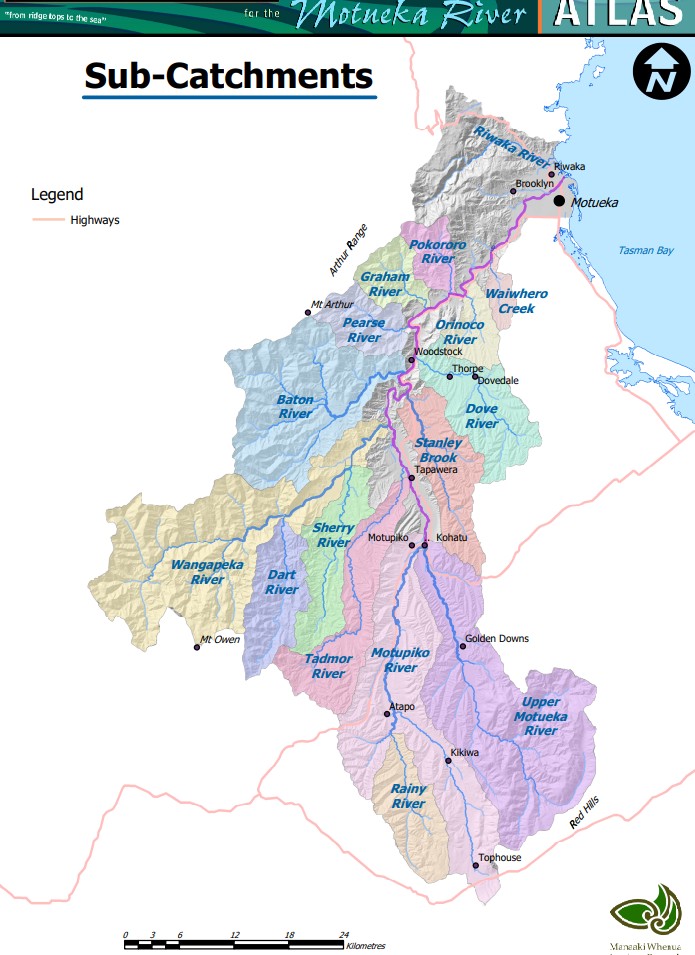
In the wake of recent floods, the Motueka Catchment Collective (MCC) has begun extending its connections into smaller sub‑catchments, reaching out to local communities to explore what support they might need, what issues they want to address, and whether there is interest in forming sub‑catchment groups. The map to the left shows some of the smaller sub-catchment groups.
The aim is simple: rather than trying to involve the entire catchment at once, MCC is creating space for communities to come together at a local scale, share experiences, and decide what matters most for their stretch of river or tributary. Other organisations are joining these conversations where relevant, offering expertise and support.
Riuwaka Catchment: Grassroots Energy and Innovation
The first gathering was held on 11 November at the Rugby Club Rooms, with 16 community members attending. The meeting was led by Tasman Bay Guardians (TBG), with input from MCC representatives and Steve Holloway from MAD Conservation.
Debbie Win, Chair of MCC’s Steering Group, shared MCC’s journey from grassroots beginnings to today’s Catchment Plan, emphasising the vision of communities acting as kaitiaki (guardians) of the awa for future generations.
Steve Holloway talked about trapping. He demonstrated new remote‑sensing trap technology called Celium amongst other tools, sparking interest in predator control to protect native species. Tasman Bay Guardians showcased their citizen science tools for stream health monitoring and inanga spawning site protection, highlighting how smaller tributaries like Riuwaka are ideal for community‑led action.
After interest was shown, TBG has planned a stream health monitoring workshop before the end of the year.
In terms of next steps, engagement will begin with landowners, horticultural growers, stakeholders, iwi, and community leaders to explore community goals and collective possibilities. Water monitoring will begin in the new year with another larger event planned.
Greenhill Catchment: Community Priorities and Partnerships
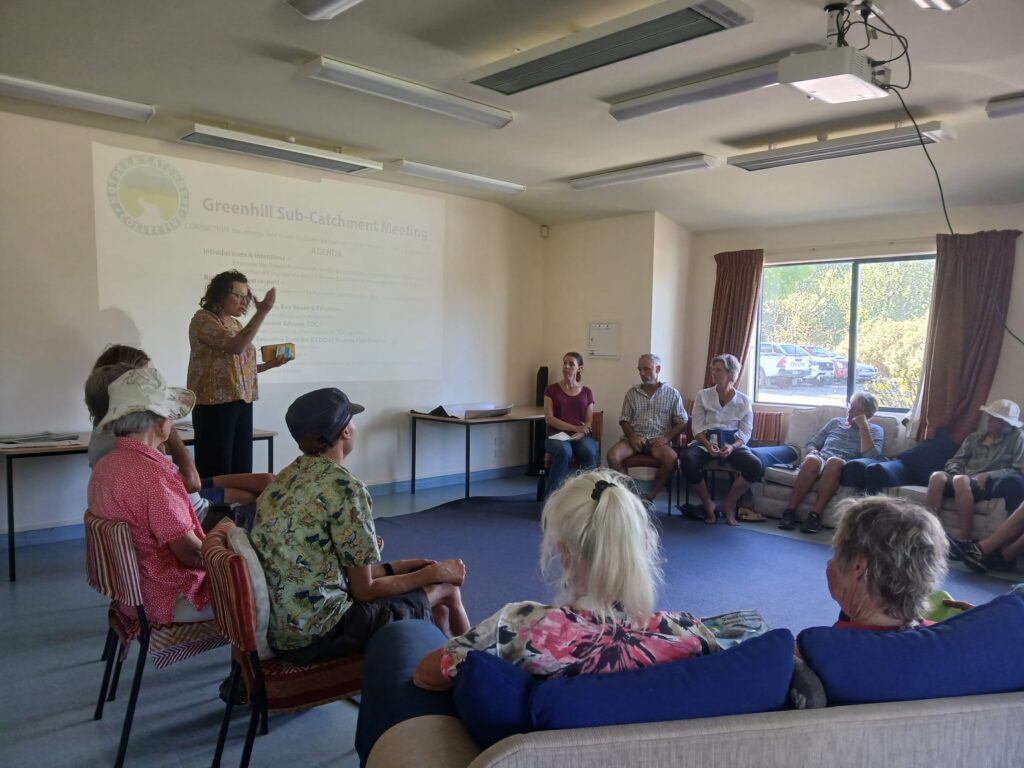
On 2 December, around 23 Greenhill residents gathered at the Ngātīmoti Fire Station rooms, hosted by MCC with support from Tasman District Council and input from Tasman Pine.
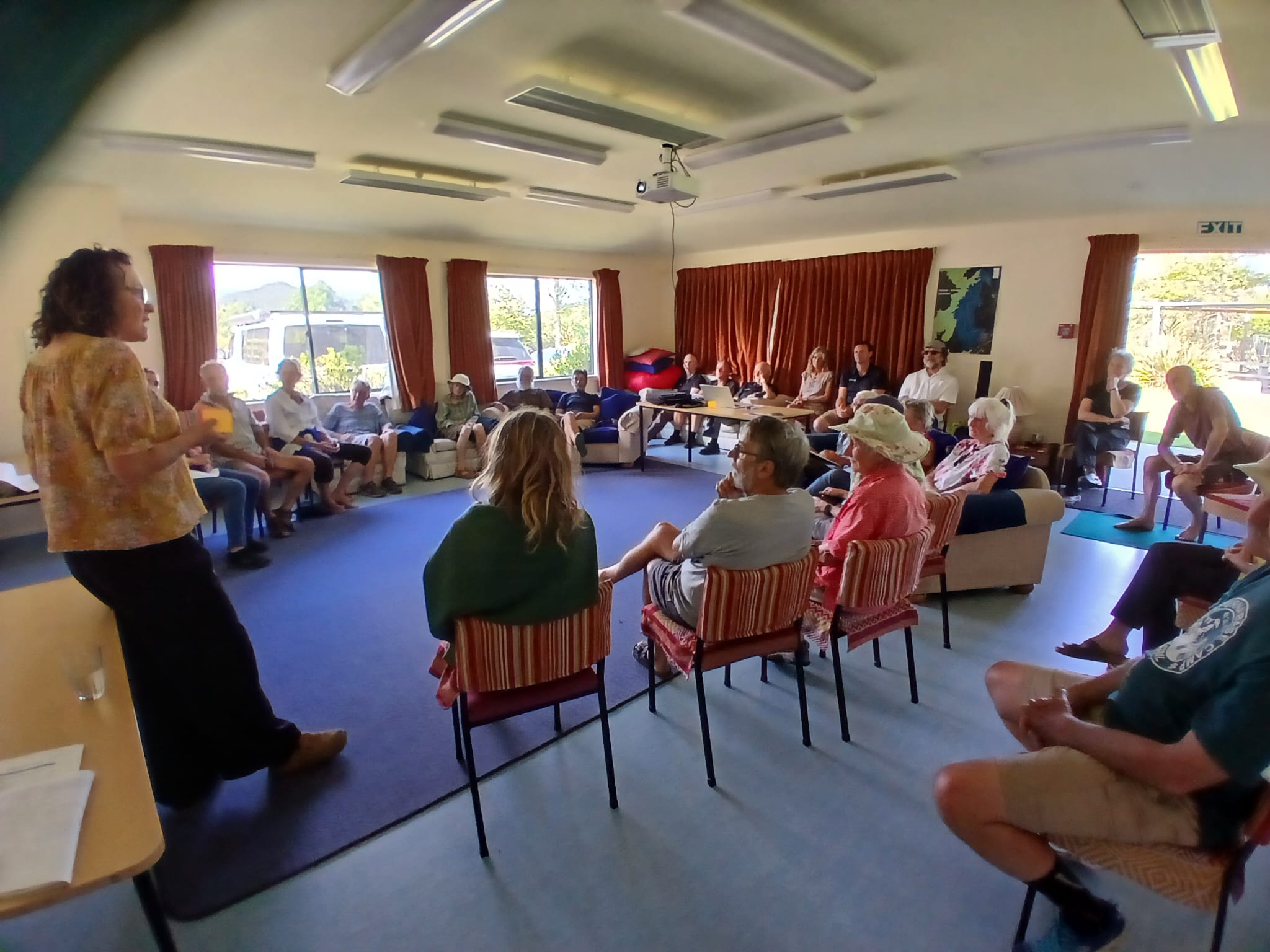
Lucy Maxwell presents to the Greenhill attendees
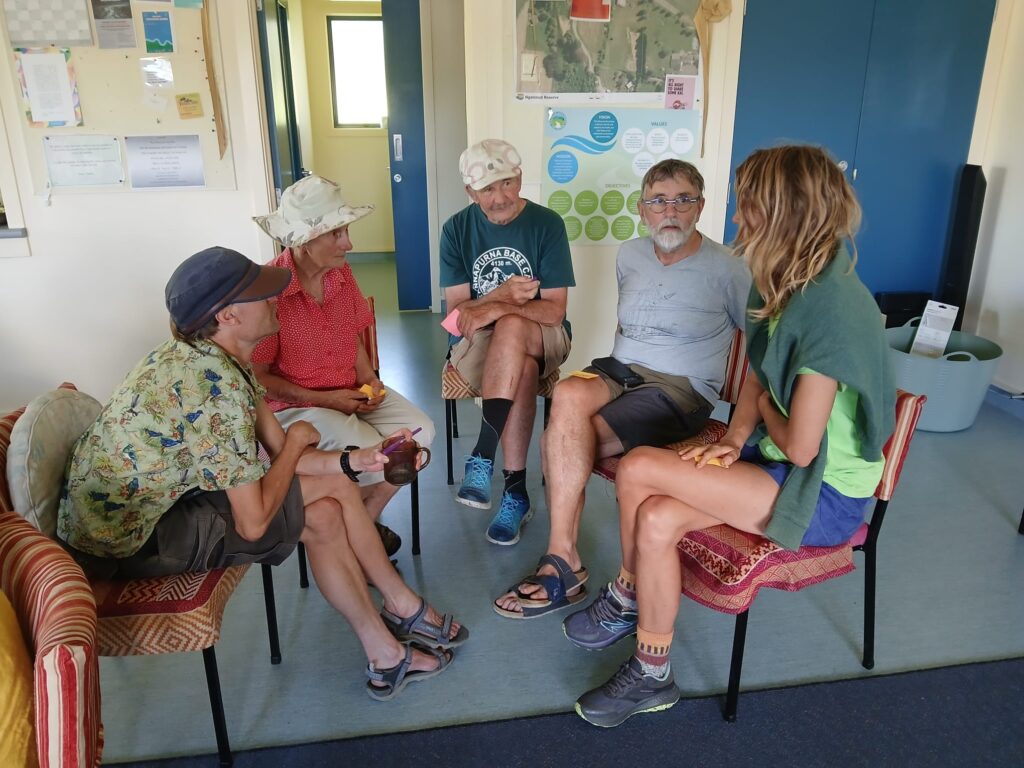
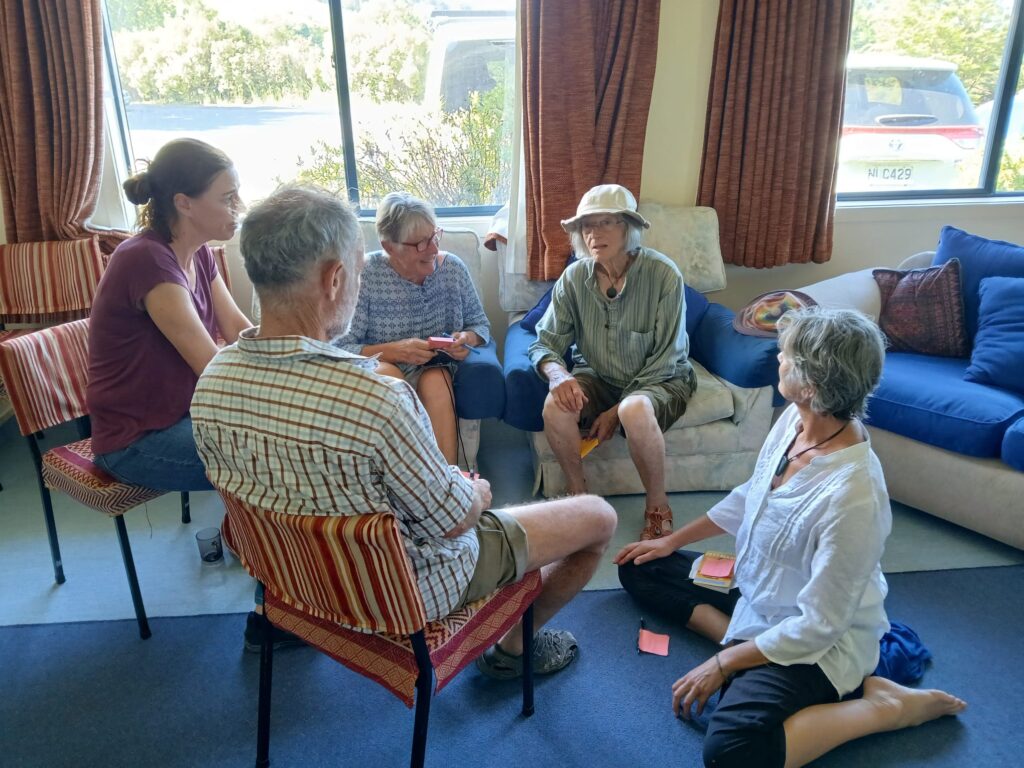
The evening began with a karakia and a reminder that the purpose of these sessions is to ensure communities are seen, heard, and valued. Participants introduced themselves, often sharing their personal connection to the Greenhill Stream and reflecting on the impacts of recent floods — some directly affected, others emotionally shaken, but all united by a deep sense of care for the river and a wish to stay safe.
Residents then broke into groups to discuss issues, aspirations, and priorities, with themes including:
Flood resilience: Recognition that climate change will bring more extreme events, and a call for community‑level strategies to prepare together.
Water quality and sediment: Strong interest in reducing erosion, impacts of forestry, improving stream health, and restoring native habitats.
Family and future focus: Concerns about protecting homes, gardens, and land for future generations.
Wildlife and ecology: Aspirations to see eels return to the creek and slopes covered in native bush.
Collaboration with forestry: Constructive dialogue with forestry representatives about legacy issues and how to build a more resilient catchment.
TDC’s Catchment Adviser presented the opportunity for expert input from TDC highlighting nature‑based solutions (NBS) such as wetlands, poplars, and natives to stabilise slopes and trap silt. An NBS expert will visit next year to work with TDC staff (Rivers Team, Natural Hazards Team, Freshwater Team and Catchment Advisors) to access the main Greenhill Stream for potential NBS – site specific advice will be supplied directly to the landowners. Then more general NBS will be shared with the communities and landowners for practical options for improving flood resilience.
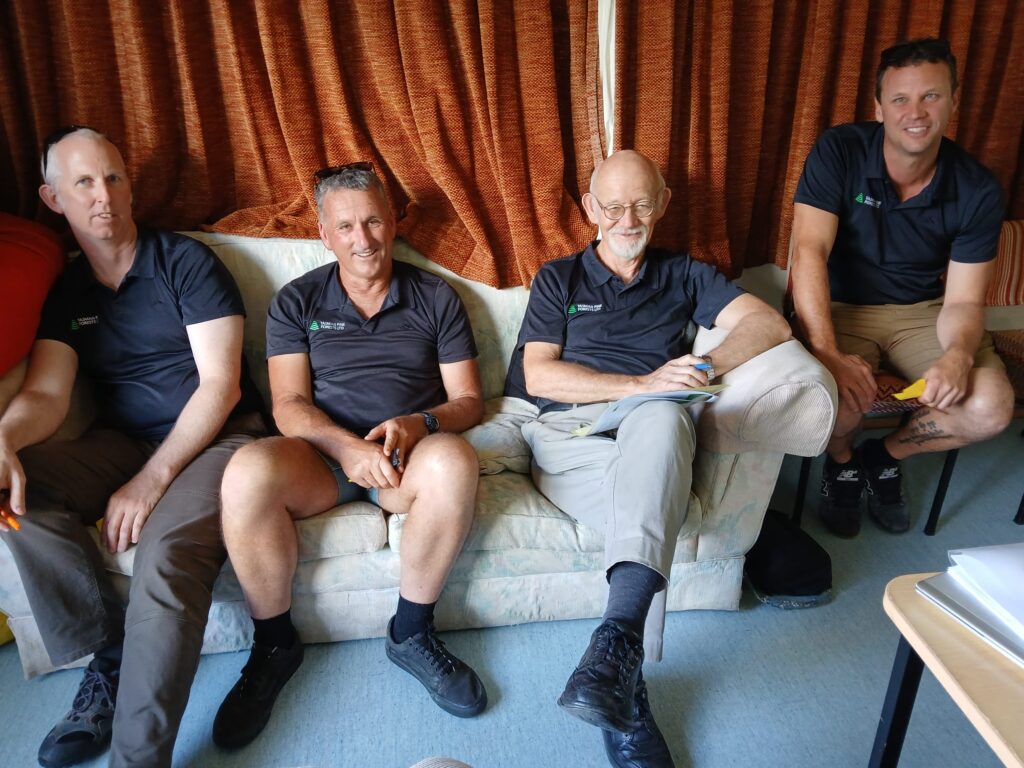
Tasman Pine representatives - including Gavin Hurford (left), Dale Smith, Steve Chandler (2nd from right), Dan Montgomery (right)
The meeting closed with enthusiasm for walking the length of the stream together and continuing the conversation in 2026. Residents left feeling positive about the chance to connect, share experiences, and shape solutions for their local river.
What’s Next
Sub‑catchment meetings will continue across the Motueka Catchment in the months ahead, as capacity allows, along with continuing to work with these groups. These gatherings are designed to give every community a voice in shaping the future of their rivers and land.
📢 Call to Action: If you and your neighbours want to be more involved in caring for your stretch of the river—or if you have local issues to raise—contact Lucy at support@motuekacatchment.org.nz to register your interest & concerns.