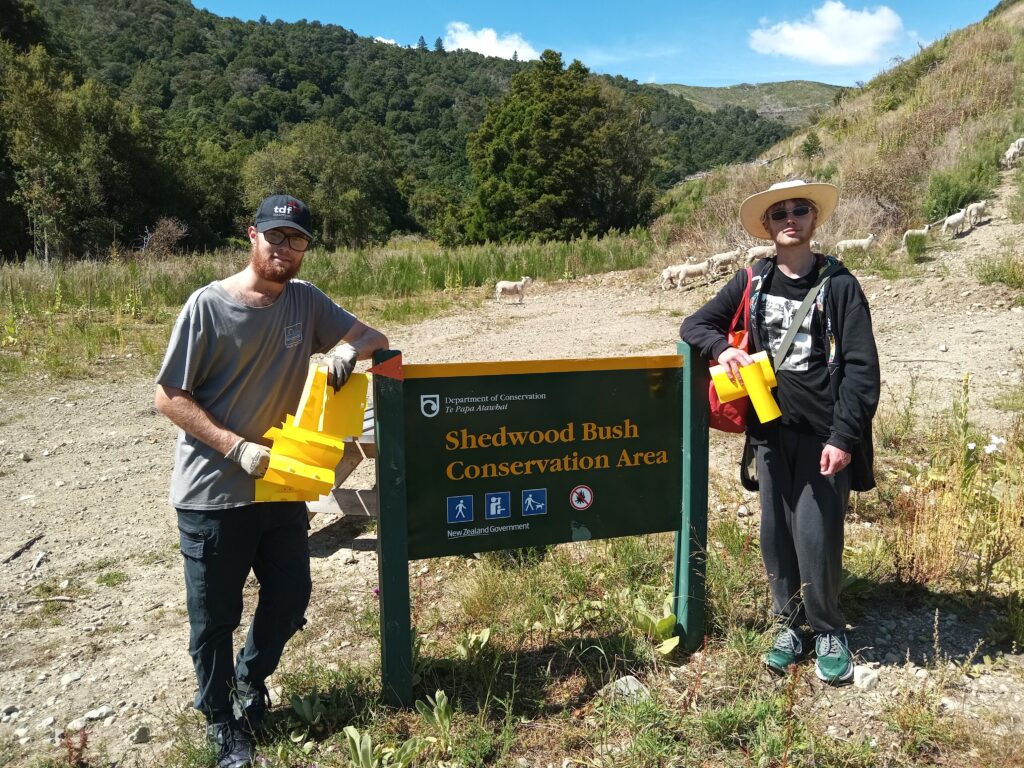
Early March offered a snapshot of how Shedwood Bush in Tapawera is cared for: local volunteers leading the work, supported by technical expertise when needed, and young people stepping in to learn the ropes. On a clear, sunny morning, Fish & Game’s Jacob Lucas headed up the track with young volunteers Braden and Cody Coleman, joined by Motueka Catchment Collective’s Dana Carter, to collect in a line of wasp bait stations and check the pest traps spread through the forest.
This work sits within a much wider effort led by the Shedwood Bush Betterers (SBB) — a group of around 20 locals who maintain the tracks, clear Old Man’s Beard, run the pest‑control network, and keep this important upper‑catchment forest thriving. Jacob’s role is to support them with technical trapping guidance, and wasp‑control expertise, helping build capability so the community can continue to lead the mahi long term.
Wasp Control and Trap Checking
The team collected 60 Vespex bait stations that Jacob had set out a week earlier. Early March is peak protein‑feeding season for wasps, and the quiet bush told the story: the baiting had worked. In past years, parts of the forest hummed with wasps at this time of year. This time, cicadas were the only soundtrack.
“That’s exactly what we want to see,” Jacob said. “When the stations come back empty and the bush isn’t buzzing, you know the nests have taken a hit.”
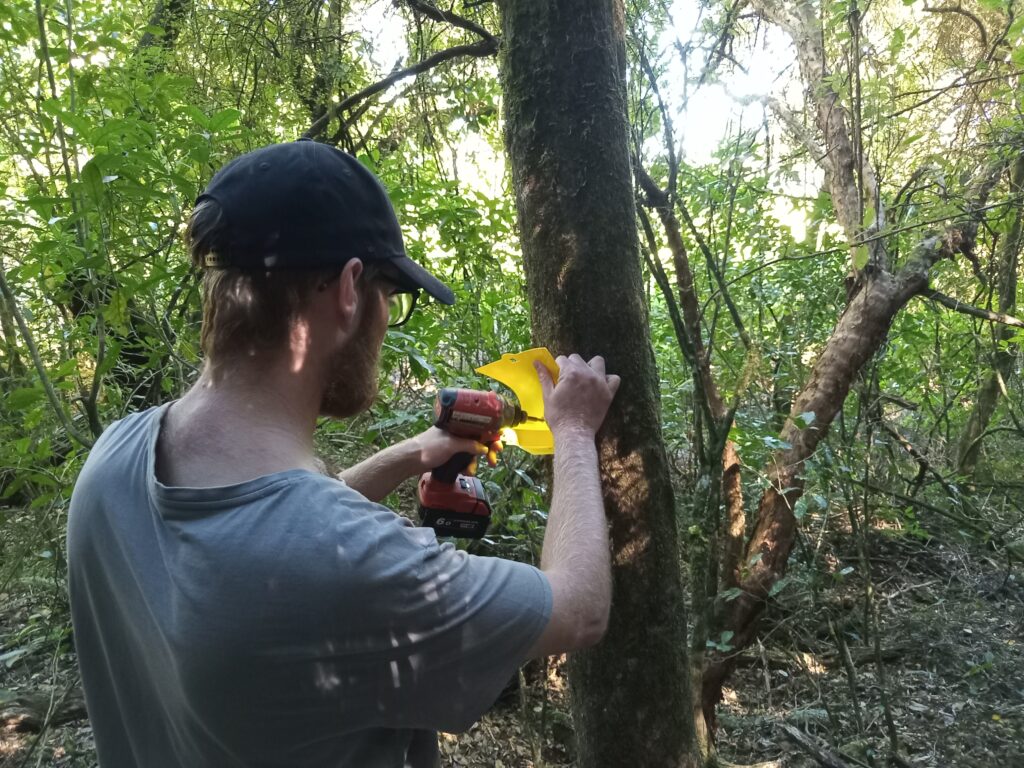
Braden drilling the vespex wasp station off
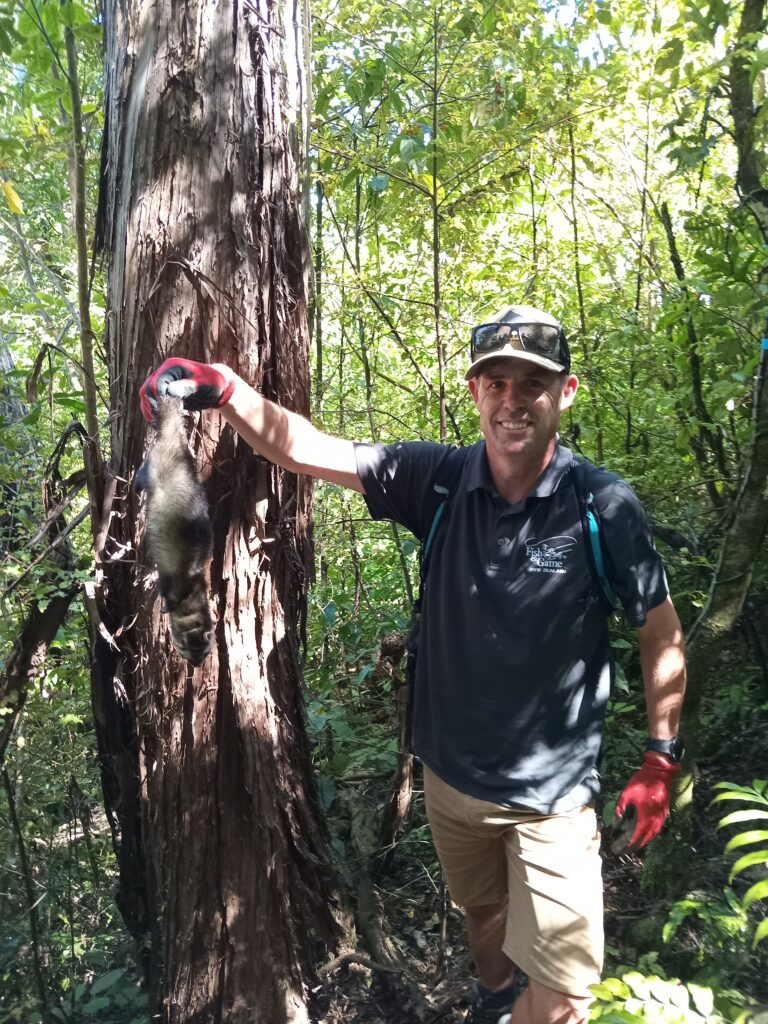
Trap checks were just as encouraging. One AT220 had caught five possums and several rats in a couple of weeks, while another has recorded around 30 possums since installation. A DOC200 also picked up a ferret — a rare but important catch for this part of the region.
Jacob Lucas with a ferret caught in the DOC200
Local Youth Stepping Up
For Tapawera local Cody Coleman, the day was part of his growing involvement with SBB. He now helps with trap checks and working bees, and he’d convinced his brother Braden to join the trip.
“I’d only been to the bottom part of the bush a couple of times before I joined the group,” Cody said. “Now I’ve been all the way to the top.”
Add in para from Kate about school, with quote and photo
Cody and Braden Coleman
A Forest With Deep Roots — and a New Future
Shedwood Bush has long been part of Tapawera’s identity. Older locals remember it as a training ground for teenage NZ Forest Service cadets, who learned bushcraft and forestry skills on these same slopes. Today, the forest is again becoming a place where people learn practical conservation skills — this time through community‑led restoration.
Across the wider project, locals contribute in different ways: supporting native planting with the school, tackling Old Man’s Beard and valley‑floor regeneration, leading the trapping programme with Jacob’s guidance, and supporting partnerships across organisations. Together, these efforts form the backbone of the Tapawera pollination pathway, linking the village to the bush and strengthening habitat for birds, insects, and people.
“Shedwood Bush is a key anchor in the pollination pathway we’re building from the village gardens and reserves right up into the hills. The more people who walk the track, learn a few micro‑skills, and feel connected to the place, the stronger that pathway becomes for both wildlife and the community,” says Mark Soper, a lead member of the Shedwood Bush Betterers who also manages the relationships between Tapawera Connect, the Department of Conservation, and the wider community.
Building Community Guardianship
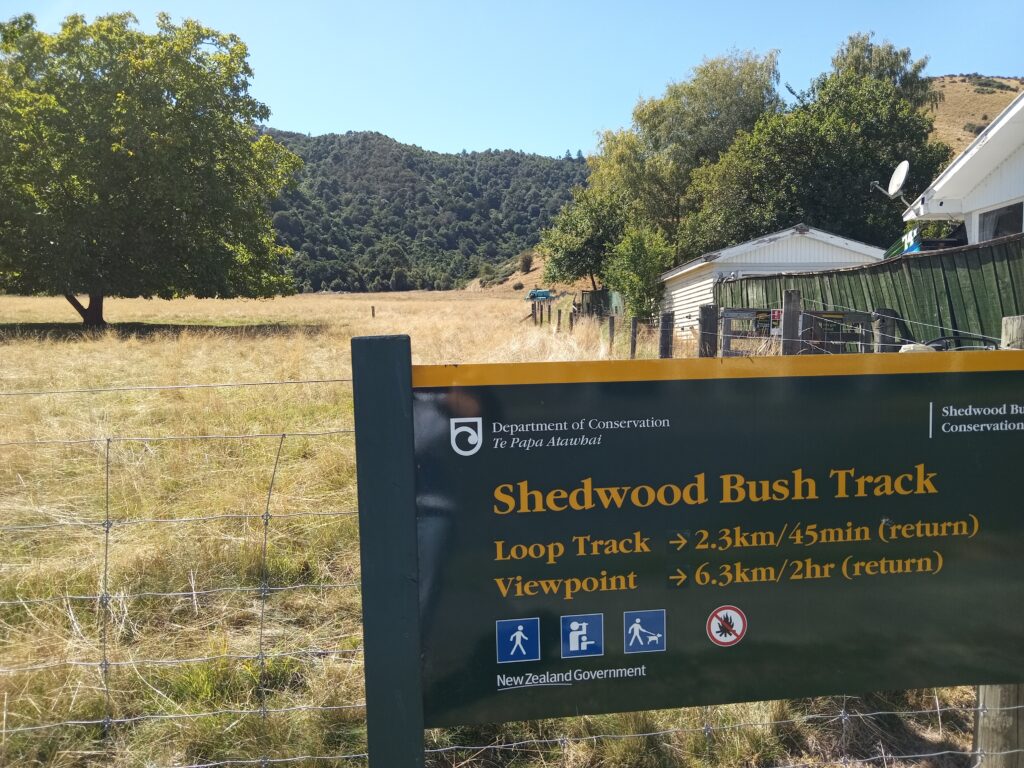
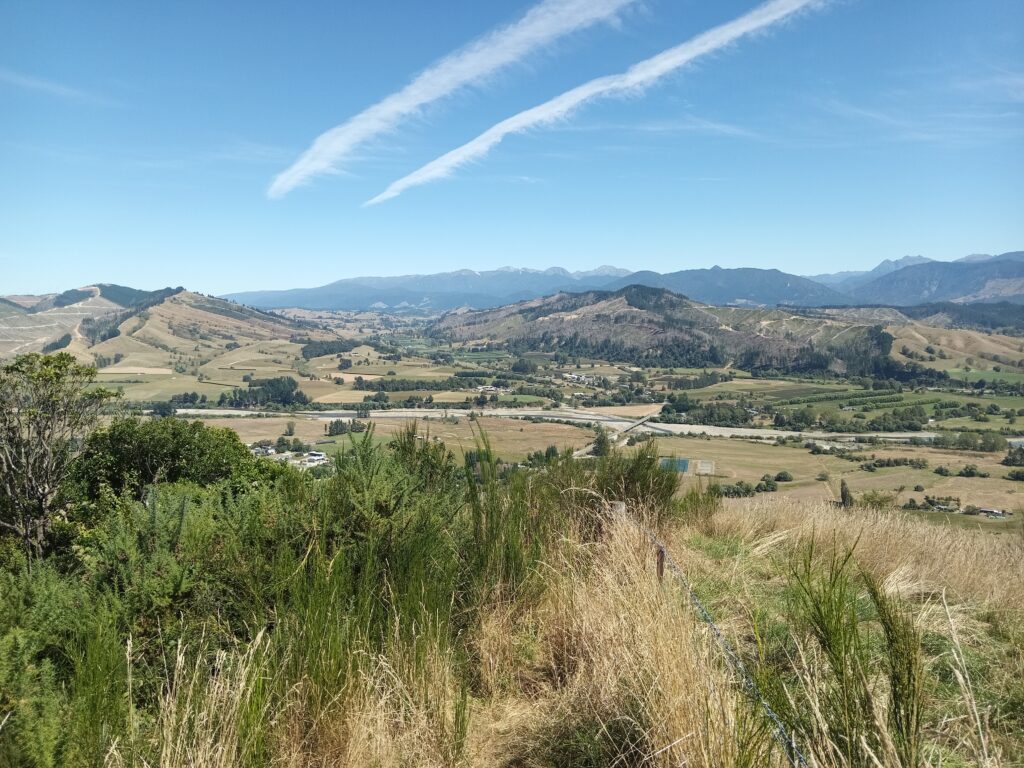
Encouraging more people into Shedwood Bush is a key part of the plan. The track is one of the region’s best short family walks — well graded, about two hours return, and offering sweeping views over Tapawera and the Tadmor and Motueka valleys. But it’s also a place where locals can learn the small, practical skills that keep a forest healthy:
trap checking and maintenance
track care and drainage
weed control and species ID
monitoring birdlife and seasonal changes
These skills strengthen the community’s connection to the bush and help ensure the work continues across generations.
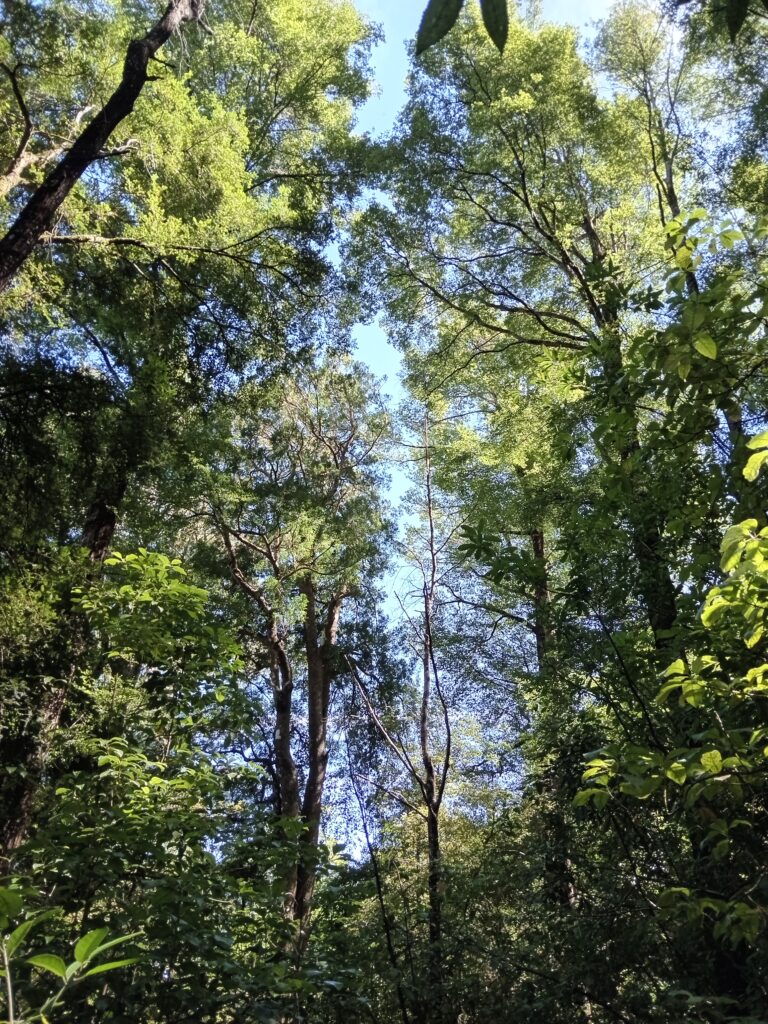
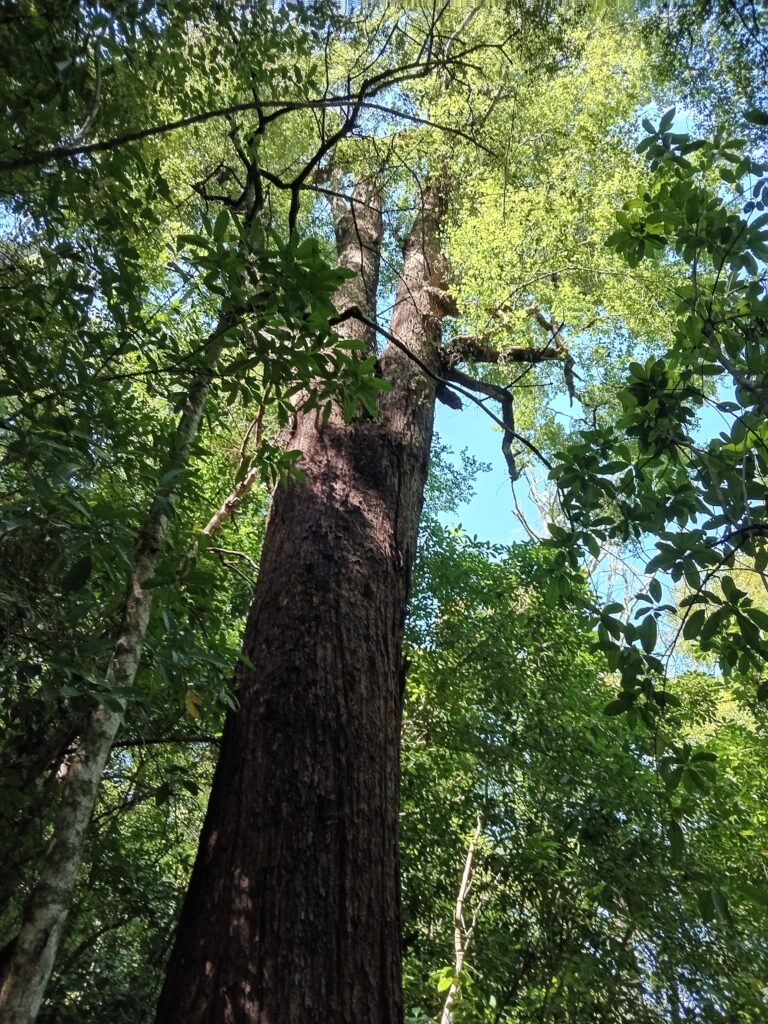
View from the top
A Forest Worth Protecting
As Jacob said while packing up the last bait station:
“There’s a good bird population here worth protecting — and with the community behind it, the bush is only going to get better.”
Shedwood Bush is more than a track. It’s a community‑led project, a training ground, a link in a growing ecological corridor, and a place where the next generation is already stepping forward.