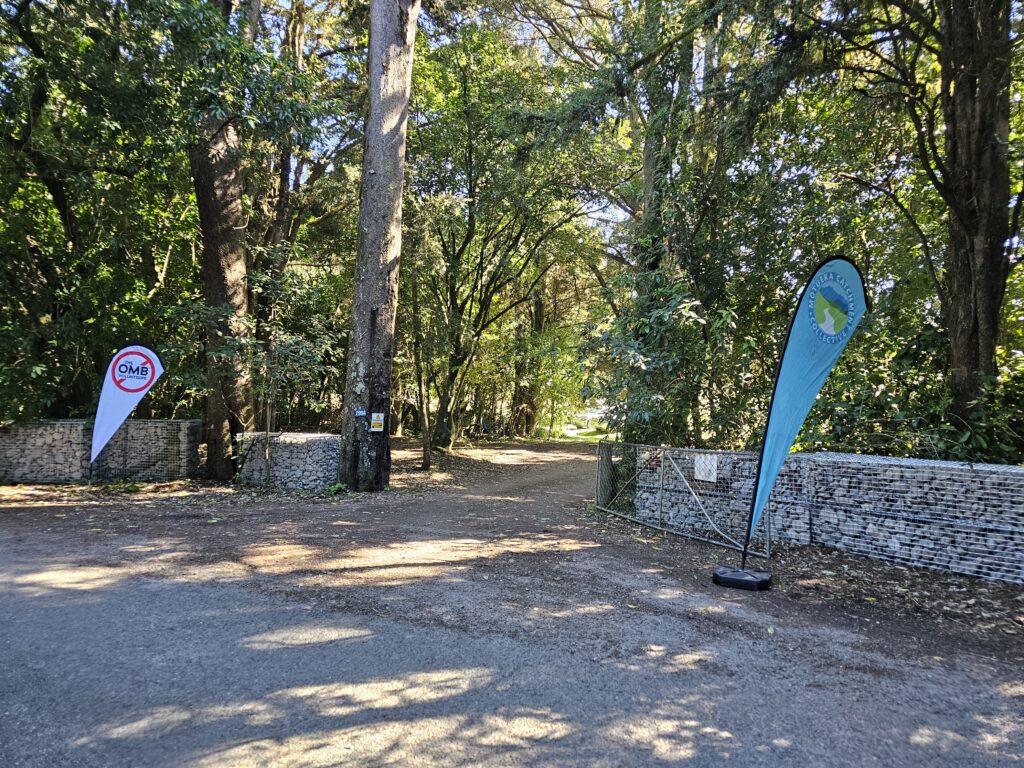
Just like David Bellamy proclaimed back in the 80’s “Old Man’s Beard Must Go!” it really is going in Haycocks Bush thanks to the hard work of community volunteers and contractors, as part of Motueka Catchment Collective’s community led project.
The riparian strip on the true left bank of the Motueka River contains pockets of mature remnant native bush, which until recently were heavily impacted by invasive vines such as Old Man’s Beard. This stretch of bush connects Haycocks Bush proper with a significant QEII covenant approximately 2 km upstream.
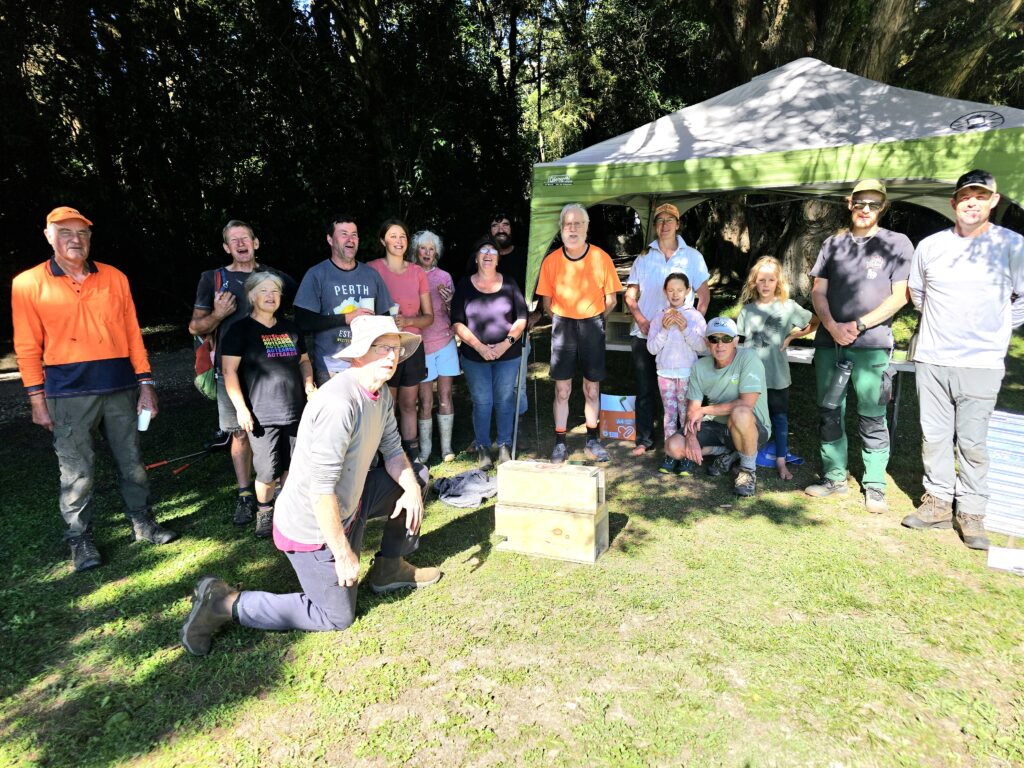
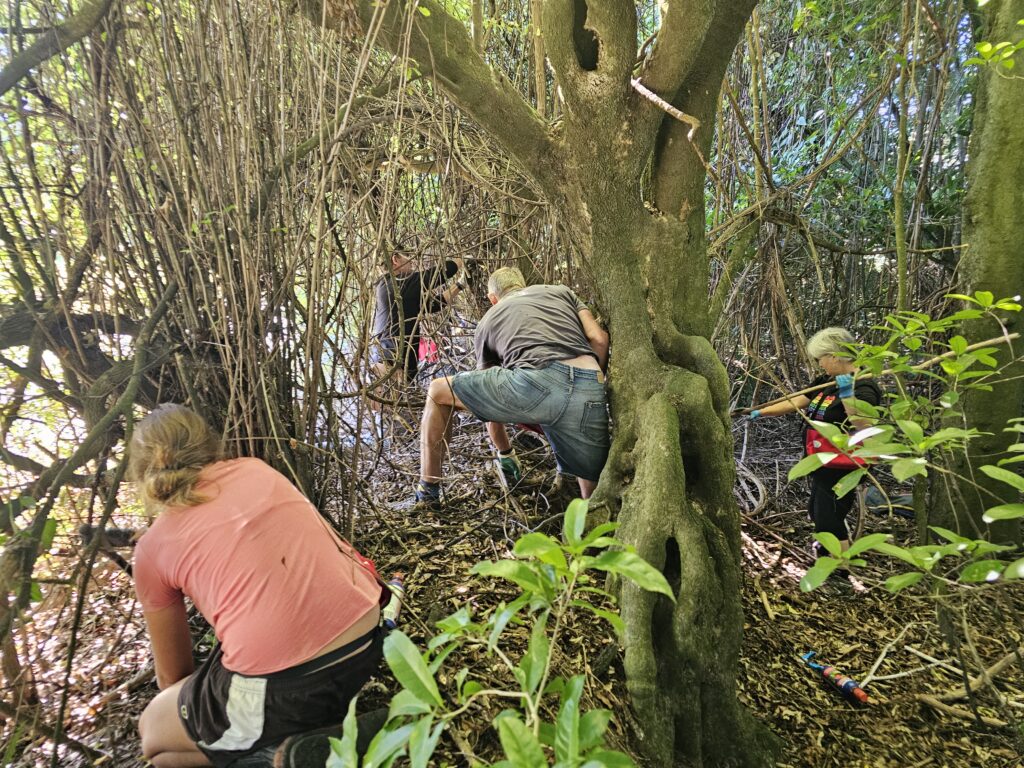
Community weed busting events over the last year have steadily worked upstream from the Graham River confluence, covering roughly 1.2 km. Volunteers have carried out initial control by cutting and managing invasive vines climbing impressive native trees such as tōtara.
“We’ve had five working bee’s over the last year, with nearly one hundred volunteers turning up to help out and we really have knocked down some Old Man’s Beard.” says Bruce Stare, MCC project lead, and member of the Motueka Valley Old Man’s Beard Group.
Funding support from MCC has enabled the development of a pest plant control plan that integrates both community weedbusting efforts and expert contractor input. This plan is especially valuable as it helps guide volunteer efforts, aligning their skills and availability with the restoration priorities at each site. Just as important is ensuring that the gains made by community efforts are maintained over time. Timely Follow-Up is critical after each event to prevent regrowth and suppress the emerging seedbank. To ensure this is done systematically and thoroughly, expert ecological restoration contractor AndyWardsEcology has been engaged.
Recent floods have left their mark on the area, but overall, the native bush fared relatively well—mostly light silt and sand deposits, with minimal debris. The floods also cleared out dense blackberry and other weeds, temporarily improving access. However, in the coming months, negative effects may emerge, including the germination of crack willow fragments and other pest plants (e.g., sycamore, Old Man’s Beard, Japanese honeysuckle, Tradescantia) in the newly exposed silt and sand along the riparian margins. While these impacts have disrupted the restoration process to some extent, they can be managed by adjusting restoration priorities to ensure timely expert Follow-Up and prevent re-establishment of invasive species—protecting and enhancing the health of this remnant bush block into the future.
Andy Wards commented that “With continued community support for weedbusting events, the project aims to keep progressing upstream each year—safeguarding this beautiful stretch of native bush and its valuable local seed source for generations to come.”
The next Haycocks Bush Working Bee is coming up on Sunday 16th November. Motueka Catchment Collective needs your help to keep progressing this important local, community driven project.