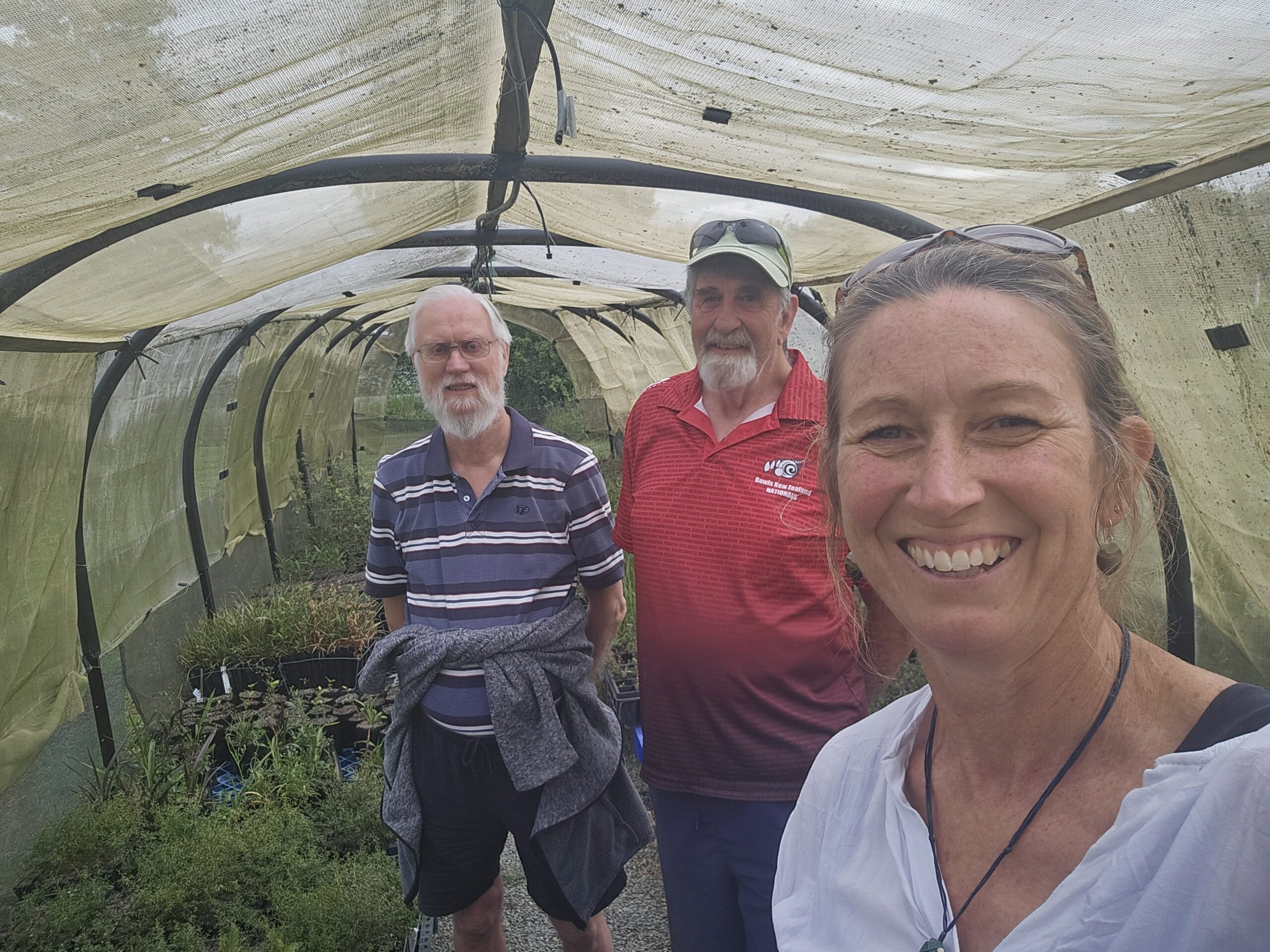
Bruce Stare - MCC Pest Management Group (left), Bill McKinlay (Nursery owner, Biodiversity and Restoration Group member (middle), Dana Carter (MCC) right
Bill McKinlay’s backyard nursery has always been more than a place for plants—it’s a quiet engine of restoration, tucked in the Win Valley of the Motueka Catchment. When MCC last visited in early 2024, the nursery was already producing thousands of native seedlings each year. Since then, it’s grown in both scale and ambition, with new shade structures, clever propagation systems, and a steady stream of plants heading out to landowners and community projects.
On a warm spring morning, two members of the Motueka Catchment Collective—Bruce and Dana—dropped in to see how things were going. Bruce supports community‑led weed control across the catchment, while Dana works on communications and engagement. Their visit was a chance to learn more about Bill’s setup, share ideas, and explore how different parts of MCC might collaborate more closely—especially around planting, weed control, and restoration support.
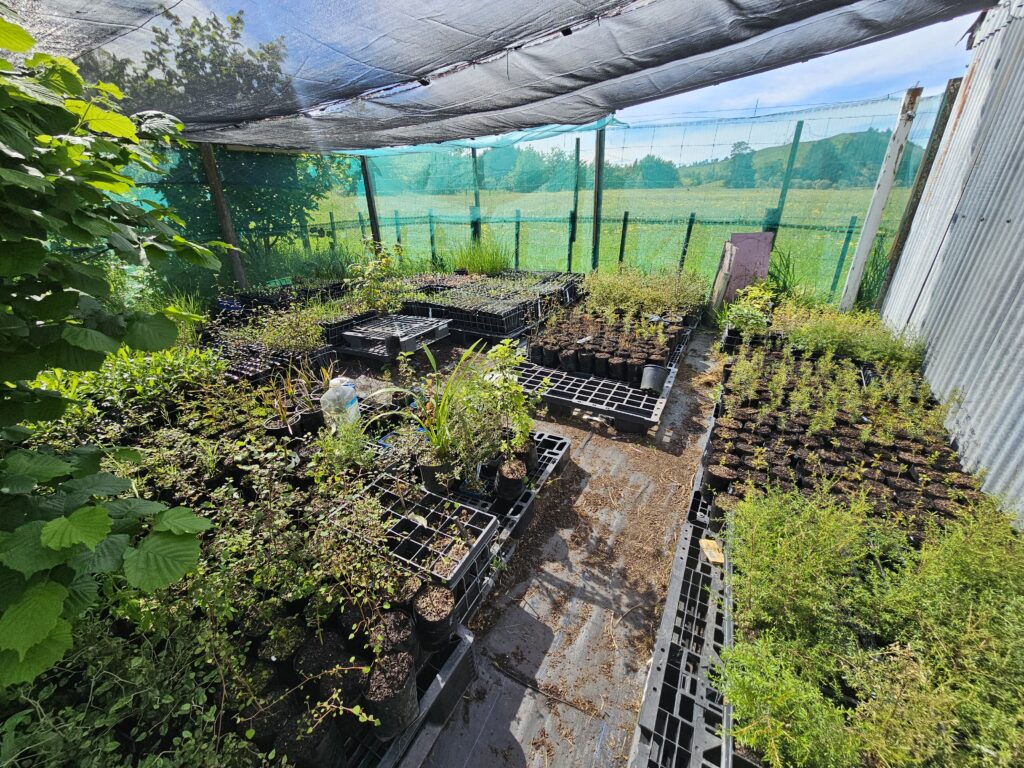
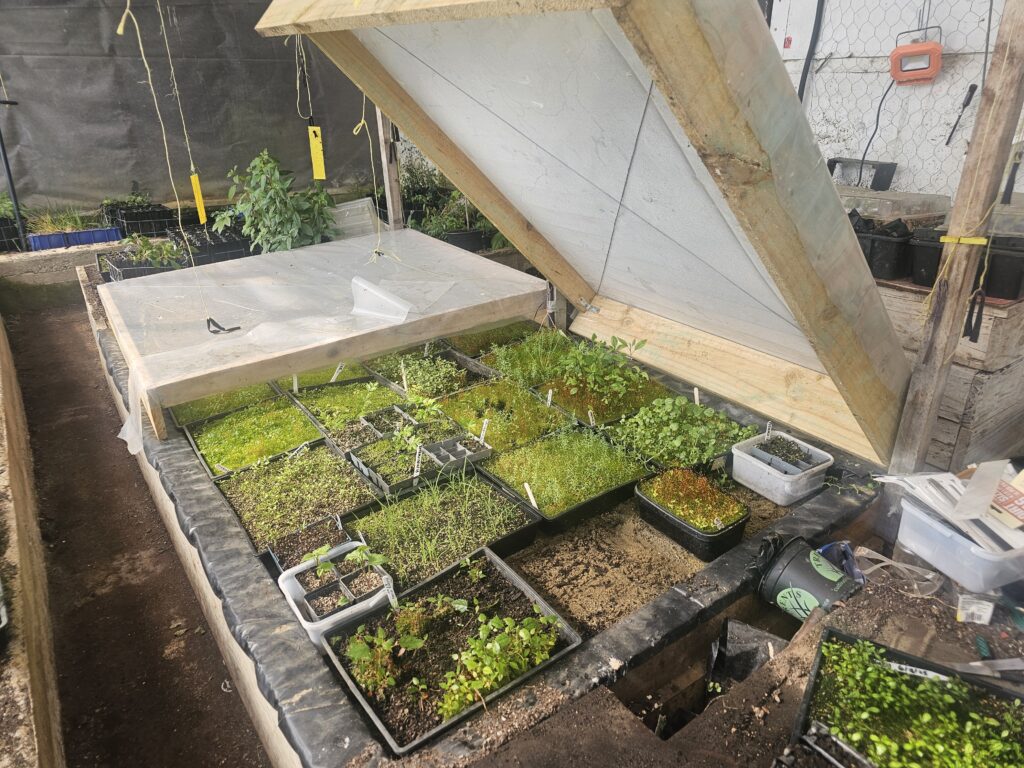
A more recent addition - another shade house
The nursery’s setup is still delightfully DIY. Pallets came from Bunnings and local recycle centres, while most root trainers are recycled and scrounged from wherever possible. “We don’t need to buy many,” Bill explained. “We can often use them three or four times.” Wire baskets are handmade, and water tanks are repurposed from community donations.
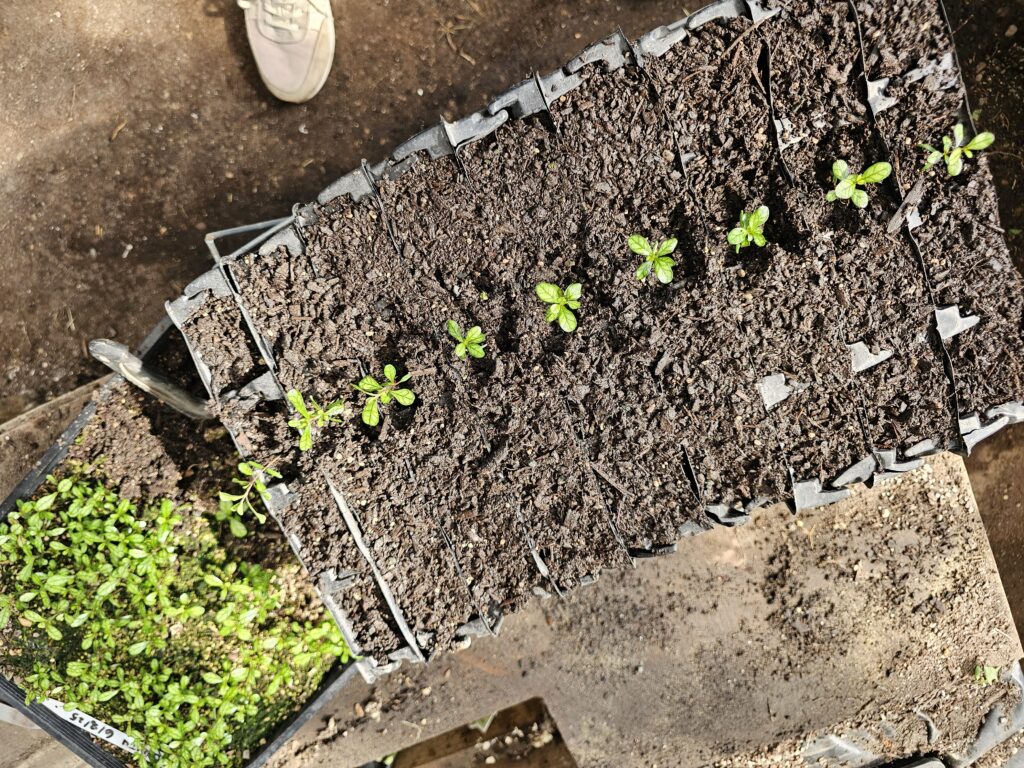
One of the most effective tools in Bill’s setup is his heat pad system, which keeps soil at around 24°C. “It speeds things up—especially in winter. Without it, we’d be waiting until spring to get anything started.” The pads are paired with humidity lids to reduce heat loss and keep conditions stable for germination.
Heat pad system for germinating seeds quickly
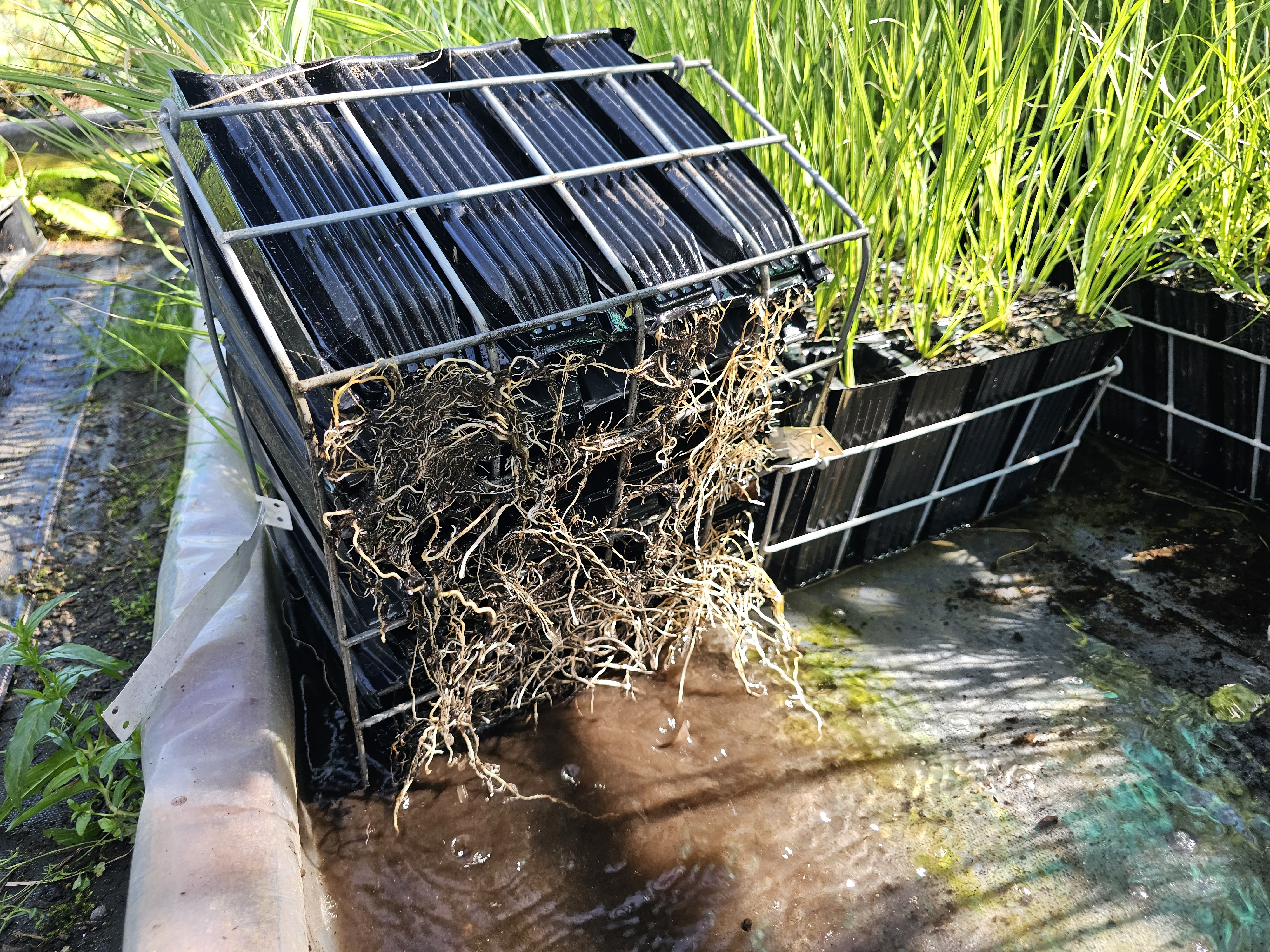
Another standout feature is the pond system for wetland species. The idea came from Annette Litherland of Landcare Trust and MCC’s Biodiversity and Restoration Group (BAR), who suggested mimicking natural conditions. Bill built his own ponds, and Ollie Langridge, another nursery operator, and member of the BAR Group, has adopted the same approach in his propagation area. “They grow twice as fast,” Bill said. “As soon as the roots poke out the bottom, I shift them into the pond trays. You don’t have to water the damn things, and they thrive.”
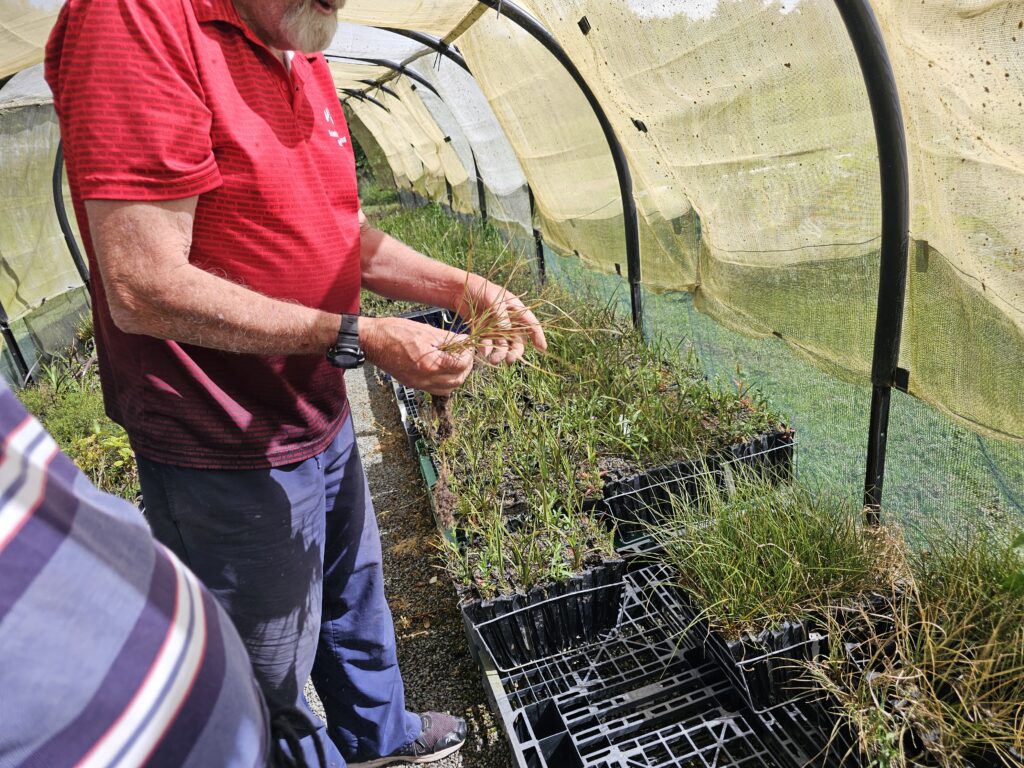
Bruce took a slow walk through the rows, admiring the healthy root systems and clever water‑saving setups. “You’ve got good succession going here,” he said. “It’s working really well.”
Bill’s approach is pragmatic and local. He ecosources within a 20km radius, aiming to match species to site conditions. “I grab whatever I can get,” he said. “But I won’t send kawakawa up to Dovedale. They wouldn’t survive the frost.”
The nursery’s output is far‑reaching. “This year, 1600 or 1700 plants went up the Win Valley, with over 2000 going further afield,” Bill said. “Some of those probably disappeared in the floods, but others got straight in and replanted.” Across MCC’s work, more than 100,000 plants have been distributed over the past few years, a collective achievement that Bill’s nursery has contributed to.
Bill’s plants have gone to landowners, community groups, and MCC projects. He’s also given away hundreds of seedlings at local festivals. “People came back at the end of the week asking for more,” he said. “There are people who genuinely came to grow.”
Bruce’s visit wasn’t just a social call—it was a chance to explore possibilities for collaboration between MCC’s Biodiversity and Restoration (BAR) and Pest Management groups. “It’d be great to sit down with your group and see what we could work on together,” Bruce said. “There’s a lot of overlap—weed control, planting, monitoring. It makes sense.”
Advice for Aspiring Growers
Thinking of starting your own native plant nursery? Bill’s nursery is a community nursery—he grows plants for others, not for his own land. “I don’t plant any of these myself,” he said. “They all go out to other people.” That’s what makes it different from a private nursery on a farm or lifestyle block, where landowners grow for their own restoration work.
If you’ve got space and a bit of time, starting your own nursery can save costs and give you control over species selection and timing. Here’s some advice drawn from Bill’s experience and wider nursery guidance:
Start small and scale up: A basic nursery producing up to 2,000 plants per year can be set up with minimal expense. Shade, shelter, weedmat, and a reliable watering system are essential.
Use what you have: Crates, baskets, and recycled materials can be repurposed. Root trainers are worth investing in, but they can often be reused three or four times.
Match species to site: Ecosourcing is key. Collect seed locally and avoid frost‑sensitive species in colder areas.
Wetland plants thrive in water: Pond trays, inspired by Annette’s idea, mimic natural conditions and reduce labour.
Keep experimenting: Bill’s nursery is a living lab, testing seed balls, direct sowing, and different propagation methods.
Responsible Eco‑sourcing: The Do’s and Don’ts
Do collect seed locally (within 20km if possible) to maintain genetic integrity.
Do seek permission if collecting from public or private land.
Do focus on common, resilient species for early efforts.
Don’t take seed from rare or threatened species without expert guidance.
Don’t over‑harvest from a single site—leave plenty for natural regeneration.
Don’t introduce species outside their natural range.
Building Networks
Bill hopes to see more community nurseries pop up across the Motueka Catchment. “It’d be great to have others around the catchment,” he said. “That way, we could get more plants out—especially to people who can’t afford to buy from commercial nurseries.”
There’s already a Native Community Nurseries & Propagation group with a number of members, sharing specialist knowledge. It’s not a garden club forum, but a space for serious growers. While Bill isn’t keen on running events about nursery setup, he’s happy to help one‑on‑one. For those wanting hands‑on experience, he suggests volunteering at the DOC nursery in Motueka: “Best to learn from experts, not a backyard DIYer.”