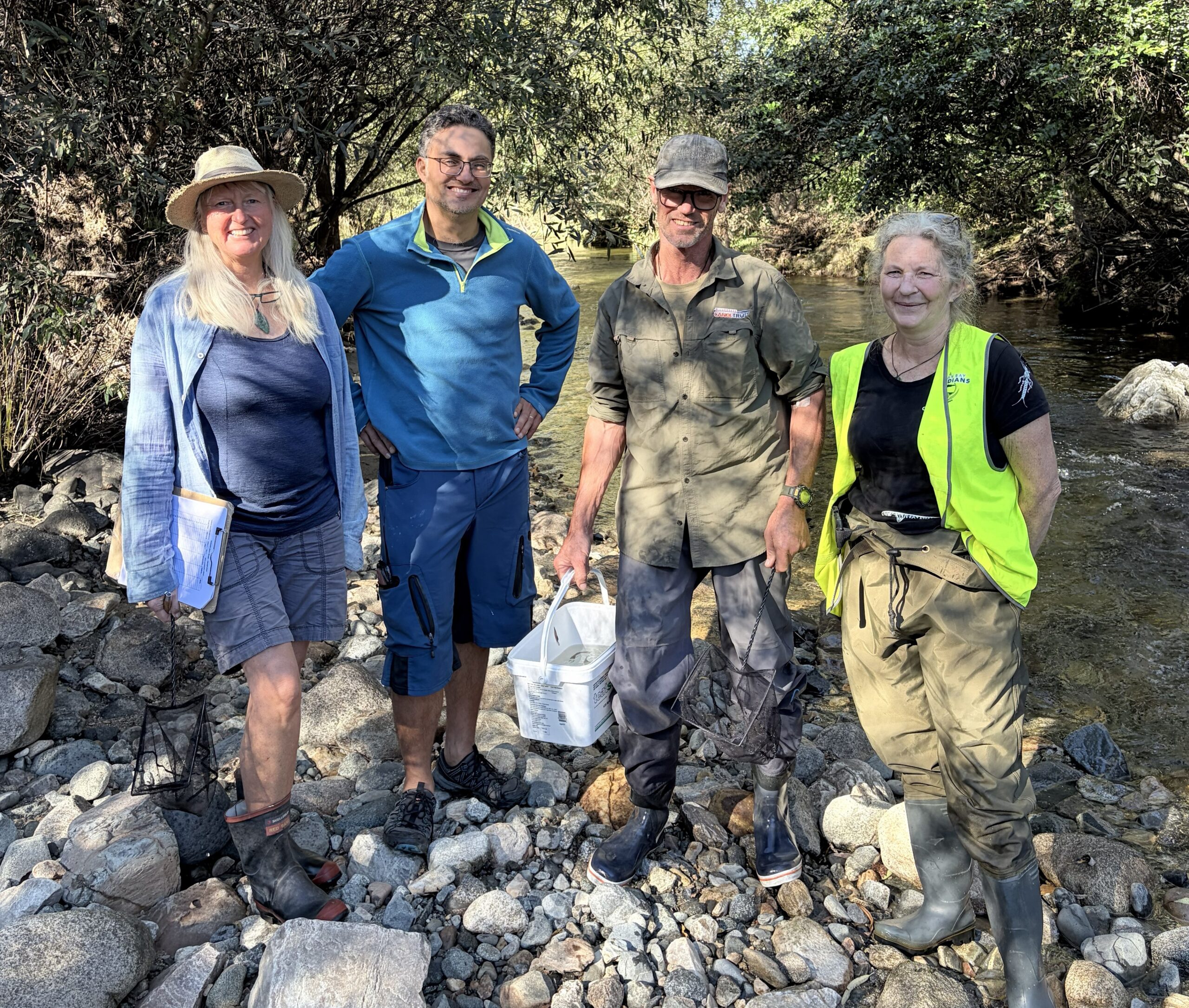
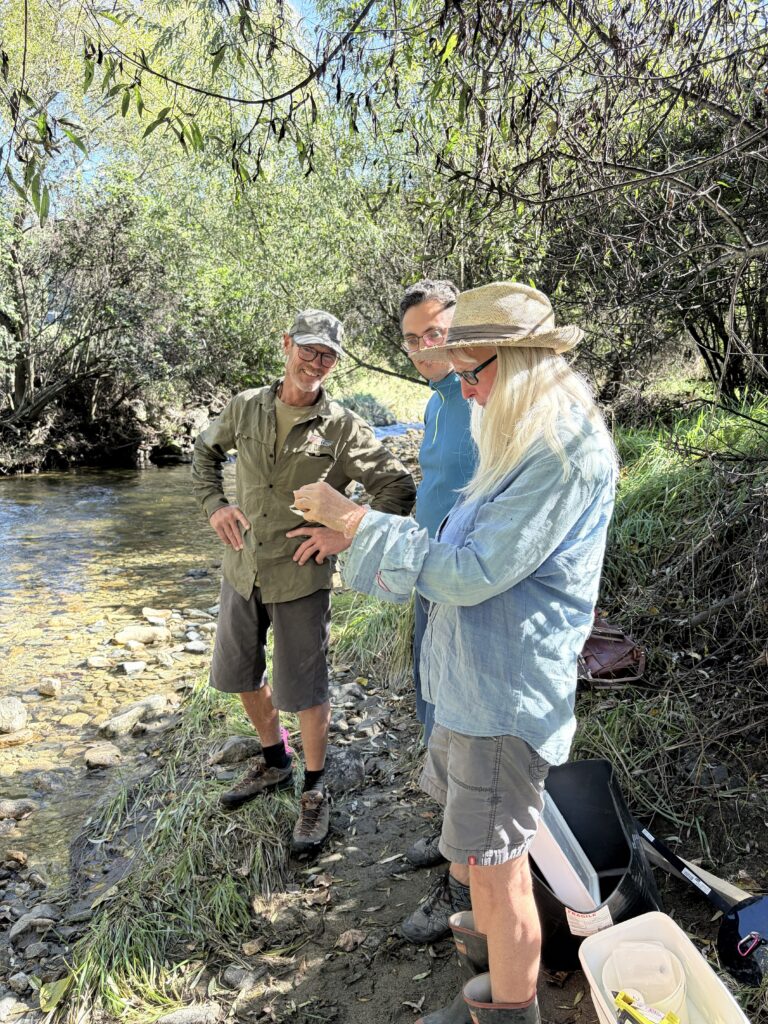
The Riuwaka Freshwater Monitoring crew with their new SHMAK gear. From left - Ali, Josh, Rob and Kate Radloff (TBG)
On a clear, autumn afternoon, three locals stood ankle‑deep in their river, arguing—good‑naturedly—about whether a rock was a cobble or a boulder, whether a stopwatch was really necessary, and who was most likely to end up wet.
This wasn’t a swim (though swimming did come up). And it wasn’t just another community monitoring day either.
This was the first official monitoring outing of the new Riuwaka community‑based freshwater monitoring group, fresh from their SHMAK kit training with Tasman Bay Guardians and guided on the day by freshwater educator Kate Radloff.
Clipboards in hand, sample jars lined up on the riverbank, and plenty of banter in the background, the group was putting theory into practice — and beginning to work out how their local observations could add to a much bigger picture.
Monitoring with a purpose
Unlike many community monitoring groups whose local streams are not being regularly monitored as part of the Tasman District Council’s long‑term monitoring programme, the Riuwaka River is already being monitored.
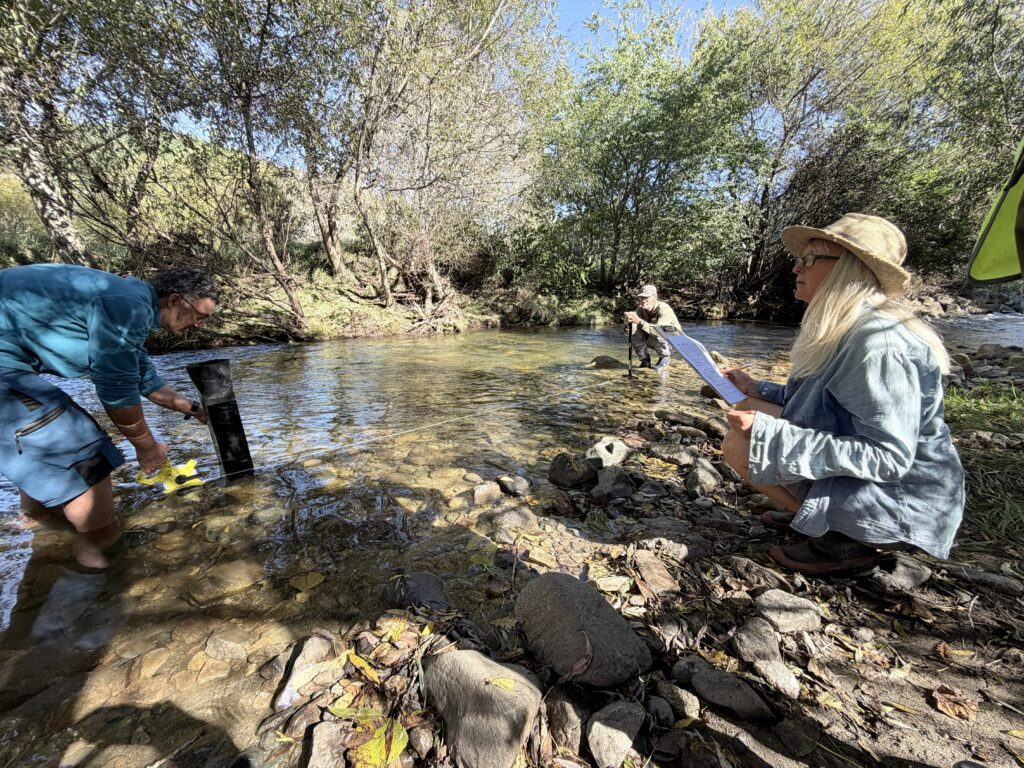
Measuring water clarity
That wasn’t something the group fully realised at the beginning. Early conversations assumed they might need to test everything themselves — water quality, flow, habitat, the lot. “When we first talked about doing this,” Josh reflected, “it felt like we’d have to measure everything ourselves.”
Discovering that there was already good long‑term data being collected didn’t put them off. Instead, it helped clarify their purpose, and made the commitment feel not only worthwhile, but manageable.
“Now it feels more like a strategic effort,” Josh said, “supporting what’s already happening and filling in the gaps — rather than doing everything ourselves.”
Kate reflected “This group can add real value by adding local eyes, local knowledge, and more regular observations.”
That led to practical discussions about how they could add value: whether monitoring further upstream might help explain differences seen downstream, or whether looking more closely at different branches of the river could provide useful context alongside council data.
Underpinning those conversations was a simple, shared goal. This is a river they already use and love — a place to walk, to cool off, and to swim.
“We want to be able to keep swimming in this river,” Ali said. “And to understand what’s going on in the water we’re in all the time.”
From the front gate to the river
The Riuwaka monitoring group is small but well‑connected to the river itself. Josh walked to the site from his place nearby. Ali and Rob, a couple who live close to the river, joked that their long‑term monitoring credentials mostly involved “regular immersive sampling” (a.k.a. swimming).
“Up until now, my contribution was swimming in it,” Ali laughed, as test vials were carefully rinsed mid‑stream. “Today we’re doing a bit more than just splashing about.”
That mix of local knowledge and new skills was evident throughout the session. There were serious discussions about flow, clarity, nutrients, habitat, and consistency — but also plenty of humour, from debates about who might push who in, to light‑hearted theories about what certain habits might say about your personality.
Science, but human
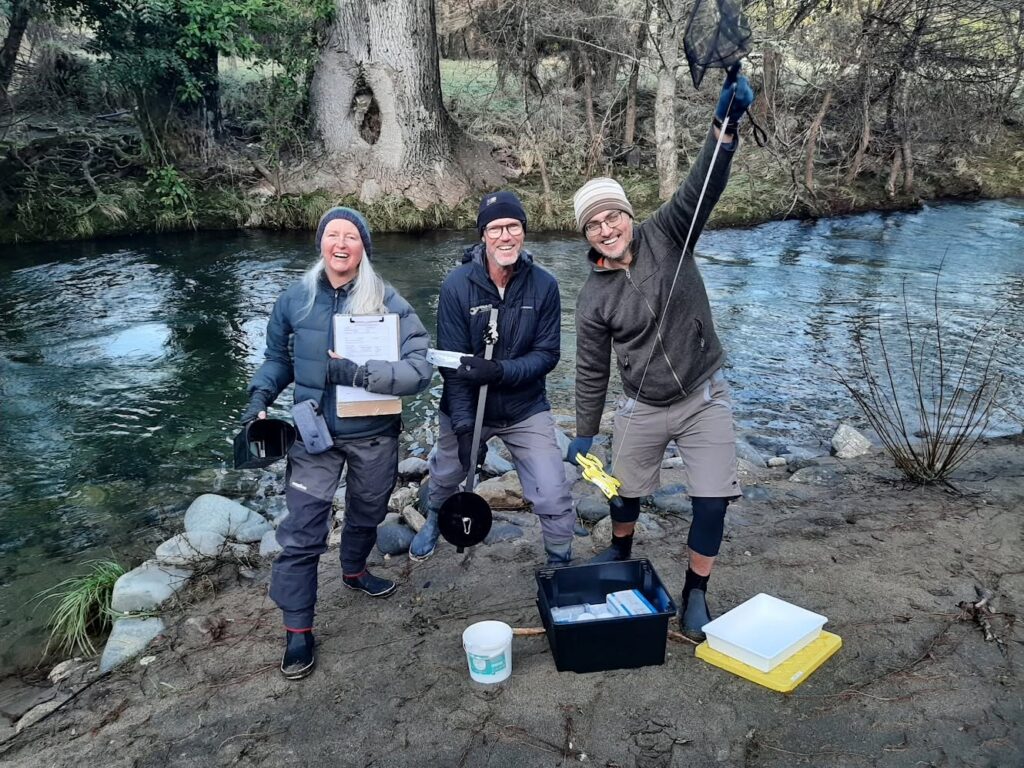
Kate’s role on the day went far beyond oversight. She guided the group through the SHMAK kit tests—nitrates, phosphates, clarity, conductivity—while constantly reinforcing good habits.
“Consistency matters more than perfection,” she reminded them. “If something looks odd, do it again. And always do it the same way, every time.”
There was also space for conversation about what not to do—tests that might be unnecessary given existing council data, or measurements that could be added later once the group was comfortable.
“This is citizen science,” Kate said. “It needs to fit into people’s lives if it’s going to last.”
The group nodded. Sustainability—of the monitoring and the people doing it—was a recurring theme.
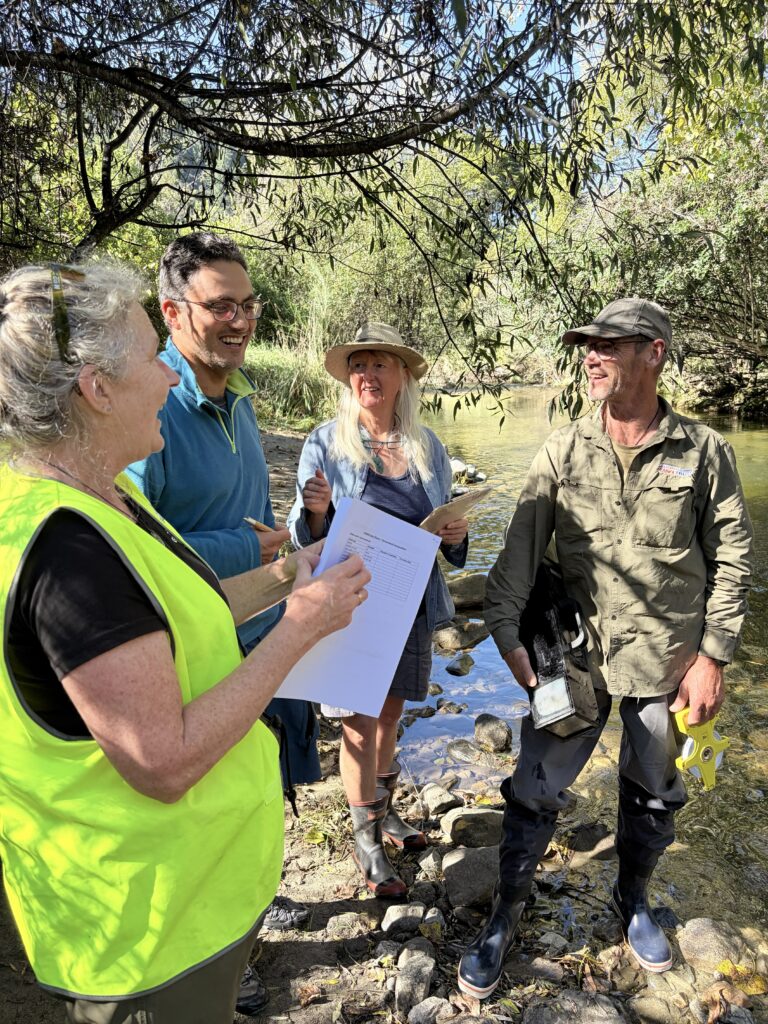
Kate explaining the concepts and having some fun with the group
Looking with new eyes
One of the most animated parts of the day came during the habitat assessment and macroinvertebrate search. Leaning over trays of bugs as well as scanning the visible stretch of river, the group debated mayflies, stoneflies, and whether missing tails counted against identification scores (“not their fault if something nicked it”)
“Think like a fish,” Kate advised, as they assessed flow, shelter, and substrate.
Finding a large green stonefly — twice — during the habitat assessment was a highlight. These insects are highly sensitive to pollution, scoring 10 out of 10 as indicators of a healthy river.
Suddenly, the river wasn’t just a place to swim or walk past—it was a living system, readable in stones, insects, and flow patterns.
Just getting started
As the afternoon wrapped up, test results were logged, worksheets checked, and everyone looked a little damp—but quietly proud.
This first session wasn’t about generating groundbreaking data. It was about confidence, collaboration, and connection: learning the tools properly, understanding why the monitoring mattered, and embedding the group into a wider catchment picture.
As Rob put it, packing up gear: “It feels good knowing we’re not doing this on our own—and that what we’re doing actually links into something bigger.”
For the Riuwaka River, that’s good news. For the catchment, even better.