The Leiths: Re cloaking the Moutere, one gully at a time
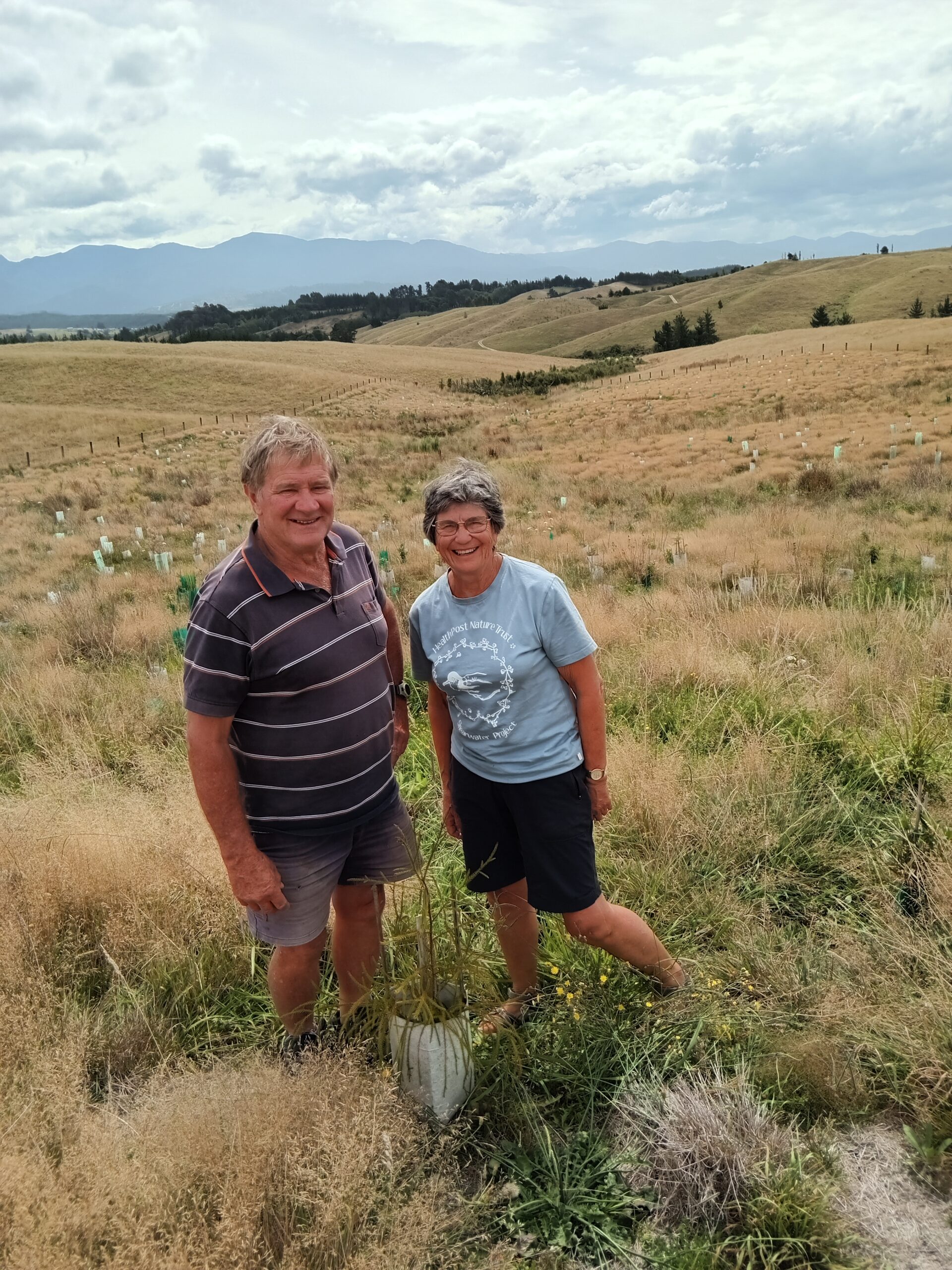
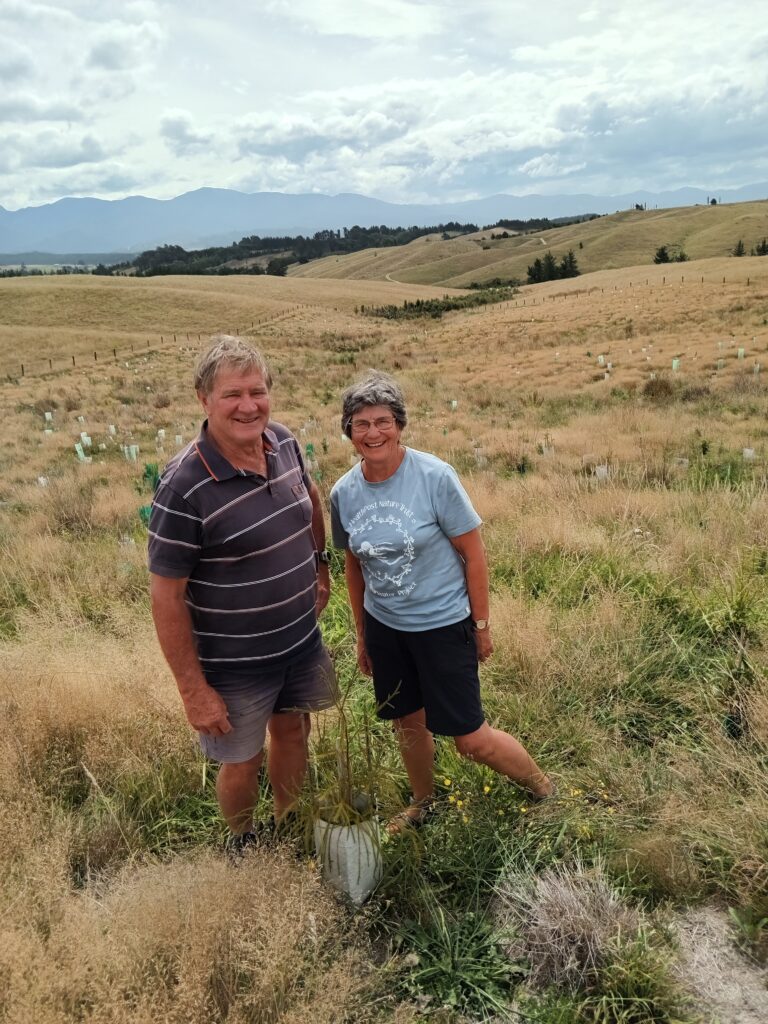
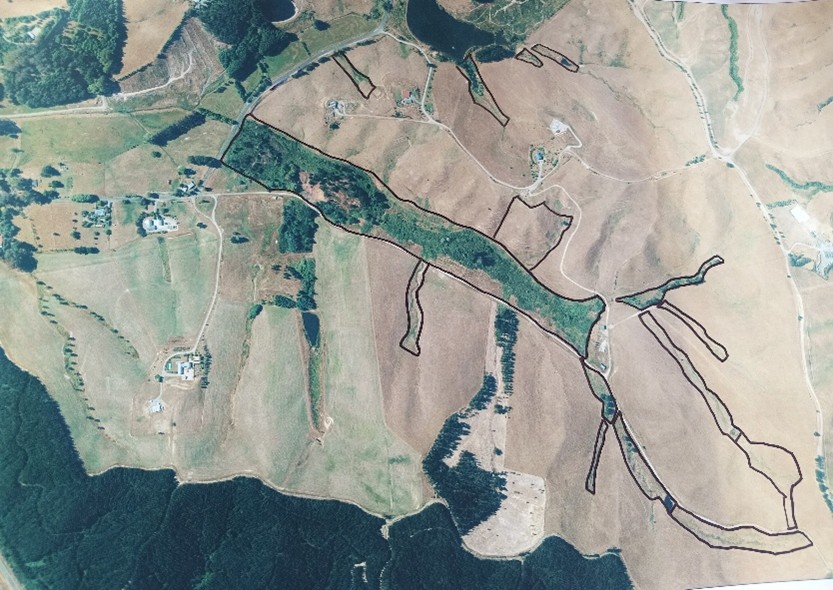
When I arrived at Philip and Jenny Leith’s place, they welcomed me into their three‑year‑old, off‑grid home—bright, modern, and with great views over the Moutere valley. Before we stepped outside, they unfolded a large annotated map across the kitchen table giving a birds eye view of their extensive planting blocks. Together they talked me through the areas they’ve fenced and planted over the past decade, each adding detail. It was clear this is a long, thoughtful restoration partnership.
As we then drove along the farm roads, the scale of their work and achievements really came into view. At each stop—wetlands, gullies, ridgelines with sweeping views—they shared another chapter. What struck me most wasn’t the scenery, or even the 44,000 native trees now establishing across the property. It was the fact that they’ve planted most of those trees themselves, now in their seventies, working steadily winter after winter. Philip digs. Jenny prepares plants, guards and stakes. Together they return for two years of release spraying until the trees can hold their own. “It’s most efficient with two,” Jenny said. “One planting, one prepping.” Having said that, they have also been grateful when friends or family have put in a few hours to help the project progress. Philip is a passionate and energetic planter and also spends hours on his own out in the gullies – planting and maintaining.
Restoring land stripped bare
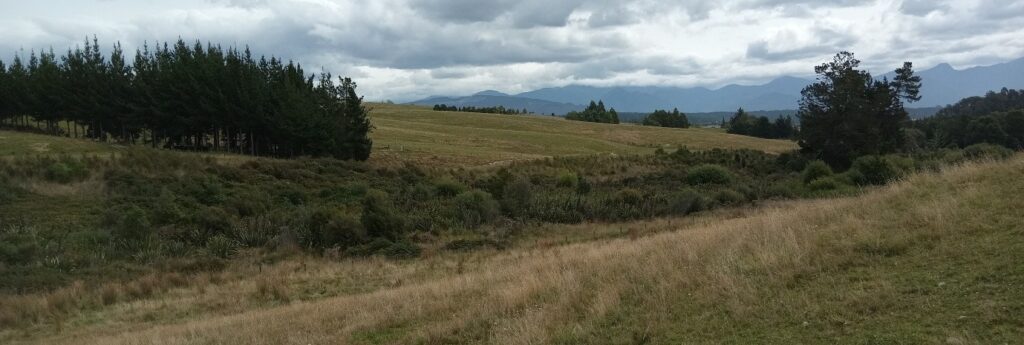
Their 150 hectares at Harakeke was once Baigent forestry, later Carter Holt Harvey. When the forestry was cleared to make way for subdivision 20 years ago, the hills were left completely bare—even the gullies. When it rained, silt and other material washed down into the nearest stream at the base of the block, carrying sediment from the exposed slopes.
“Everything went,” Philip said. “Even in the gullies—there was nothing left to hold the soil. We had to do something to combat that.”
They began by fencing behind the dam they built for orchard water storage. As the opportunity arose they kept going—fencing, planting, trapping, restoring. Over time, their work on different areas of the land is linking up: the large wetland area, major and minor gullies, which provide corridors for seed distribution, birds and invertebrates.
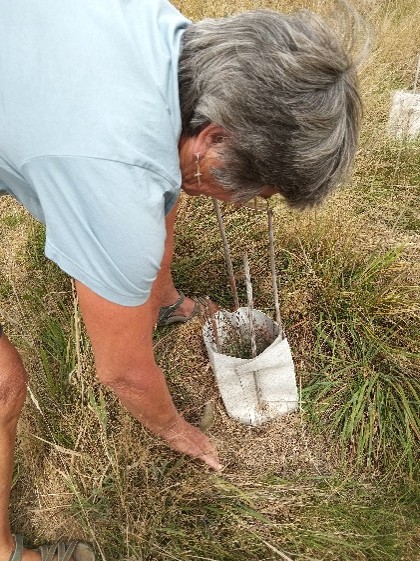
Most of the Leiths’ planting has been self‑funded over many years, but several programmes have helped accelerate their work. They received some support through the Billion Trees programme, Trees That Count, and the Provincial Growth Fund, which together supplied several thousand native plants. The Moutere Catchment Project also contributed funding for trees and fencing, part of a wider package that supported more than 100 landowners across the valley.
Today, their restoration footprint includes:
- 20 + hectares of wetland fenced and mostly planted, including one of the few remaining remnant wetlands in the Moutere Valley
- 20 fenced off blocks and major gullies restored, with another 2,500 trees ready to go in this winter
- 1,600 podocarps—tōtara, kahikatea, rimu, matai—now establishing well in a “new forest” planted in 2025
- A trapping network expanded from 30 to 150 traps, with around 300 catches in the past year
- A public “Weka Walk” through the wetland area open to walkers, riders, dogs and horses
- The opportunity for students from Whenua Iti Outdoors, and local schools to share the planting and maintenance programmes.
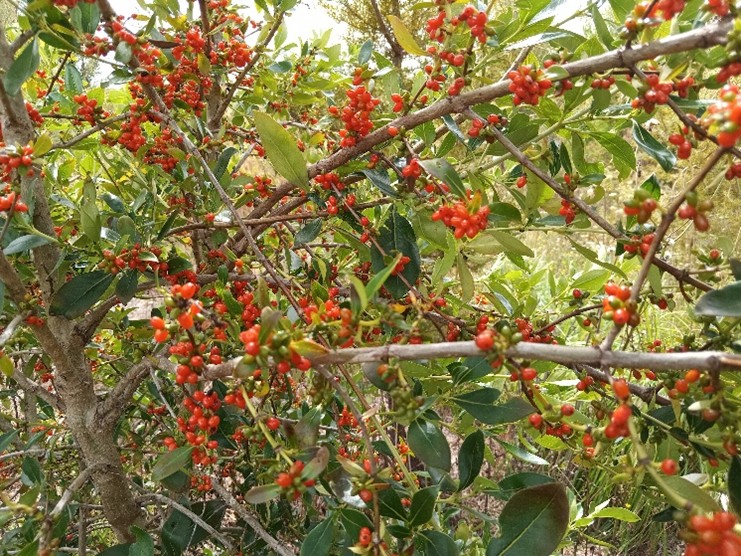
The gully plantings serve a dual purpose: stabilising steep ex‑forestry slopes to reduce sediment loss and creating continuous bird corridors linking wetland to gully to ridge. Some of the older plants are now self‑seeding, such as tōtara, and the coprosma currently have impressive seed loads, a sign that the system is beginning to regenerate under its own momentum.
A wide range of species—and a practical approach
They’ve trialled a wide range of species over the years – kahikatea, manuka, matai, kanuka, flaxes, and coprosma. Most thrive; others don’t, and they’ve started to plant species that attract birds such as kowhai,rewarewa and tanekaha. They generally plant the podocarps as 1.5 metre spacings, and fill in with other more shrubby species around them.
“We’re not purists about ecosourcing,” Philip said. “This land has been cleared of native vegetation for at least a 100 years—we plant what fits, what survives, and what will help bring back the birds but with an eye to what may have been here originally.”
Their planting method has refined through years of trial and error: plant early into clear ground, ideally in July, and this increases the chance of rain soon after planting so the clay seals over; guard every tree, and keep grass competition down for the first two years. They don’t tend to add fertiliser anymore as they feel the soil around the potted up seedlings is already good enough to sustain them. The land has also had ample lime and fertiliser to establish pasture since the last pines were felled.
They recently trialled wool mat under and around the plants instead of cardboard, but this has had mixed success as it seems to break down too quickly and allows weeds through too early. But they’re pragmatic and will try a thicker wool mat this winter.
A working farm, still evolving
Alongside the restoration work, the Leiths run about 200 cattle, breeding Welsh Blacks and fattening them for sale. The farm is still in its development phase—soil fertility is being built up, sheds are being added, and pasture is gradually improving. They’ve also planted an exotic plantation block with eucalypts and redwoods, as part of their long‑term land management plan. The native restoration sits alongside these productive elements, not in place of them.
Why they do it
Their motivation is simple: they love trees, and they want to leave the land better than they found it. Over time, their vision has become clearer—a farm park of sorts, where productive land sits alongside extensive native plantings, where gullies are re‑cloaked, and where birds can move freely through the landscape again.Improving water quality , reducing erosion and restoring native flora and fauna as much as possible.
“It just feels like the right thing to do,” Jenny said. “We want to leave a legacy. It might not look like much yet, but in 5 – 10 years it will!”
A valley that has changed
The Leiths have lived in the Moutere for 50 years. They remember when the valley was full of farming families, when neighbours gathered for BBQs and dances, when people knew each other well. Today, with more lifestyle blocks and many residents working in town, those rhythms have changed. When I asked if they were sad about that, they paused: “It’s just the way life evolved. We focus on what we can do here, and we are fortunate to have family living nearby.”
And what they’ve done here is extraordinary.
How this connects to the Kotahitanga Alliance feasibility study
Across the Moutere and Motueka lowlands, only 1–2% of the landscape is currently in native cover. The Kotahitanga Alliance feasibility study is exploring how to increase this to around 15%, working with landowners, iwi and communities to identify where native planting will deliver the greatest benefits—improving water quality, biodiversity, climate resilience and sediment control—while supporting productive land use.
The Leiths show what this future could look like: practical, staged, locally driven restoration that strengthens both the land and the community.