It started with a few kits, some training, and a shared love of local rivers. Now, around a year or so later, neighbours from across the Motueka catchment are gathering, sharing data, and shaping the future of freshwater health together.
At the third gathering of our sub-catchment Freshwater Monitoring Groups, the energy was unmistakable. What began as a collaboration between the Motueka Catchment Collective (MCC) and Tasman Bay Guardians (TBG) has grown into a grassroots network of citizen scientists. With water monitoring kits in hand—and backed by training and mentoring—locals are now tracking the health of their own tributaries. The goal: to build confidence, capability, and eventually, independent community-led monitoring that feeds into a bigger picture of catchment care.
Some of the Freshwater Monitoring Groups have now been active for over a year, steadily building their knowledge of local streams and the life they support. Regular Community Based Freshwater Monitoring (CBFM) gatherings bring these groups together to share insights, deepen skills, and strengthen connections across the catchment.
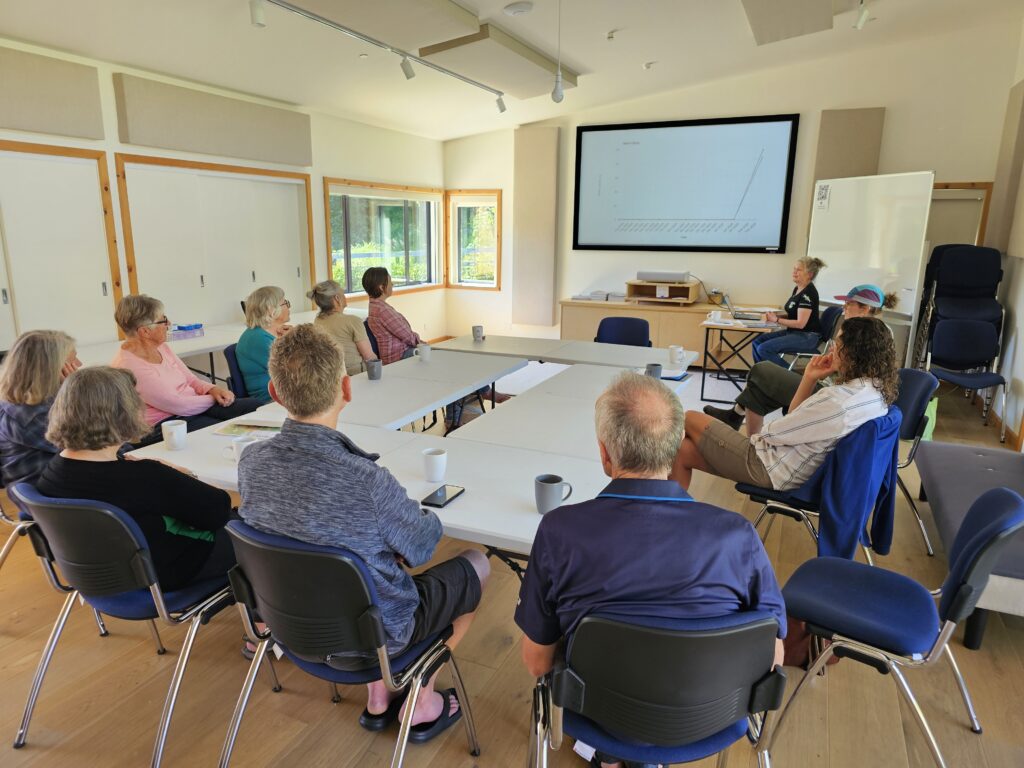
At the latest gathering, Kate Radloff from Tasman Bay Guardians kicked off the learning with a practical dive into NIWA’s water monitoring manual—highlighting the critical role of stream temperature in shaping dissolved oxygen levels, especially for sensitive macroinvertebrates.
CBFM gathering attendees to listen to Kate Radloff go through NIWA's guidance
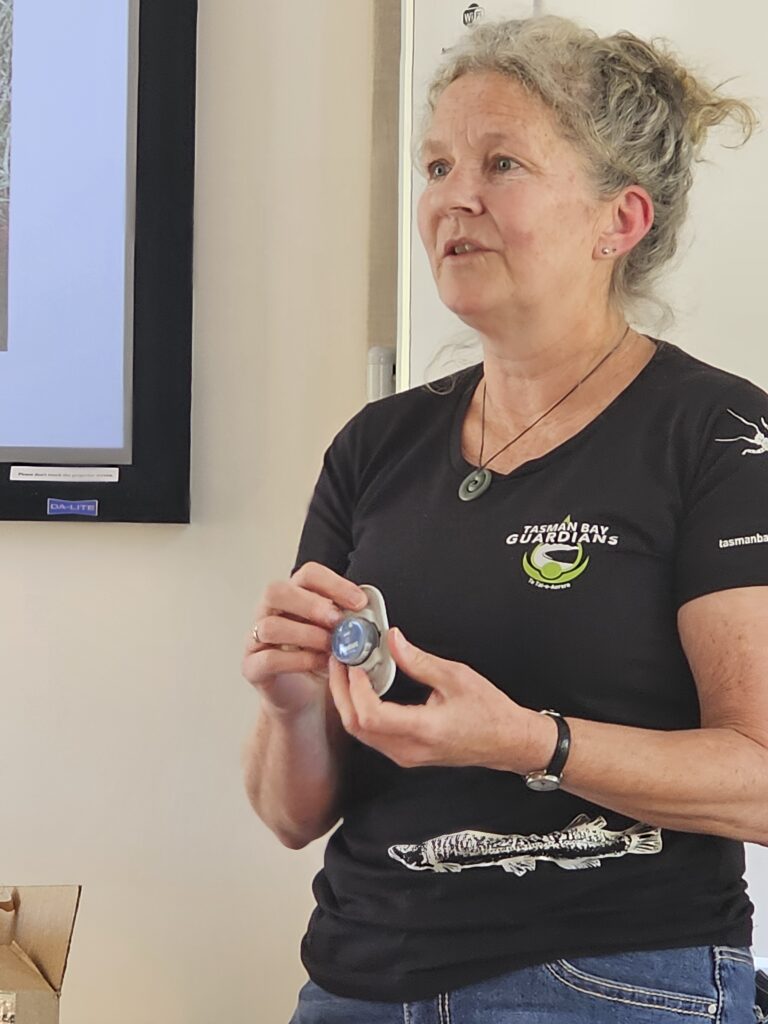
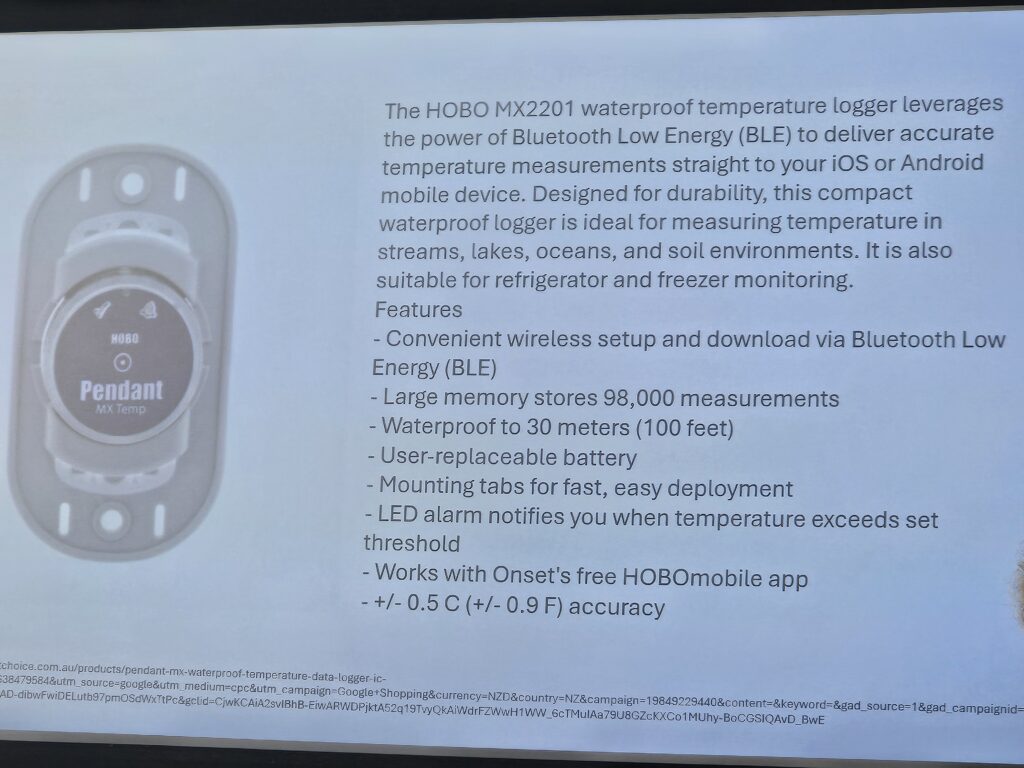
To support this focus, MCC offered each group the use of Hobo temperature loggers, purchased with the general funding of Ministry for Primary Industries (MPI). These devices provide a detailed picture of daily temperature fluctuations, helping track summer highs that can stress aquatic life. The response was enthusiastic—everyone was keen to get started and see what their local data might reveal.
Kate Radloff holding a hobo temperature logger
Details on the slide about the logger
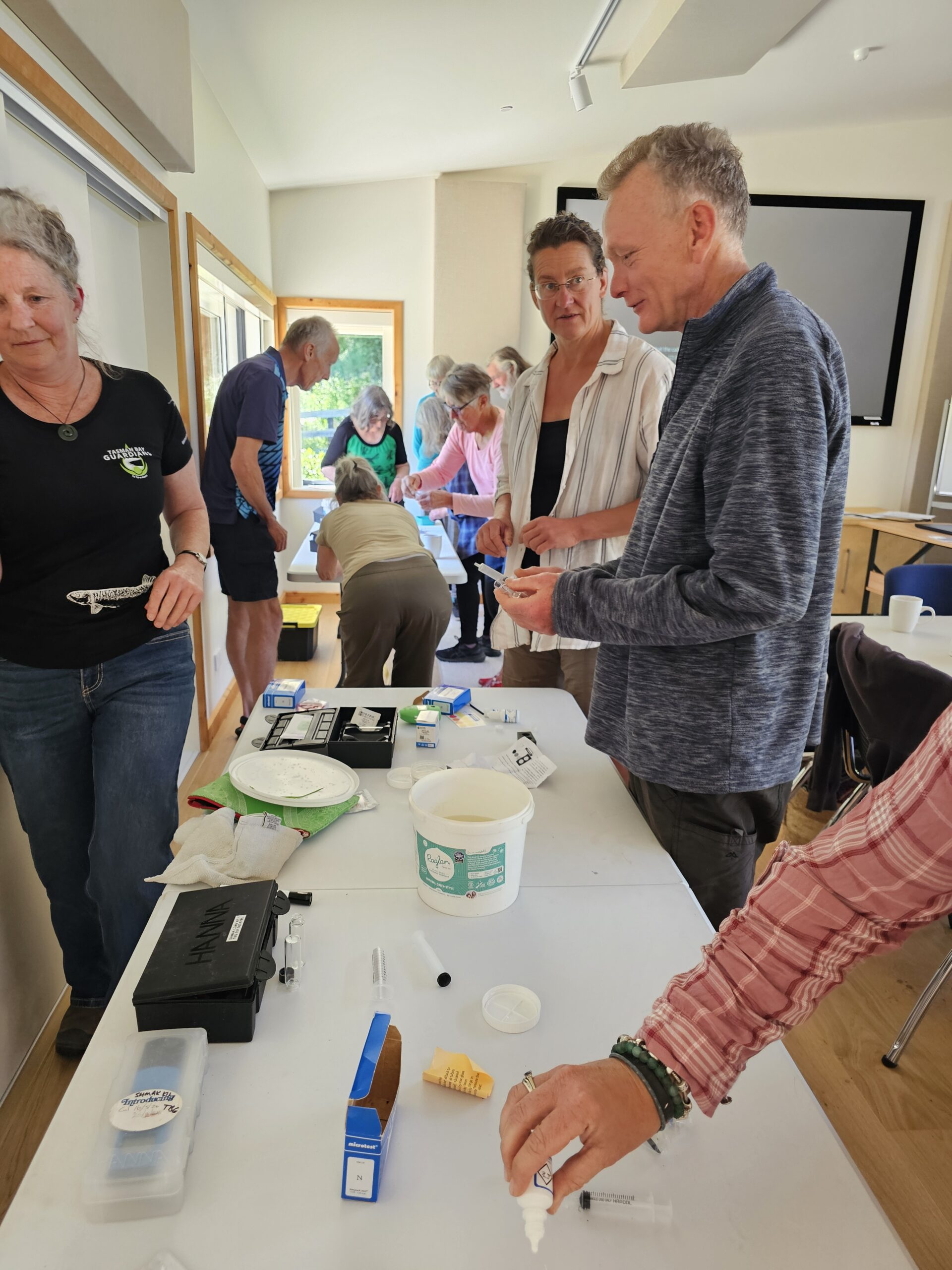
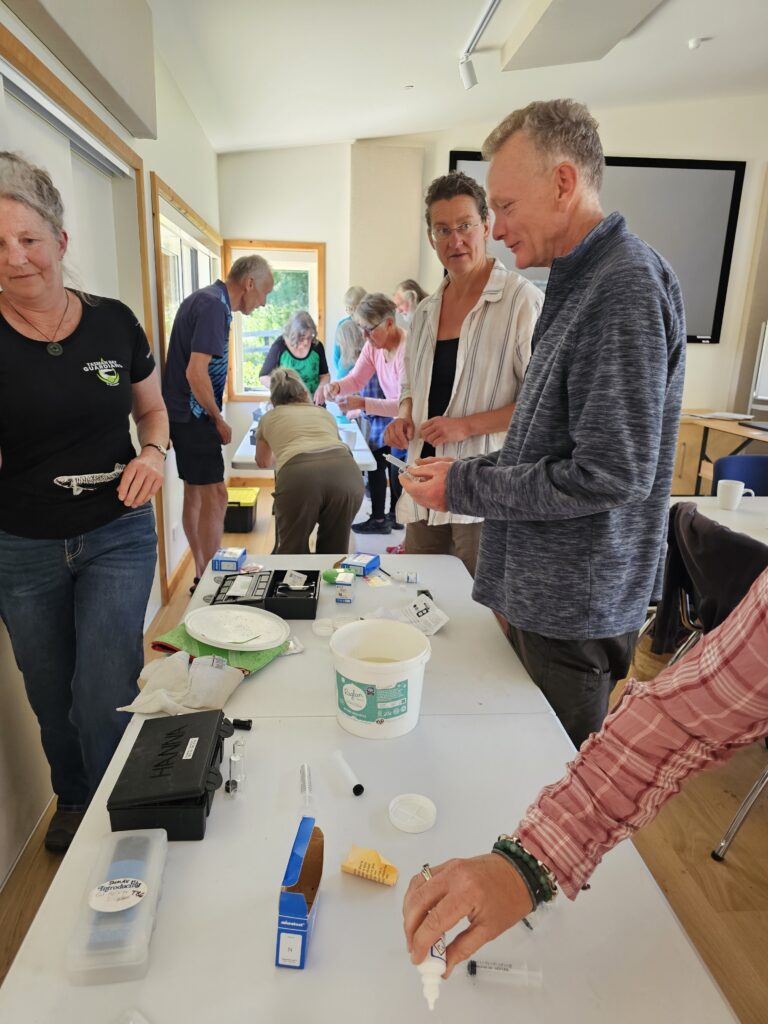
The groups going through some measurements to check consistency of results
The groups also had a chance to test the accuracy of their monitoring skills—working in teams to measure the same unknown water sample and compare results. It was a hands-on way to explore consistency, build confidence, and spark great conversations about technique and calibration.
After a well-earned lunch (complete with delicious kai), the afternoon session welcomed Trevor James, Senior Resource Scientist for Freshwater and Estuarine Ecology at Tasman District Council. Trevor generously shared his deep knowledge of the Motueka River system, helping groups interpret their results, explore ecological patterns, and consider how their local data fits into the bigger picture of catchment health.
As always, the gathering was relaxed, energising, and full of practical learning. The next one is already on the horizon—planned for March, and sure to bring more insights, connections, and momentum.
With groups now active across many tributaries, there’s a good chance one is already monitoring near you. If you’re curious about joining or want to learn more, we’d love to hear from you: support@motuekacatchment.org.nz.