On 18 September, around sixty people gathered at the Riverside Centre for an important and timely hui hosted by the Motueka Catchment Collective (MCC). The theme —“Understanding Our Rivers, Strengthening Our Communities”— brought together farmers, iwi, scientists, council staff, and residents to explore how we live with the Motueka River and its extremes.
“This hui is a stepping stone,” said facilitator Ursula Passl. “Floods force us to pause and reflect. Everyone here has a connection to the river—and that’s what brings us together.”
Ngāti Tama’s Dayveen Stephens opened with a moving video journey to the river’s source, reminding us of its spiritual lifeforce. “It’s pristine and pure at the source—but sometimes it’s sad to see the condition of the awa further down.” she shared.
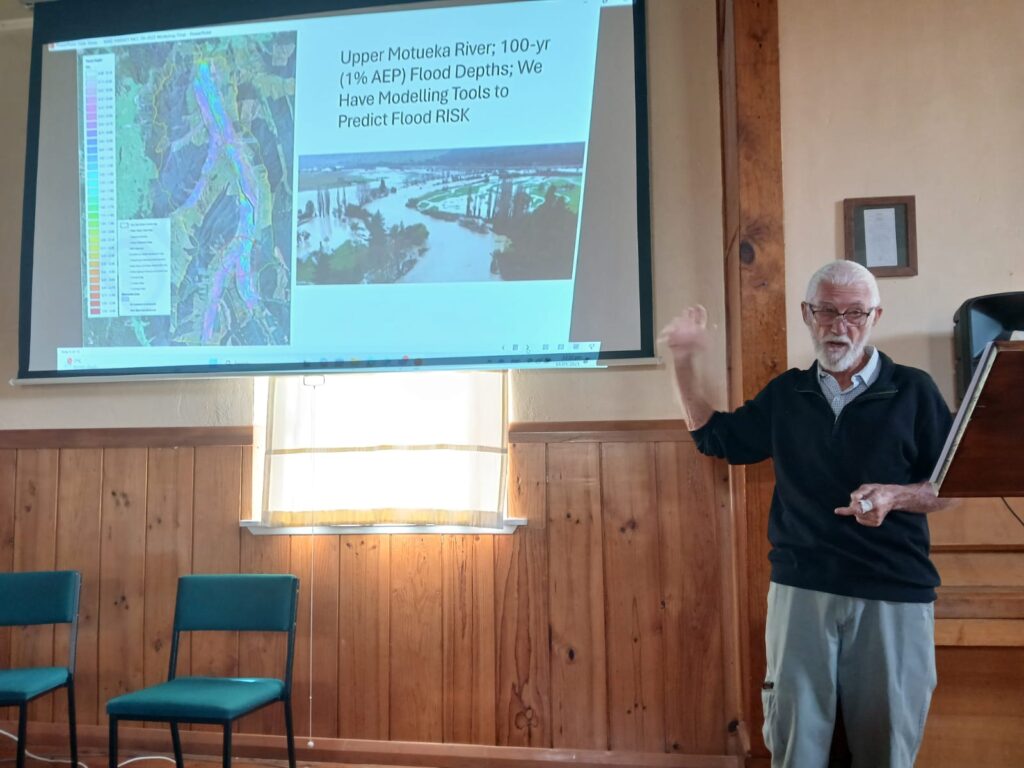
Veteran river manager John Ellis urged a shift in mindset: “We’ve tried to control the river for decades. It’s time we showed it respect. Rivers have nurtured us—now we must care for them.”
Neil Deans, Pou Taiao for Ngāti Koata, outlined the Water Conservation Order protecting the Motueka’s outstanding values, including trout and whio habitat, scenic landscapes, and karst systems. “Floods are part of every river’s story,” he said. “With climate change, they’ll only get bigger and more frequent.”
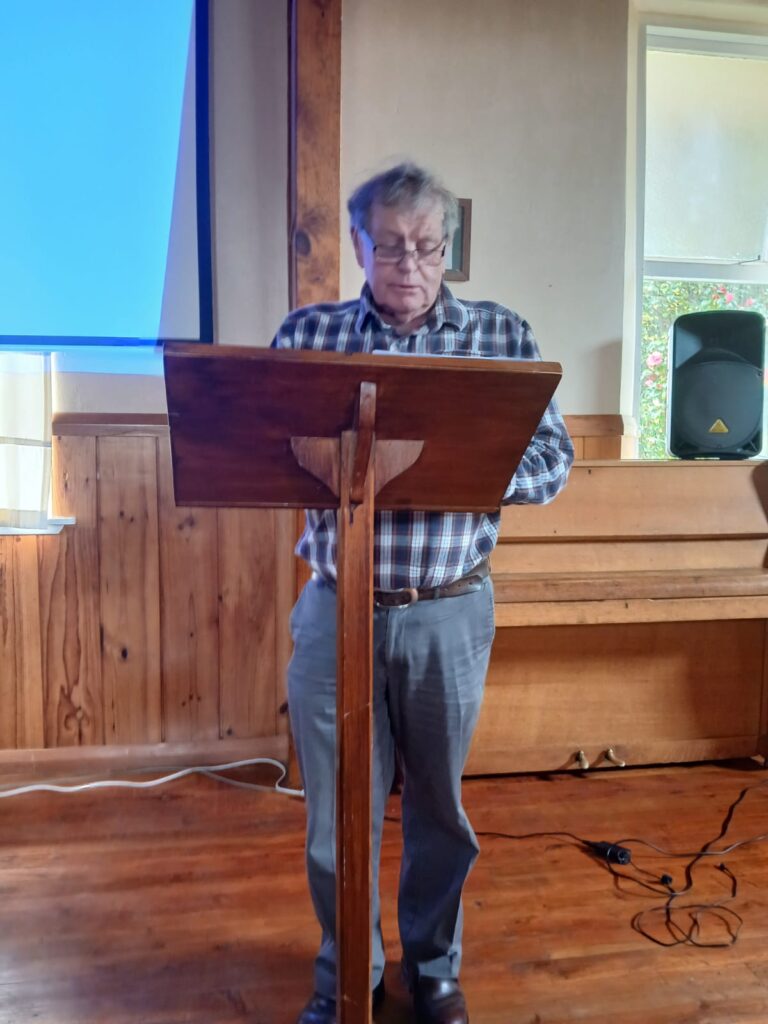
John Ellis, veteran river manager
Mike Harvey, river geomorphologist
River geomorphologist Mike Harvey challenged assumptions about flood management: “Stopbanks give the illusion of safety. But when we build close to rivers, we increase the risk. We need to let rivers breathe.”
Trevor James, Principal Scientist at Tasman District Council, highlighted the river’s rich biodiversity and called for river management solutions that create win-wins for keeping people safe and protecting native habitats. “We can build back better,” he said. “But we must stop treating rivers like drains.”
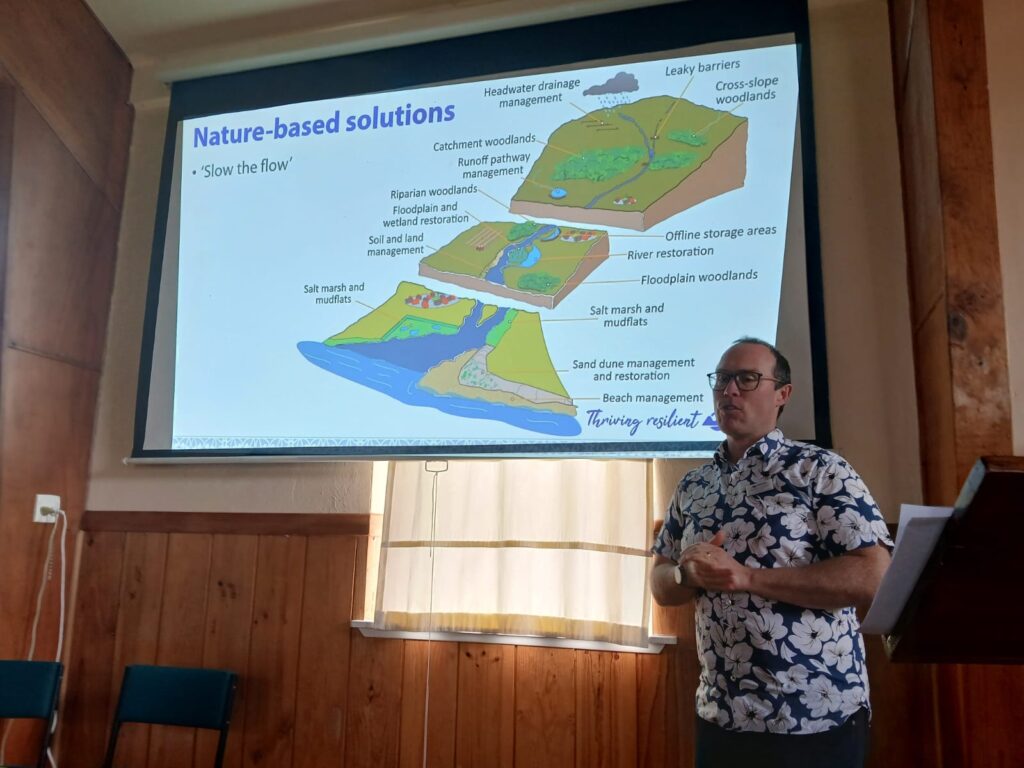
Nature-Based Solutions and Flood Resilience
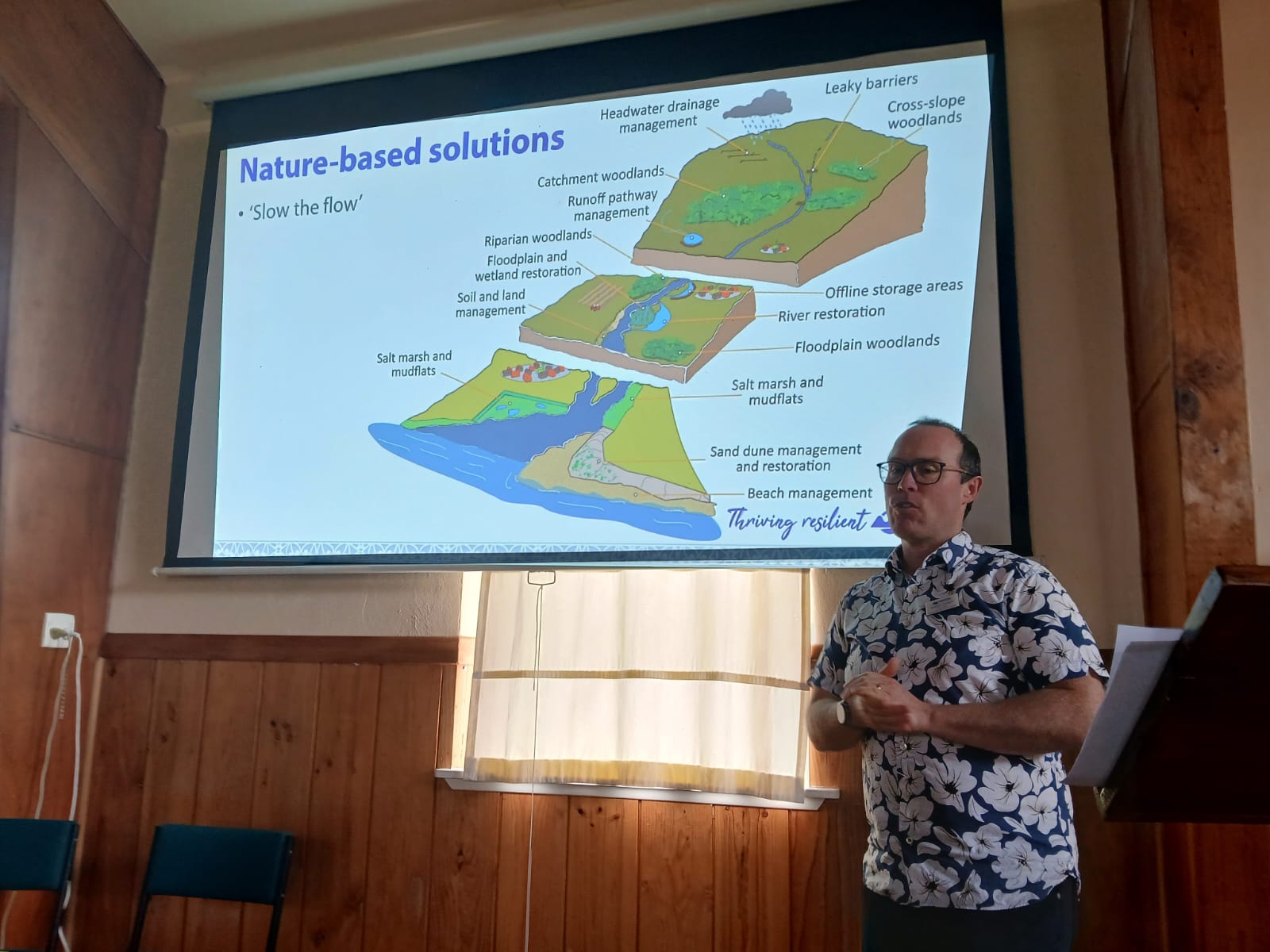
Alastair Clement, Hazards team leader at Tasman District Council, and Seb Dedonker, River and Wetland Engineer, brought a practical lens to how we think about flood resilience.
Alastair Clement, Natural Hazards team leader, TDC
Alastair defined this as “our ability to avoid the effects of flooding—and where we can’t, to be well prepared, respond well, and recover quickly.”
He shared findings from TDC’s modelling work, showing that nature-based solutions—like riparian planting, leaky barriers, and floodplain reconnection—when combined, can reduce peak flows by up to 36% in some sub-catchments. Alastair did point out, however, that nature based solutions are only fully effective in managing flood risk for small to medium floods such as a 20 year flood.
Seb reinforced the need to rethink infrastructure: “We’ve narrowed our rivers and built too close. If you live in the floodplain, prepare to be flooded, particularly if it is a 50 to 100 year flood like we saw in June and July.” He advocated for secondary channels, wetland restoration, and smarter land use. “Do we want a drain—or a living river with good water quality, fish, and habitat?”
Both speakers stressed that solutions must be site-specific, collaborative, and grounded in long-term memory. “Let’s not forget what this flood taught us,” Seb urged. “Use that knowledge to shape what we do next.”
Open Dialogue and Community Voices
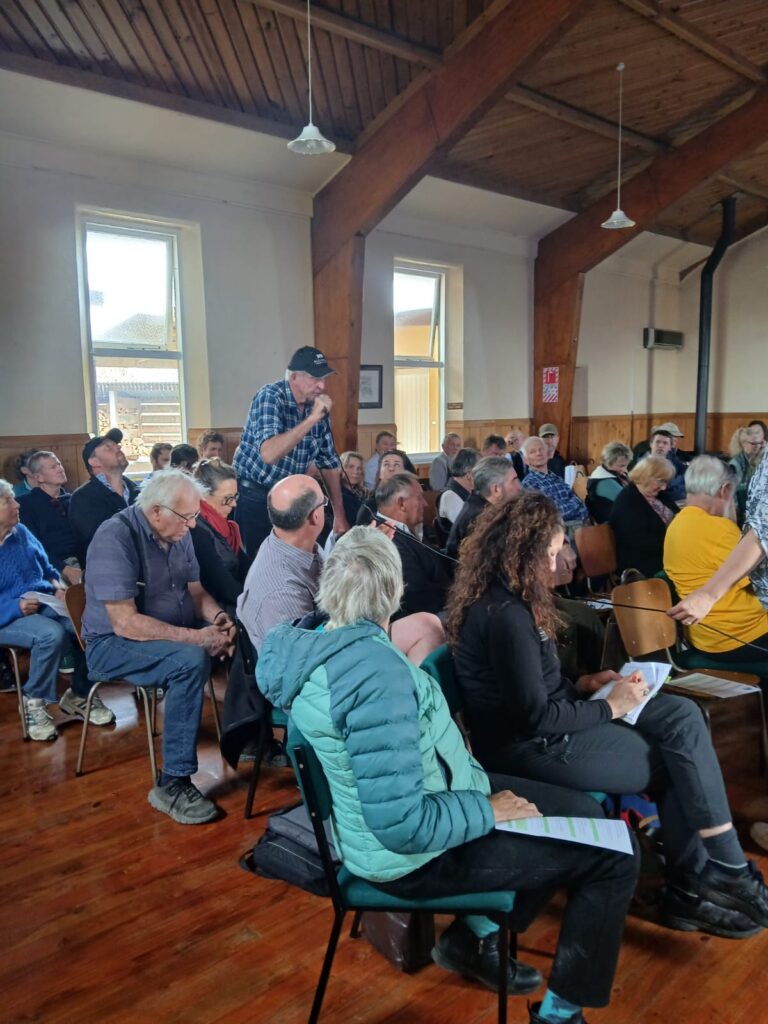
Throughout the day, panel discussions created space for open, respectful dialogue. Attendees asked thoughtful, sometimes challenging questions—about gravel extraction, forestry practices on Separation Point granite, and the role of modelling versus lived experience. One participant asked, “Does practical knowledge from living beside the river count?” Alastair responded, “Models aren’t perfect—they’re tools, not truths but they can be useful.” Ursula pointed out that this hui is a way of hearing from different people and allowing the sharing of perspectives and experiences.
Another attendee asked whether nature-based solutions would require land use changes, and who would pay for this. “The river was here before us,” Alastair said. “But this is a complex question and we need to come together as a society to answer that.”
Ursula reminded everyone that disagreement is part of progress: “Don’t be afraid to have a cup of tea with someone you disagree with. That’s how communities find a way forward.”
Collective Action and next steps
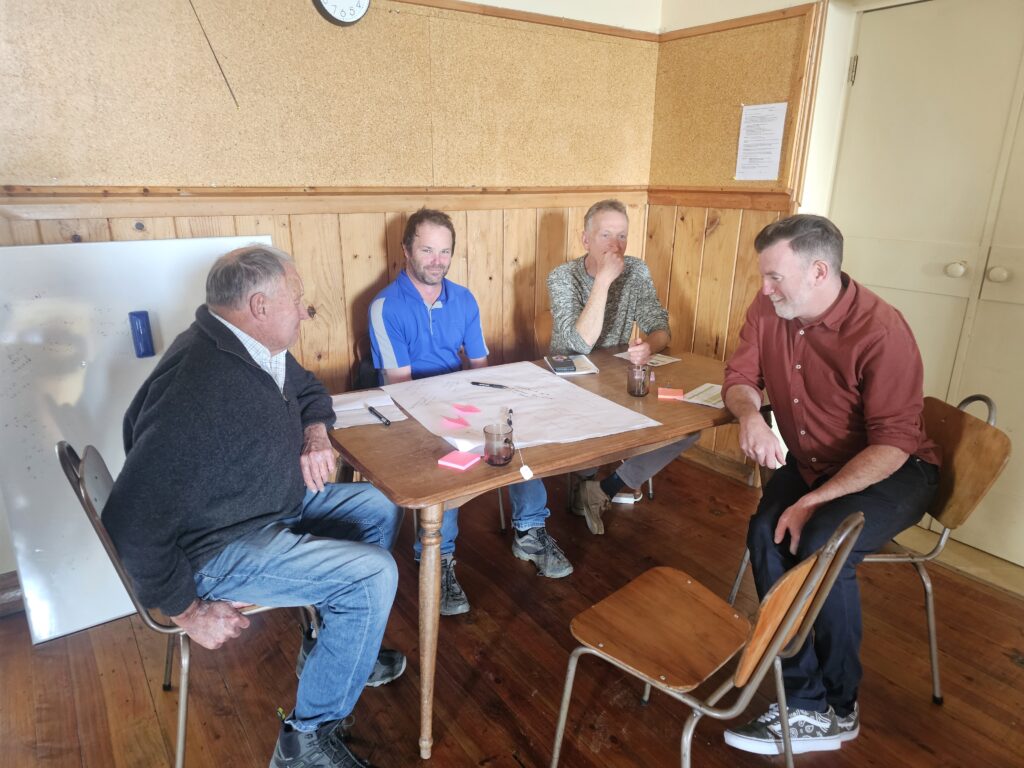
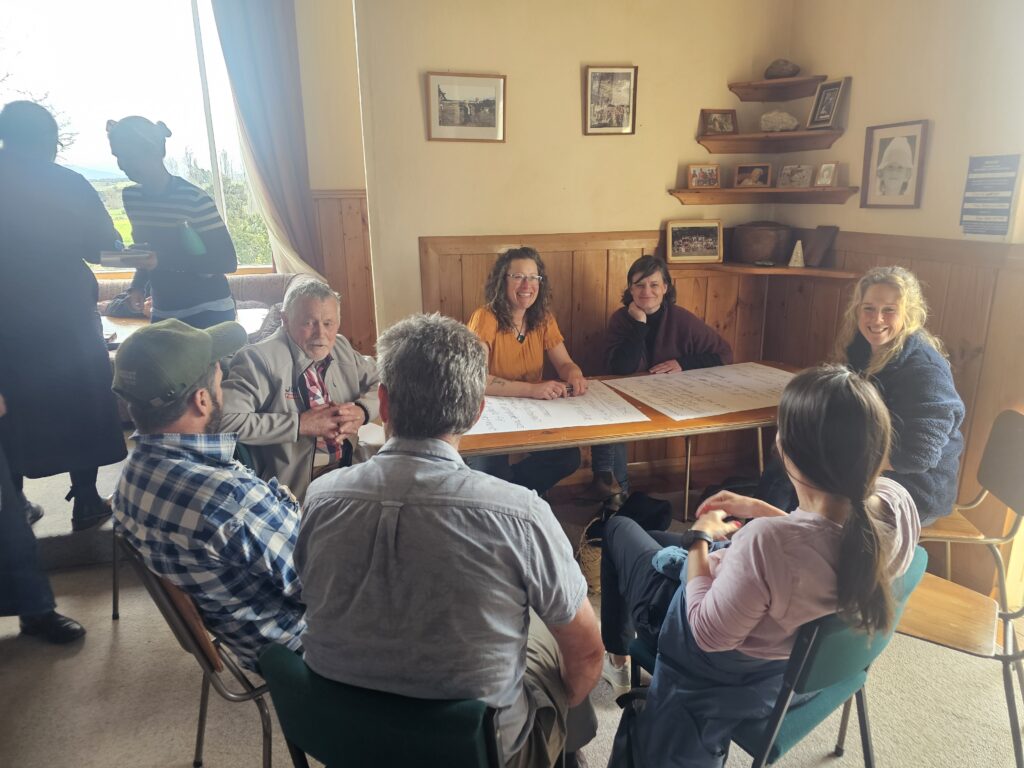
Breakout groups explored practical ideas and next steps —from planting trees and slowing water on private land, to improving emergency preparedness and sharing knowledge. One attendee summed it up: “We need to drink tea with our neighbours, work with council, and make meetings safe for honest kōrero.”
Break out discussion tables
MCC closed the day with a clear message: this hui was just the beginning. More gatherings are planned to deepen flood resilience planning and support collaborative action across the catchment.
Here is some feedback we received about the day:
“Just wanted to say thanks so much to the team for organising the event yesterday. It was very well run and the format was engaging and highly informative.”
“Congratulations for a very nice Conference day last week. So interesting and well needed into the community”.